

The companies have created Syna Therapeutics, a joint venture that will develop biosimilars and new molecules.
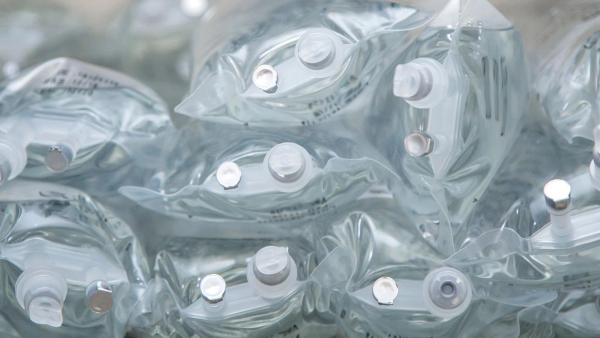
The evolution of therapeutic modalities drives the adoption of single-use technologies.
Despite a growing number of biosimilar approvals, market uptake remains a challenge.
Given the criticality of fill/finish processes, it is clear that automation is the next technological step.
The companies have created Syna Therapeutics, a joint venture that will develop biosimilars and new molecules.
The contract development and manufacturing organization announced the addition of a new building complex that will house its headquarters in Bothell, WA.
Fujifilm acquires cell culture media companies Irvine Scientific Sales Company and IS Japan.
RGtimeline/Shutterstock.comParenteral product quality is improving.

Early adopters are benefiting from lower costs and increased productivity.
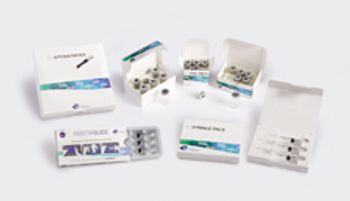
Keystone Folding Box has added a new line of secondary packaging systems for injectable pharmaceutical products.
Certificates of analysis can be used to monitor the reliability of products and their suppliers, says Susan Schniepp, distinguished fellow at Regulatory Compliance Associates.
Accelerated development of new preventives raises challenges for efficient CMC evaluation and production.

This is the first of a series of three articles about validation and technical transfer in the bio- pharmaceutical industry.
Developments and investments in single-use systems advance upstream biomanufacturing.
The companies will co-develop and co-promote a CAR T cell therapy in the United States.
Telstar reports that its Boreas, a new 86° ultra-low-temperature freezer, increases average performance by 20%.
The agreement gives IncoCell Tianjin, a wholly-owned subsidiary of China-based Boyalife Group, access to Cesca’s celluar processing contract development and manufacturing services.
Hitachi will manufacture regenerative medicines developed by Daiichi Sankyo and SanBio Group.
The collaboration between the two companies aims to finish all necessary work needed to file for a first-in-human study by early 2019.
The company plans to install 4000-L disposable bioreactors from ABEC at its new commercial manufacturing facility in Wuxi city, China.
ISPE announced BioMarin Pharmaceutical, Shire, Vetter, and Wyeth Pharmaceuticals as FOYA Category winners.
An expanded pharma services supply chain facility in Germany boosts Thermo Fisher’s Pharma Services footprint in Europe.
Emerson will provide Ireland’s National Institute of Bioprocessing Research and Training with technologies to help the institute prepare students for the transition to manufacturing digitization in the biopharmaceutical industry.
Biogen will acquire an AMPA receptor potentiator for cognitive impairment associated with schizophrenia in a deal worth approximately $590 million.
Sartorius Stedim Biotech has launched a new automated parallel bioreactor system for perfusion culture.
Sartorius has delivered to ABL’s Strasbourg facility, a GMP viral vector manufacturing package solution that includes single-use bioreactors and an automation platform for normal flow filtration, tangential filtration, and mixing.
The contract development and manufacturing organization has expanded biologics capacity at its facility in Berkeley, CA.
Sensors and devices being developed by nGageIT Digital Health Solutions can track patient use of oral solid-dosage or injectable drugs.
The author reviews operative options for the implementation of a quality oversight and how companies can benefit from this function from a regulatory perspective.