




Results of a Phase III trial showed that Tagrisso with the addition of chemotherapy reduced the risk of disease progression or death associated with EGFR-mutated non-small cell lung cancer by 44%.
Accurately targeted immunotherapies through reliable neoantigen recognition enable personalized medicine development.
Proprietary cell lines offer opportunities for achieving high AAV titers.

In the ATMP space, CGTs are hitting their stride with unprecedented approvals in the past year alone.

Results of a Phase III trial showed that Tagrisso with the addition of chemotherapy reduced the risk of disease progression or death associated with EGFR-mutated non-small cell lung cancer by 44%.

With the Proteologix acquisition, Johnson & Johnson gains two bispecific antibody early phase assets for immune-mediated diseases.

Imfinzi (durvalumab) combined with chemotherapy decreased the risk of disease progression or death by 58% in a 700-patient trial.
The collaboration and licensing agreement will focus on the discovery and development of RNA exon editing therapeutics.

At BIO 2024 in San Diego, John Dunlop, PhD, chief scientific officer at Aliada Therapeutics, sat down for an interview with BioPharm International to discuss the firm’s MODEL platform and its potential impact on therapeutic delivery for brain-related conditions.

Syngene has launched a new protein production platform that offers faster production with lower risk.
Swiss CDMO CordenPharma and Spain-based Certest will collaborate on the development of ionizable lipids for LNP formulations.

Using a multi-pronged strategy to find optimum, tailored formulations is best.
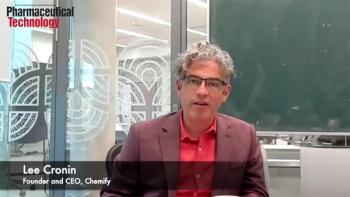
Chemify founder and CEO, Lee Cronin gives insight into the combination of digital chemistry, robotics, and AI in the drug discovery process.
Enzene's new division will provide end-to-end integrated discovery services.
Webcasts
Webinar Date/Time: Wed, Jun 19, 2024 11:00 AM EDT
FDA’s priority review status was granted based on positive results from a Phase III study evaluating Sarclisa in combination with VRd in treating transplant-ineligible newly diagnosed multiple myeloma.

Under an agreement, Johnson & Johnson will acquire Numab Therapeutics’ wholly owned subsidiary to gain global rights to NM26, a bispecific antibody targeting atopic dermatitis.

The partnership will create therapeutic assets and new discovery platforms and potentially reshape drug discovery.
Webcasts
Webinar Date/Time: Thu, Jun 20, 2024 10:00 AM EDT

An ASGCT Panel titled Novel Nucleic Acid and Cell-based Vaccines for Cancer highlights promising mRNA personalized cancer vaccine work.
Under this partnership, AGC Biologics and BioConnection will provide development and manufacturing capabilities for biopharmaceutical drug substance and drug product.
Biogen’s acquisition of HI-Bio includes lead investigational mAb, felzartamab, under development for treating a range of immune-mediated diseases.
Webcasts
Webinar Date/Time: Tue, Jun 18, 2024 10:00 AM EDT | 4:00 PM CEST
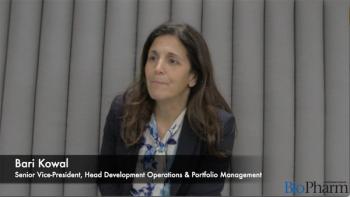
Regeneron’s Bari Kowal, senior vice-president, head Development Operations & Portfolio Management, gave insight into how the biopharma industry views the application of AI in R&D.

In an interview with BioPharm International® during the US Pharma and Biotech Summit, Ken Keller, president and CEO, Daiichi Sankyo, discusses what makes a good foundation for partnerships in the bio/pharmaceutical industry.
The company presented results from its programs for Duchenne muscular dystrophy and facioscapulohumeral muscular dystrophy.
Webcasts
Webinar Date/Time: Thu, Jun 13, 2024 11:00 AM EDT
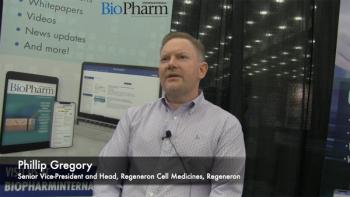
Regeneron’s work in CAR-T cell therapy development includes engineering receptor architecture to improve CAR-T cell sensitivity and improve immune response.
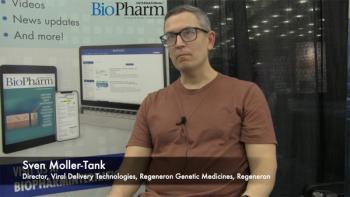
Sven Moller-Tank, PhD, director of Viral Delivery Technologies, Regeneron Genetic Medicines, Regeneron spoke about the use of bispecific antibodies to retarget AAV specificity.