






BioBusiness
Latest News

Advertisement
Latest Videos




Advertisement
More News

IASO Bio adds a fratricide-resistant CAR-T platform to its pipeline, aiming to speed novel T-cell malignancy therapies to patients.

Spevatamig's fast track status targets a cancer where 5-year survival is under 20%, pairing a novel mechanism with pembrolizumab.

Infinimmune has closed a $75 million Series A financing co-led by Regeneron Ventures and Playground Global to advance its lead atopic dermatitis programs, IFX-101 (targeting IL-22) and IFX-201 (targeting IL-13), both derived from its Anthrobody platform for discovering fully human antibodies.
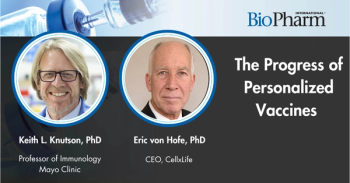
Why Cancer Vaccines' Greatest Advantage May Be Durability of Response, Not Immediate Tumor Shrinkage
Cellex Life CEO Dr Eric von Hofe and Professor of Immunology at Mayo Clinic, Dr Keith L. Knutson, explain why individualized tumor profiling, not off-the-shelf targeting, is key to effective personalized cancer vaccines.

Fresh $175 million in funding follows Silence's 88% response rate in its divesiran polycythemia vera trials, positioning the company for a planned 2027 phase 3 push.

China's NMPA has approved ivonescimab plus chemotherapy for first-line advanced squamous non-small cell lung cancer, based on Phase III HARMONi-6 data showing the PD-1/VEGF bispecific antibody combination reduced the risk of death by 34% compared with a PD-1 inhibitor plus chemotherapy.
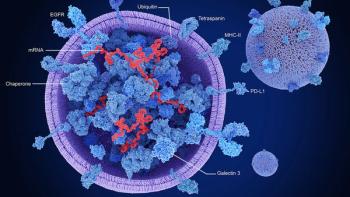
Under the 5-year manufacturing deal, NurExone will access Made Scientific's Princeton, NJ, GMP facility to speed regenerative exosome therapies toward clinical trials.
Boulevard Bio has emerged from stealth with $65 million in financing from Deerfield Management and early Phase 1 data for BLVD101, a bispecific BAFF/APRIL antibody for IgA nephropathy supporting once-quarterly dosing, alongside two additional multi-specific antibody candidates for B cell-driven autoimmune disease.

AbCellera aims to tap public markets to push ABCL635 forward after the therapy cut menopause hot flash severity 58% versus 12% for placebo in trials.

Zamubafusp alfa's FDA fast track status highlights the therapy's ability to remove toxic amyloid already damaging the heart and kidneys in AL amyloidosis patients.

SynaptixBio says rare disease biotech investment is increasing in the US following renewal of the FDA's Priority Review Voucher program, while UK-based rare disease companies continue to lack an equivalent incentive and remain dependent on public markets, private investment, or acquisition to secure capital.
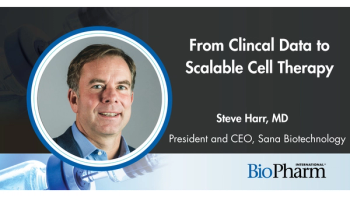
Dr Steve Harr, Sana Biotechnology's CEO, identifies scalability, commercialization, and reimbursement as the defining hurdles for curative islet cell therapy in type 1 diabetes.

Silence's siRNA drug freed 88% of trial patients from ongoing phlebotomies, a chronic burden for people with polycythemia vera.
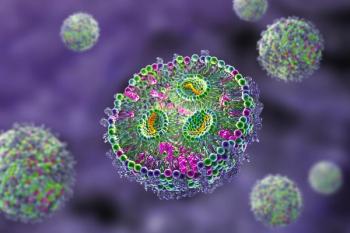
Stand Up To Cancer has awarded its Nina Nicolai Pancreatic Cancer Innovation in Collaboration Award to a research team developing a combination approach that pairs an engineered mRNA vaccine with KRAS G12D-directed TCR-T cell therapy, aiming to sustain antigen production and improve T-cell responses against pancreatic cancer.

Early Parkinson patients could gain a first disease-modifying option as ACI-7104 clears a major FDA hurdle after strong interim results.

Ascletis Begins Phase I Studies of Amylin Agonist ASC36 and Its GLP-1/GIP Co-Formulation for Obesity
Ascletis has initiated two Phase I studies for its obesity pipeline: ASC36, a once-monthly amylin receptor peptide agonist, and ASC36_35FDC, a once-monthly fixed-dose co-formulation of ASC36 with its GLP-1R/GIPR dual agonist ASC35, following recent FDA IND clearances for both candidates.

Bristol Myers Squibb has selected Houston's Generation Park for a new $2.3 billion multi-modal manufacturing campus capable of producing small molecules, biologics, and antibody-drug conjugates, adding to a growing wave of large-scale US pharmaceutical manufacturing investment.

Akeso is pairing a next-gen bispecific ADC with its PD-1/VEGF antibody, ivonescimab, in a first-line push against hard-to-treat breast cancer.

AWS's AI and cloud tools aim to compress Novo Nordisk's path from drug target to first human dose for chronic disease patients.
Moderna's mFLUSIVA approval offers a regulatory case study for mRNA vaccine sponsors, covering comparator selection lessons from the FDA's reversed refusal-to-file, competitive implications for Pfizer and Sanofi's mRNA flu programs, and what the accelerated approval pathway means for long-term regulatory risk.

BI-1808 plus pembrolizumab posted a 24% response rate in platinum-resistant ovarian cancer, tripling pembrolizumab's historical rate alone.

Neurocrine Biosciences has dosed the first participants in a Phase 1 study of NBIP-'1968, an investigational GLP-1/GIP/glucagon receptor triple agonist for obesity, marking the company's entry into the increasingly competitive multi-agonist incretin therapeutics space.

Melanoma patients who failed anti-PD-1 therapy gain a new option after Replimune's oncolytic virus clears FDA on its third try.
Biotech companies entering new markets must consider talent availability, reimbursement strategy, and regional expertise early in development, according to Kirsten Detrick, chief representative, USA, at the Basel Area Life Sciences Supercluster.
Dr Steve Harr of Sana Biotechnology describes how converging islet transplant science makes a single-treatment cure for type 1 diabetes without immunosuppression an inevitable outcome.
Advertisement
Advertisement
Trending on BioPharm International
1
Nuravax Alzheimer Vaccine AV-1959R Earns FDA Fast Track Designation
2
Nano24's Inhaled EXO-CD24 Cuts ARDS Mortality in Phase 2b Trial
3
Geneos Launches Phase 2 IMPACT31 Trial of Personalized DNA Cancer Vaccine to Prevent Liver Cancer Recurrence
4
Akeso's Ivonescimab Enters Phase 2/3 Biliary Tract Cancer Trial in US
5