




BioBusiness
Latest News
Advertisement
Latest Videos
Advertisement
More News
LumaLex Law's Dustin Robinson explains why retatrutide compounding remains illegal regardless of the Seventh Circuit's pending classification ruling.

Artiva Biotherapeutics will present data on AlloNK, an allogeneic, non-genetically modified NK cell therapy given with rituximab, in refractory rheumatoid arthritis, Sjögren disease and systemic sclerosis at ACR Convergence 2026, ahead of a planned phase 3 trial in rheumatoid arthritis.

Novartis has secured an exclusive worldwide license to ABO2203, Abogen's investigational mRNA-encoded CD19xCD3 T-cell engager designed to produce the bispecific inside the body to reset B cells in autoimmune disease. The agreement also includes options on other programs built on Abogen's RNA platform.

The 15-month project could let living cell therapies ship and store at room temperature, cutting cold-chain costs that limit patient access.
A planned phase 3 trial will test the TROP2 ADC and PD-1/VEGF bispecific together in 1st-line triple-negative breast cancer.

Next-gen bioprocessing, cloud-driven AI, and personalized immunizations are accelerating global therapy delivery while reinforcing cleanroom and trial compliance.

Following an FDA meeting, Wave Life Sciences plans a single 2-year registrational trial of WVE-006, its GalNAc-conjugated RNA editing oligonucleotide for alpha-1 antitrypsin deficiency, with a 1-year interim analysis that could support accelerated approval based on biomarkers.

Keith Knutson, PhD, of Mayo Clinic explains why vaccine manufacturing speed and cost will determine real-world scalability.
Patients suffered pyrogenic reactions before Fresenius Kabi recalled 3 contaminated batches at its 430,000-sq-ft Melrose Park, Ill., biologics plant.

Sanofi is paying Regeneron up to $8 billion to co-develop REGN20423 and 3 other long-acting antibodies beyond dupilumab (Dupixent).

Denosumab-adet now covers all 3 Xgeva indications, widening lower-cost treatment access for cancer patients with bone complications.

More than half of patients achieved clear or almost clear hands and feet with lebrikizumab by week 16, and 77% reported satisfaction with clearance.
Novo gains global rights, excluding Greater China, to HRS-1596, a phase 1-ready GLP-1/GIP dual receptor agonist that Hengrui says has potential for once-weekly oral dosing in obesity and type 2 diabetes.

NouvSight001 isn't limited to the RPE65-mutation subset current gene therapy treats, potentially reaching more of the 1.5 million with RP worldwide.

Updated 36-month data in 15 high-dose patients showed 80% slowing on cUHDRS, while the 48-month cUHDRS result did not reach statistical significance. uniQure attributes the gap to attrition in the external control, and the FDA is reviewing a BLA based on the 36-month data.

Ivonescimab, in phase 3 trials across 8 tumor types, will be paired with sonesitatug vedotin in new gastrointestinal cancer trials.

Daiichi Sankyo and Merck pulled ifinatamab deruxtecan's FDA filing in small cell lung cancer after a 187-patient trial fell short.

Insulin efsitora alfa-gobe (Onswik) cuts injections from 365 to 52 a year for adults with type 2 diabetes, per its new FDA approval.
Genentech is paying Earendil Labs $55 million upfront in a deal worth over $1.5 billion to develop bispecific antibodies for hard-to-treat cancers.

Guselkumab eased spinal pain, stiffness, and MRI-confirmed spinal inflammation in a 411-patient trial of psoriatic arthritis with axial involvement.

IMVT-1402 (imeroprubart) failed to reach statistical significance on CLASI-A at Week 12 in a 57-patient proof-of-concept study, and Immunovant will stop development in cutaneous lupus erythematosus. The anti-FcRn antibody continues in five other autoimmune indications.
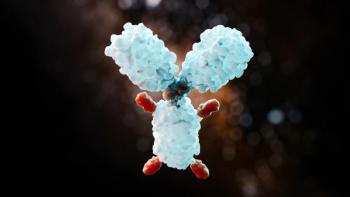
SOTIO Biotech's LRRC15-targeted antibody-drug conjugate SOT106 now holds both Orphan Drug and Fast Track Designations in soft tissue sarcoma and osteosarcoma. The company expects to start first-in-human testing later in 2026.
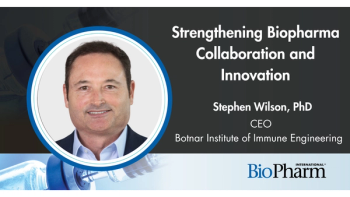
Dr Stephen Wilson, CEO of the Botnar Institute of Immune Engineering, describes Basel's collaborative ecosystem and a 3-year roadmap linking research to global clinical partners.

Johnson & Johnson's modeling projects 18.5-year life expectancy with Tecvayli-Darzalex versus 4.9 years for standard care.

InnoCare will discover compounds against up to 5 targets for Lilly, backing a deal worth up to $3.35 billion in milestones.
Advertisement
Advertisement
Trending on BioPharm International
1
Nuravax Alzheimer Vaccine AV-1959R Earns FDA Fast Track Designation
2
Nano24's Inhaled EXO-CD24 Cuts ARDS Mortality in Phase 2b Trial
3
Akeso's Ivonescimab Enters Phase 2/3 Biliary Tract Cancer Trial in US
4
Geneos Launches Phase 2 IMPACT31 Trial of Personalized DNA Cancer Vaccine to Prevent Liver Cancer Recurrence
5