
“The FDA’s acceptance of our BLA for review marks an important milestone for the Huntington’s disease community, which has waited generations for a treatment that changes the course of this devastating disease.”
— Matt Kapusta, chief executive officer, uniQure
News|Articles|November 2, 2026
FDA Accepts uniQure’s Huntington’s Disease Gene Therapy BLA for Priority Review
Author(s)Emily Schoenthaler
FDA set a May 1, 2027 target date for AMT-130, a one-time gene therapy that silences the huntingtin gene, and plans an advisory committee meeting.
Advertisement
FDA has accepted uniQure’s Biologics License Application (BLA) for ifezuntirgene inilparvovec (AMT-130), a one-time gene therapy for Huntington’s disease, and granted it priority review under the accelerated approval pathway.¹ The target action date is May 1, 2027, and FDA said it is tentatively planning an advisory committee meeting to discuss the application.¹
“Backed by compelling data from our phase 1/2 studies, we believe ifezuntirgene inilparvovec has the potential to become the first disease modifying treatment for Huntington’s disease,” said Matt Kapusta, chief executive officer of uniQure.¹
How does AMT-130 work?
Huntington’s disease is a rare, inherited neurodegenerative disorder caused by an expanded CAG repeat in the huntingtin gene, leading to movement problems, behavioral changes, and cognitive decline.¹ About 75,000 people in the US, EU, and UK have the disease, and no approved therapy slows its progression.¹
AMT-130 uses uniQure’s miQURE gene-silencing platform to deliver a microRNA designed to silence the huntingtin gene and its toxic exon 1 protein fragment.¹ The therapy is administered once through MRI-guided, convection-enhanced stereotactic neurosurgery directly into the striatum, a brain region affected early in the disease.¹ It holds FDA Breakthrough Therapy, Regenerative Medicine Advanced Therapy (RMAT), and Fast Track designations.¹
What data support the BLA?
The application is based on 36-month data from phase 1/2 studies compared with a propensity score-matched external control drawn from the Enroll-HD natural history database.¹ In September 2025, uniQure reported that high-dose AMT-130 slowed disease progression by 75% on the composite Unified Huntington’s Disease Rating Scale (cUHDRS) at three years compared with the external control, meeting the study’s primary endpoint.² An updated three-year analysis of 15 high-dose patients later showed 80% slowing on cUHDRS and 67% slowing on Total Functional Capacity.³
Four-year data reported in September 2026 were less pronounced. In 12 high-dose patients, AMT-130 slowed cUHDRS decline by 44% vs an updated external control, a difference that was not statistically significant, and slowed decline on Total Functional Capacity by 61%.³ uniQure said that 53% of the updated control data were missing and that the effect was likely understated.³ The company’s shares fell about 40% after the update.³
How did the application reach FDA?
The filing follows a series of reversals in FDA’s position. After the three-year data, FDA questioned the study design, and in November 2025 said the data were not adequate as primary evidence for a BLA, before changing course again in the spring of 2026.⁴ uniQure submitted the BLA in September 2026.⁴ Former FDA Commissioner Marty Makary and Center for Biologics Evaluation and Research director Vinay Prasad, who had made negative comments about the therapy, have since left the agency.⁴ Analysts at Stifel called the acceptance an “incrementally positive sign” for accelerated approval.⁴
Expedited designations increase interaction with FDA but do not lower the evidence bar. In a BioPharm International®
What happens next?
As a condition of accelerated approval, uniQure plans a randomized confirmatory trial of about 200 patients, assigned 2:1 to AMT-130 or standard of care, with Total Functional Capacity at 36 months as the primary endpoint.¹ Screening is expected to begin in the US by the end of 2026.¹
“The confirmatory trial remains a key priority, with screening anticipated to begin by year end and the study is expected to be well underway by the time of potential approval,” Kapusta said.¹
References
uniQure announces FDA acceptance and priority review of the Biologics License Application for ifezuntirgene inilparvovec for the treatment of Huntington’s disease . News release. uniQure. November 2, 2026. Accessed November 2, 2026.UniQure “exceeds expectations” in much-anticipated 3-year Huntington’s readout . BioSpace. September 24, 2025. Accessed November 2, 2026.- Bell J.
UniQure Huntington’s four-year data . BioPharma Dive. September 29, 2026. Accessed November 2, 2026. UniQure snags May Day decision date for Huntington’s gene therapy after arduous year . BioSpace. November 2, 2026. Accessed November 2, 2026.
Advertisement
Related to this article

The IL-23p19 inhibitor tildrakizumab becomes the third drug in its class approved for psoriatic arthritis, and the only one given exclusively by a healthcare provider.

Inovio reports that Voceryq spared 27% of adults with recurrent respiratory papillomatosis from surgery for 12 months in a 26-patient efficacy group.

Industry experts discuss how reshoring, fill/finish capacity, and cold chain technology are shaping a more resilient biopharma supply chain.

The first-in-class molecule, licensed to Dianthus as DNTH212 outside Greater China, is designed to block type 1 interferon production and BAFF/APRIL-driven B-cell activity with a single drug.

Updated phase 2 IOV-LUN-202 data show Iovance’s TIL cell therapy lifileucel produced a 24.6% response rate in previously treated non-squamous metastatic NSCLC, rising to 52.0% in KRAS and HER2 wild-type patients, as the company launches a biomarker-enriched registrational cohort.

The proposed FDA guidance would let sponsors add patient-specific gene editing variants to approved BLAs via in vitro data, with comments due November 27, 2026.
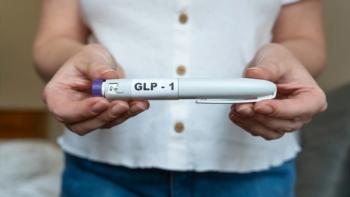
In the 80-week phase 3 TRANSCEND-T2D-2 trial in adults with type 2 diabetes, Eli Lilly’s GIP/GLP-1/glucagon triple agonist retatrutide lowered A1C by 2.2% and body weight by up to 20.9%, compared with 1.8% and 9.4% with Ozempic 2 mg.

The EGFR×LGR5 bispecific antibody met both primary endpoints, overall survival and objective response rate, at the first interim analysis of LiGeR-HN1 in first-line PD-L1-positive recurrent or metastatic head and neck cancer.
Advertisement
Advertisement
Trending on BioPharm International
1
Lonza Adds Bioconjugation Suites in Visp to Meet Rising ADC Demand
2
Drug Digest: Reshoring Manufacturing and Securing Cold-Chain Supply for Biopharma
3
Leads Biolabs Doses First Lupus Patient With LBL-047, a BDCA2/TACI Bifunctional Fusion Protein
4
BioMarin Licenses Subcutaneous Fabry ERT From GC Biopharma, Hanmi
5