

"Cancer immunotherapy has entered the IO 2.0 era. Opamtistomig's value lies in a manageable safety profile and the potential for long overall survival benefit across tumor types." Dr. Kang Xiaoqiang, founder, chairman, and chief executive officer, Leads Biolabs
News|Articles|November 20, 2026
Leads Biolabs Details Long-Term Survival Data and 2027 ADC Combination Plans for PD-L1/4-1BB Bispecific Opamtistomig
Author(s)Emily Schoenthaler
Listen
0:00 / 0:00
Key Takeaways
- Molecular design leverages PD-L1 anchoring with low-affinity 4-1BB engagement to localize T-cell co-stimulation in the TME and reduce transaminitis risk seen with urelumab-class agonists.
- Safety across 14 indications (>800 patients) showed no dose-limiting toxicities, no MTD through 25 mg/kg escalation, and an adverse-event profile aligned with PD-(L)1 monotherapy.
At the 2026 Jefferies Global Healthcare Conference, Leads Biolabs presented updated survival and safety data for its PD-L1/4-1BB bispecific antibody opamtistomig across seven tumor types and disclosed plans to begin antibody-drug conjugate combination programs in 2027.
Advertisement
Leads Biolabs presented updated clinical data for opamtistomig (LBL-024), its programmed death-ligand 1 (PD-L1)/4-1BB bispecific antibody, at the 2026 Jefferies Global Healthcare Conference in London, the Nanjing, China-based company announced on November 20, 2026.¹ The company also disclosed for the first time plans to launch several antibody-drug conjugate (ADC) combination programs in 2027.¹
Can a 4-1BB bispecific activate T cells without the liver toxicity seen with earlier 4-1BB agonists?
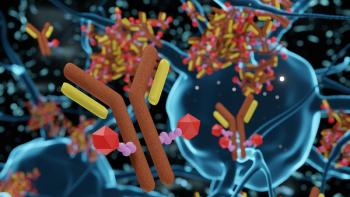
Opamtistomig is built with high affinity for PD-L1 and very low affinity for the co-stimulatory receptor 4-1BB.¹ According to Leads Biolabs, the design restricts both checkpoint blockade and 4-1BB co-stimulation to the tumor microenvironment, with the aim of avoiding hepatotoxicity caused by 4-1BB activation in normal tissues.¹ The company said the molecule promotes T-cell activation and proliferation, reduces regulatory T cells, and generates long-lived memory T cells, which it described as the basis for durable survival benefit.¹ Hepatotoxicity has long limited the clinical use of 4-1BB agonists, according to the company.¹ In an integrated safety analysis of urelumab, an agonist anti-CD137 (4-1BB) monoclonal antibody given to 346 patients with advanced cancers, dose was the single most important factor contributing to transaminitis, which was more frequent and severe at doses of 1 mg/kg or higher.² Leads Biolabs reported that more than 800 patients have received opamtistomig across 14 indications with no dose-limiting toxicities, that the maximum tolerated dose was not reached with escalation to 25 mg/kg, and that the overall safety profile was similar to that of PD-(L)1 monoclonal antibodies.¹
How long are patients with neuroendocrine carcinoma and other solid tumors living on opamtistomig?
Extrapulmonary neuroendocrine carcinoma (EP-NEC) has the most mature survival data. In the pivotal registrational study of opamtistomig monotherapy in third-line or later EP-NEC (n=96), median follow-up was 16.3 months and median overall survival (OS) was 8.7 months, which the company compared with approximately 3-4 months in historical data.¹ In first-line EP-NEC with combination chemotherapy (n=69), median OS was not yet mature after 21.2 months of median follow-up, and the 18-month OS rate was 55.7%.¹ The company also reported median OS with later-line monotherapy of 7.5 months in third-line or later biliary tract cancer (n=31), 13.3 months in hepatocellular carcinoma previously treated with immunotherapy (n=14), and 26.5 months in second-line or later ovarian cancer (n=11).¹ The company compared these results with historical data rather than randomized controls.¹ In first-line non-small cell lung cancer (NSCLC) data presented at the 2026 World Conference on Lung Cancer, the objective response rate was 87.1% in the squamous cohort (n=31) and 54.8% in the non-squamous cohort (n=31).¹ Among the first 18 patients with NSCLC, follow-up reached 12.3 months, nine patients remained on treatment, and two additional progressions were recorded since the prior update.¹
When could patients with extrapulmonary neuroendocrine carcinoma have access to opamtistomig?
China's National Medical Products Administration (NMPA) granted priority review to the opamtistomig New Drug Application in July 2026 and accepted the application for previously treated EP-NEC in August 2026.¹˒³ The company said the drug could become the first approved 4-1BB-targeting antibody and the first approved treatment for EP-NEC.¹ The FDA has granted opamtistomig Orphan Drug Designation and Fast Track Designation in EP-NEC, and in October 2026 granted a second Fast Track Designation for first-line advanced or metastatic biliary tract cancer.¹˒⁴ The rationale for pairing checkpoint inhibition with a second immune mechanism echoes arguments made for other bispecific formats. Discussing a different class, T-cell receptor bispecifics, Mohammed Dar, MD, chief medical officer and head of clinical development at Immunocore, told BioPharm International®: "One of the most interesting insights from the brenetafusp data is that the mechanism of action for these TCR bispecifics is quite distinct from checkpoint inhibitors. They are likely to work in settings where checkpoints have historically not worked, including in patients who are resistant to checkpoint therapy."
Could pairing opamtistomig with ADCs deepen responses?
Leads Biolabs plans to test opamtistomig with ADCs, including its in-house EGFR/PD-L1 ADC, a CDH17/CD3/ADC, and a DLL3/CD3/ADC, as well as ADCs from other companies.¹ The company also plans to explore combinations with anti-VEGF agents and T-cell engagers.¹ Opamtistomig is currently being evaluated in 14 indications, including one pivotal single-arm registrational study and one confirmatory phase 3 study.¹
References
1. Nanjing Leads Biolabs Co., Ltd.
2. Segal NH, Logan TF, Hodi FS, et al.
3. Nanjing Leads Biolabs Co., Ltd.
4. Nanjing Leads Biolabs Co., Ltd. L
Advertisement
Related to this article

Celldex's anti-KIT monoclonal antibody barzolvolimab depleted mast cells but did not meet its primary itch endpoint in a phase 2 atopic dermatitis study. The company is discontinuing development of its atopic dermatitis treatment while advancing a planned 2027 BLA in chronic spontaneous urticaria.

Mazen Noureddin, MD, MHSc, of Houston Methodist Hospital discusses phase 2 data for GSK's once-monthly FGF21 analog efimosfermin presented at The Liver Meeting 2026 and what the findings mean for ongoing phase 3 trials in MASH and compensated cirrhosis.

Updated phase 1 data for micvotabart pelidotin, an antibody-drug conjugate that targets a protein in the tumor extracellular matrix, support Pyxis Oncology’s plan to start a phase 3 trial in recurrent/metastatic head and neck squamous cell carcinoma in mid-2027.

DISCO Pharmaceuticals will receive $40 million upfront, with up to $2.5 billion in potential milestones, to discover bispecific therapeutics for AbbVie that recognize pairs of tumor surface proteins, an approach intended to limit toxicity in healthy tissue.

Visara has dosed the first patient in ASCEND, a roughly 244-patient, head-to-head phase 2b trial comparing two doses of its tetravalent VEGF-A/ANG-2 bispecific VIS-101 with aflibercept in treatment-naïve wet AMD. The study will test dosing intervals of up to seven months and select the dose for a global phase 3 program planned as early as 2027.

Mazen Noureddin, MD, MHSc, discusses phase 2 data for GSK’s once-monthly efimosfermin presented at The Liver Meeting 2026, including fibrosis marker results in patients with compensated cirrhosis.

A single dose of Zai Lab’s long-acting bispecific ZL-1503 produced at least 90% inhibition of an atopic dermatitis signaling biomarker through Week 12 in healthy volunteers. Its 40- to 50-day half-life supports a target of dosing every 12 weeks.
FDA has cleared Biolojic Design’s IND for BD200, a bispecific antibody-drug conjugate targeting Trop2 and Nectin-4 whose arms can each bind either target. A global Phase 1 study in solid tumors is expected to begin in the coming weeks.
Advertisement
Advertisement
Trending on BioPharm International
1
Biocon’s Pebrilzo Becomes First Breast Cancer Treatment Biosimilar Approved Under EMA’s Tailored Clinical Approach
2
The BioPharm Brief: A Matrix-Targeting ADC in Head and Neck Cancer, an RNAi Approval in Myasthenia Gravis, and AbbVie Bets on AND-Gated Bispecifics
3
Evotec, BMS Gain Second FDA IND Acceptance for Molecular Glue Degrader
4
AbbVie and DISCO Partner on AND-Gated Bispecifics Designed to Recognize Tumor-Selective Protein Pairs
5