

“PMR can make remarkably ordinary things hard: getting out of bed, getting dressed, lifting your arms, getting through the day.” Seth Ginsberg, co-founder and president, Global Healthy Living Foundation and CreakyJoints
News|Articles|November 17, 2026
FDA Approves Cosentyx as First Anti-IL-17 Biologic for Polymyalgia Rheumatica
Author(s)Emily Schoenthaler
Listen
0:00 / 0:00
Key Takeaways
- FDA approved secukinumab 150 mg for PMR after inadequate corticosteroid response or taper intolerance, establishing the first IL-17A–targeting biologic indication in PMR and Cosentyx’s 11th US label.
- Polymyalgia rheumatica in adults ≥50 years remains glucocorticoid-centric, yet relapse approaches 40% within a year and prolonged exposure increases osteoporosis, cardiometabolic risk, and diabetes burden.
FDA approved Novartis’ secukinumab (Cosentyx) 150 mg for adults with polymyalgia rheumatica who respond inadequately to corticosteroids or cannot tolerate a taper. In the Phase 3 REPLENISH trial, secukinumab doubled sustained remission rates.
Advertisement
FDA has approved Novartis’ secukinumab (Cosentyx) 150 mg for adults with polymyalgia rheumatica (PMR) who have had an inadequate response to corticosteroids or cannot tolerate a corticosteroid taper.¹ The approval makes Cosentyx the first anti-interleukin-17 (IL-17) biologic approved for PMR and marks its 11th US indication.¹
“For too long, treatment options beyond glucocorticoids have been limited,” said John Stone, MD, MPH, professor of medicine at Harvard Medical School, Massachusetts General Hospital, and global principal investigator for the REPLENISH trial.¹
What is polymyalgia rheumatica?
PMR is a common inflammatory disease in adults aged 50 years and older, characterized by acute pain and stiffness in the shoulders, neck, and hips.¹ About 966,000 people in the US live with the disease.¹ Long-term steroid use is the current standard of care, but relapses affect up to 40% of patients in the first year, and prolonged steroid exposure increases the risk of osteoporosis, cardiovascular disease, and diabetes.¹
Cosentyx is not the first biologic approved for PMR. In February 2023, FDA approved Sanofi and Regeneron’s sarilumab (Kevzara), an interleukin-6 receptor antibody, as the first biologic for patients with PMR who have had an inadequate response to corticosteroids or cannot tolerate a corticosteroid taper.² In that trial, 28% of patients receiving Kevzara achieved sustained remission at 52 weeks compared with 10% receiving placebo.² Cosentyx now adds a second mechanism, blocking IL-17A, an inflammatory cytokine that the antibody already targets in psoriasis, psoriatic arthritis, axial spondyloarthritis, and hidradenitis suppurativa.¹
What did the REPLENISH trial show?
The global, randomized, double-blind, placebo-controlled Phase 3 REPLENISH trial (NCT05767034) enrolled 381 patients with recently relapsed PMR across 27 countries.¹˒³ Patients were randomly assigned 1:1:1 to secukinumab 300 mg, secukinumab 150 mg, or placebo for 52 weeks, each combined with a 24-week prednisone taper.³
Both doses roughly doubled the rate of sustained remission at Week 52, defined as the absence of PMR signs and symptoms sustained from Week 12 to Week 52.³ Sustained remission was observed in 41.2% of patients in the 300-mg group, 40.6% in the 150-mg group, and 20.4% in the placebo group.³ The approved 150-mg dose was associated with sustained remission in 40.5% of patients vs 20.5% with placebo, according to Novartis.¹ Complete sustained remission, which also required normal inflammatory markers, occurred in 28.2% of the 300-mg group, 24.5% of the 150-mg group, and 4.7% of the placebo group.³ Patients receiving secukinumab also had lower cumulative glucocorticoid doses than those receiving placebo.³
“In the Phase 3 REPLENISH trial, secukinumab doubled the likelihood of sustained remission while helping patients taper off steroids, which should be the goal of PMR treatment,” Stone said.¹
What about safety?
Serious adverse events occurred in 15.9% of patients receiving Cosentyx 150 mg and 14.2% of those receiving placebo.¹ Patients on Cosentyx 150 mg had higher rates of hypersensitivity reactions, including eczema, dermatitis, rash, and urticaria (14% vs 9%), and urinary tract infections (13% vs 7%).¹ One patient treated with Cosentyx died of cryptococcal meningitis.¹ Novartis said the safety profile was consistent with the established Cosentyx profile.¹
Expanding approved biologics into new indications has become a long-range strategy for sponsors. In an
What happens next?
The PMR indication is already approved in the EU, and additional regulatory reviews are ongoing, including in Japan.¹ A phase 3 open-label extension study is evaluating the long-term safety and tolerability of secukinumab in patients with PMR for up to two years.⁴
“With this approval in PMR, our 11th US indication for Cosentyx, we are expanding those benefits to a community that has had limited treatment options for far too long,” said Victor Bultó, president, US, Novartis.¹
References
Novartis Cosentyx becomes first and only FDA-approved anti-IL-17 biologic for people with polymyalgia rheumatica (PMR) . News release. Novartis; November 17, 2026. Accessed November 17, 2026.Kevzara (sarilumab) approved by FDA as first and only biologic indicated for patients with polymyalgia rheumatica . News release. Regeneron Pharmaceuticals; February 28, 2023. Accessed November 17, 2026.- Stone JH, Buttgereit F, Saraux A, et al; REPLENISH Investigators.
Phase 3 trial of secukinumab in polymyalgia rheumatica . N Engl J Med. 2026;395(7):637-647. doi:10.1056/NEJMoa2602567 Open-label, long-term safety study of secukinumab in polymyalgia rheumatica (PMR) . ClinicalTrials.gov identifier: NCT06331312. Accessed November 17, 2026.
Advertisement
Related to this article

Obinutuzumab produced complete proteinuria remission in 36.1% of primary membranous nephropathy patients at 2 years vs 5.7% with tacrolimus.
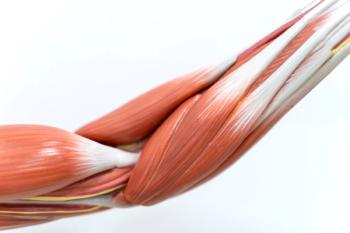
Once-weekly self-injected gefurulimab improved daily-living scores in AChR-positive generalized myasthenia gravis in the 260-patient PREVAIL trial.

Gene-corrected nula-cel freed all 3 RESTORE patients from transfusions, with sickle hemoglobin below 20% in the 2 followed for over 6 months.

FDA declined to approve Summit Therapeutics and Akeso’s ivonescimab plus chemotherapy in previously treated EGFR-mutated NSCLC. The agency said the Phase 3 HARMONi trial’s progression-free survival benefit was not enough without a significant overall survival gain.

J&J agreed to acquire Ollin Biosciences for $2.2 billion upfront, and Lilly agreed to buy Calytrix Bio for up to $1.5 billion. Novartis licensed OBI Pharma’s ADC platform, and Seawolf debuted with $100 million and a Sanofi pact.
Merck's Dr Dave Maraldo outlines 3 principles for placing manufacturing capacity and how end-to-end ADC supply chains could shift platform thinking.

Donidalorsen sustained a 95% reduction in hereditary angioedema attacks over 2 years, and patients switching from other prophylaxis saw a 71% drop.

A single 240 mg dose of WVE-007 cut visceral fat while preserving lean mass for 1 year, as Activin E fell by up to 88% across INLIGHT dose groups.
Advertisement
Advertisement
Trending on BioPharm International
1
FDA Approves AstraZeneca's Gefurulimab (Klygefa) for Generalized MG
2
FDA Rejects Summit’s PD-1×VEGF Bispecific Ivonescimab in EGFR-Mutated NSCLC, Citing Lack of Survival Benefit
3
Deals Roundup: J&J Buys Ollin, Lilly Adds Calytrix, and Novartis and Sanofi Strike Platform Pacts
4
The BioPharm Brief: FDA Rejects Ivonescimab, Gazyva Becomes the First Approved pMN Therapy, and a Nanobody Approval in Myasthenia Gravis
5