

“Our AND-gated approach is designed to selectively target tumor cells while sparing healthy tissue, thus offering a potentially differentiated path in precision oncology.” Mark Manfredi, PhD, chief executive officer, DISCO Pharmaceuticals
News|Articles|November 19, 2026
AbbVie and DISCO Partner on AND-Gated Bispecifics Designed to Recognize Tumor-Selective Protein Pairs
Author(s)Emily Schoenthaler
Listen
0:00 / 0:00
Key Takeaways
- DISCOtech systematically maps cancer-specific surfaceome patterns to nominate target pairs intended to enable dual-antigen “AND-gated” tumor recognition across heterogeneous solid tumors.
- AND-gated bispecific ADCs and T-cell engagers are designed to require simultaneous binding to two antigens, aiming to widen therapeutic windows by reducing normal-tissue engagement.
DISCO Pharmaceuticals will receive $40 million upfront, with up to $2.5 billion in potential milestones, to discover bispecific therapeutics for AbbVie that recognize pairs of tumor surface proteins, an approach intended to limit toxicity in healthy tissue.
Advertisement
DISCO Pharmaceuticals has entered a strategic collaboration and option-to-license agreement with AbbVie to discover and develop AND-gated bispecific therapeutics for solid tumors with high unmet medical need, the Cologne, Germany-based biotech announced on November 19, 2026.¹ The collaboration pairs DISCO’s DISCOtech surfaceome mapping platform and AND-gated discovery approach with AbbVie’s oncology research and development expertise.¹
What is an AND-gated bispecific?
Conventional antibody-drug conjugates (ADCs) recognize a single antigen, and limited discrimination between tumor and normal tissue is one of the constraints that bispecific designs aim to address.² DISCO’s approach starts from pairs of cell surface proteins. According to the company, the DISCOtech platform systematically maps cancer-specific cell surface expression patterns and identifies target pairs that enable highly selective tumor recognition.¹ DISCO then designs AND-gated ADCs and T-cell engagers that engage both targets at the same time.¹
The company says that simultaneous engagement could broaden the pool of addressable targets and reduce on-target, off-tumor toxicity, which it describes as a key limitation of solid tumor therapies.¹ “Our DISCOtech® platform’s unique ability to identify tumor-selective target pairs provides the foundation for therapies with the potential for a wider therapeutic window,” said Mark Manfredi, PhD, chief executive officer of DISCO Pharmaceuticals.¹
Why is dual targeting harder than it sounds?
The rationale for dual targeting rests on avidity: a bispecific antibody that binds two antigens at once is expected to favor cells that carry both antigens over normal tissue that carries only one.³ In practice, molecular design determines whether that selectivity materializes. In a 2017 study in mice bearing paired tumor xenografts, investigators found that dual targeting alone was not sufficient to produce selective tumor targeting, and that the affinity of the individual binding arms, overall avidity, and format valence all played pivotal roles.³ Affinity-reduced monovalent bispecific variants achieved greater selectivity without substantially reducing efficacy against the targeted tumor.³
A 2026 review of bispecific ADCs reached a related conclusion, noting that the effects of adding a second specificity depend on target-pair biology, molecular format, valency, epitope geometry, arm affinity, linker-payload properties, drug-to-antibody ratio, and normal-tissue exposure, among other factors.²
Other developers are also pursuing dual-antigen selectivity, including
What are the deal terms?
DISCO will receive $40 million in upfront payments and is eligible for up to $2.5 billion in option, development, and other milestone payments, plus tiered royalties on worldwide net sales.¹ Upon successful completion of specified research activities by DISCO, AbbVie will have the option to exclusively license selected programs for further development.¹ The announcement did not name the targets, tumor types, or number of programs covered.¹
The agreement follows an earlier platform deal. In January 2026, DISCO granted Amgen an exclusive license to develop therapies against a cancer surface target identified by its platform, in a deal worth up to $618 million in total potential value plus royalties.⁴ At that time, DISCO described the platform as combining cell surface proteomics with protein community mapping to identify previously inaccessible target pairs.⁴
“We look forward to working together with AbbVie towards the shared goal of creating transformative therapeutics for patients,” said Ajla Hrle, PhD, chief business officer of DISCO Pharmaceuticals.¹
What happens next?
DISCO’s lead internal programs are progressing toward the clinic in small cell lung cancer and colorectal cancer.¹ The announcement did not include clinical data, and the AbbVie collaboration covers discovery-stage work. Whether target pairs identified by DISCOtech translate into a wider therapeutic window in patients will depend in part on how the resulting molecules are engineered, including arm affinity and format.²˒³
References
- DISCO Pharmaceuticals.
DISCO Pharmaceuticals announces strategic collaboration with AbbVie to advance next-generation AND-gated bispecific therapeutics for solid tumors . News release. GlobeNewswire. Published November 19, 2026. Accessed November 19, 2026. - Kim J, Kang S.
From dual targeting to clinical validation: a translational framework for bispecific antibody-drug conjugates . Int J Mol Sci. 2026;27(19):8748. Published online September 30, 2026. doi:10.3390/ijms27198748 - Mazor Y, Sachsenmeier KF, Yang C, et al.
Enhanced tumor-targeting selectivity by modulating bispecific antibody binding affinity and format valence . Sci Rep. 2017;7:40098. doi:10.1038/srep40098 - DISCO Pharmaceuticals.
DISCO Pharmaceuticals enters license agreement to advance novel cancer surfaceome targeted therapies . News release. GlobeNewswire. Published January 7, 2026. Accessed November 19, 2026.
Advertisement
Related to this article

A second cereblon E3 ligase modulator from the Evotec and Bristol Myers Squibb degrader partnership is set to begin phase 1 testing in 2027.

mAbxience will develop and manufacture the antibody for ONC001, a CD64-targeting ADC aimed at monocytic AML and chronic myelomonocytic leukemia.

Verismo will pair Stanford's PACK-IT lentiviral technology with its KIR-CAR platform to pursue off-the-shelf, in vivo CAR T therapies for cancer.
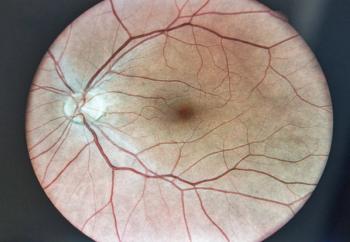
Visara has dosed the first patient in ASCEND, a roughly 244-patient, head-to-head phase 2b trial comparing two doses of its tetravalent VEGF-A/ANG-2 bispecific VIS-101 with aflibercept in treatment-naïve wet AMD. The study will test dosing intervals of up to seven months and select the dose for a global phase 3 program planned as early as 2027.

Blackstone Life Sciences will fund up to $1.5 billion of development costs through 2028 for Pfizer’s monthly GLP-1 receptor agonist berobenatide, in exchange for milestone payments tied to approval and sales. Pfizer keeps full control of the program.
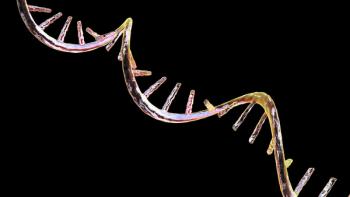
Alnylam-discovered cemdisiran, an siRNA silencing complement C5, is the first RNAi therapy approved for AChR-positive generalized myasthenia gravis.

Marrow's lead candidate MAR-101 aims to reactivate fetal hemoglobin in sickle cell disease and beta thalassemia through in vivo bone marrow targeting.
Merck's Dr Dave Maraldo explains that small-molecule platform agility and flexible conjugation capacity can help biologics manufacturing respond to research needs.
Advertisement
Advertisement
Trending on BioPharm International
1
Biocon’s Pebrilzo Becomes First Breast Cancer Treatment Biosimilar Approved Under EMA’s Tailored Clinical Approach
2
SELLAS Cancer Vaccine Improves Overall Survival in Phase 3 AML Trial
3
Visara Doses First Patient in Phase 2b Trial Pitting Bispecific VIS-101 Against Aflibercept in Wet AMD
4
The BioPharm Brief: A First for Streamlined Biosimilar Approval, a Head-to-Head Bispecific Trial in Wet AMD, and In Vivo KIR-CAR T
5