

"The results are durable, but of course we want to see that durability continue." – Andrea Cercek, MD, section head, colorectal cancer, Memorial Sloan Kettering Cancer Center
News|Videos|November 20, 2026
Immunotherapy Alone Spares dMMR Rectal Cancer Patients the Lasting Effects of Standard Treatment, Says MSK's Andrea Cercek
Author(s)Emily Schoenthaler, Andrea Cercek
In the second part of a two-part interview, Andrea Cercek, MD, of Memorial Sloan Kettering Cancer Center explains how patients are monitored after a complete response to dostarlimab, what longer follow-up needs to show, and how avoiding chemoradiation and surgery changes patients' lives.
Advertisement
FDA's accelerated approval of Jemperli (dostarlimab-gxly) in MSI-H/dMMR locally advanced rectal cancer rests on a 12-month endpoint. For patients and physicians, the next question is what happens after that.
In the pivotal AZUR-1 trial, the rate of clinical complete response sustained for 12 months (cCR12) was 47% by independent central review in 116 evaluable patients and 68% by investigator assessment in 144 evaluable patients. At a median follow-up of 26.3 months,
In the second part of a two-part video interview with BioPharm International®,
Patients are watched closely, Cercek said, with serial MRI and flexible sigmoidoscopy "just about every four months." They are also monitored for clinical signs and symptoms of recurrence.
She said the trial design already builds in a measure of durability. "The endpoint was a cCR12 or what was a clinical complete response that was already sustained for 12 months," she said. "So already the patients achieved a complete response and then had no tumor recurrence for 12 months."
"Even longer follow-up, we have not seen any recurrences in AZUR-1 in the patients that achieved a clinical complete response," Cercek said. Freedom from local recurrence, disease-free survival, and overall survival are still maturing and will be reported later, she noted.
"But we do already have a very good sense of durability of response and certainly in our study as well, 96% durability of response of clinical complete responses," she said.
"They really function completely normally, which is, I think the most rewarding thing of all." – Andrea Cercek, MD, section head, colorectal cancer, Memorial Sloan Kettering Cancer Center
What changes for patients who avoid chemoradiation and surgery?
Cercek pointed out that the approval came from a single-arm registrational study. Randomizing patients to radiation was felt to be unethical given how strongly tumors responded to immunotherapy alone, she said, and the endpoint itself is "incredibly patient-centric."
Standard tri-modality therapy can leave lasting effects. About 30% of patients need a permanent colostomy, Cercek said, and radiation and surgery can cause infertility as well as bowel, bladder, and sexual dysfunction. Chemotherapy adds a risk of neuropathy. With dostarlimab alone, "there's really no toxicity in terms of the pelvic floor, in terms of any bowel, bladder, or sexual dysfunction," she said.
For younger patients, that has made family planning possible. "So we've had babies in our investigator-initiated study now, five babies have been born to patients post completion of immunotherapy with dostarlimab," Cercek said. Patients have had spontaneous pregnancies and normal vaginal deliveries, and young women treated with immunotherapy alone do not enter menopause, she said.
The benefit extends to older patients too, including several treated in their late 80s and early 90s. After standard treatment, most patients have to manage their bowels and know where a bathroom is at any given time, she explained. "And this is not an issue now with the patients that received immunotherapy."
Check out the first part of this two-part interview
About the Speaker
Andrea Cercek, MD, section head, colorectal cancer, Memorial Sloan Kettering Cancer Center
Andrea Cercek is a gastrointestinal medical oncologist at Memorial Sloan Kettering Cancer Center (MSK), where she is section head of colorectal cancer and founder and co-director of the Center for Young Onset Colorectal and Gastrointestinal Cancers. Her research focuses on novel therapies for early-stage disease, including immunotherapy, and on defining the causes of and improving treatment for early-onset colorectal cancer. She earned her MD at New York Medical College and completed an internal medicine residency at NewYork-Presbyterian/Weill Cornell Medical Center and a hematology/oncology fellowship at MSK.
Advertisement
Related to this article

In the first part of a two-part interview, Andrea Cercek, MD, of Memorial Sloan Kettering Cancer Center explains which early patient responses led to the dostarlimab study behind Jemperli's rectal cancer approval, and why mismatch repair-deficient tumors are so visible to the immune system.
Mazen Noureddin, MD, MHSc, discusses phase 2 data for GSK’s once-monthly efimosfermin presented at The Liver Meeting 2026, including fibrosis marker results in patients with compensated cirrhosis.

At the 2026 Jefferies Global Healthcare Conference, Leads Biolabs presented updated survival and safety data for its PD-L1/4-1BB bispecific antibody opamtistomig across seven tumor types and disclosed plans to begin antibody-drug conjugate combination programs in 2027.

Celldex's anti-KIT monoclonal antibody barzolvolimab depleted mast cells but did not meet its primary itch endpoint in a phase 2 atopic dermatitis study. The company is discontinuing development of its atopic dermatitis treatment while advancing a planned 2027 BLA in chronic spontaneous urticaria.
Mazen Noureddin, MD, MHSc, of Houston Methodist Hospital discusses phase 2 data for GSK's once-monthly FGF21 analog efimosfermin presented at The Liver Meeting 2026 and what the findings mean for ongoing phase 3 trials in MASH and compensated cirrhosis.

Updated phase 1 data for micvotabart pelidotin, an antibody-drug conjugate that targets a protein in the tumor extracellular matrix, support Pyxis Oncology’s plan to start a phase 3 trial in recurrent/metastatic head and neck squamous cell carcinoma in mid-2027.

DISCO Pharmaceuticals will receive $40 million upfront, with up to $2.5 billion in potential milestones, to discover bispecific therapeutics for AbbVie that recognize pairs of tumor surface proteins, an approach intended to limit toxicity in healthy tissue.
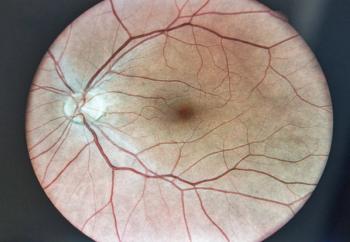
Visara has dosed the first patient in ASCEND, a roughly 244-patient, head-to-head phase 2b trial comparing two doses of its tetravalent VEGF-A/ANG-2 bispecific VIS-101 with aflibercept in treatment-naïve wet AMD. The study will test dosing intervals of up to seven months and select the dose for a global phase 3 program planned as early as 2027.
Advertisement
Advertisement
Trending on BioPharm International
1
The BioPharm Brief: A Matrix-Targeting ADC in Head and Neck Cancer, an RNAi Approval in Myasthenia Gravis, and AbbVie Bets on AND-Gated Bispecifics
2
Biocon’s Pebrilzo Becomes First Breast Cancer Treatment Biosimilar Approved Under EMA’s Tailored Clinical Approach
3
Evotec, BMS Gain Second FDA IND Acceptance for Molecular Glue Degrader
4
AbbVie and DISCO Partner on AND-Gated Bispecifics Designed to Recognize Tumor-Selective Protein Pairs
5