

"We have delivered best in disease data in chronic spontaneous urticaria, cold urticaria and symptomatic dermographism while also increasing our understanding of which diseases, like atopic dermatitis, might not be primarily driven by mast cells." Anthony Marucci, co-founder, president, and chief executive officer, Celldex Therapeutics
News|Articles|November 20, 2026
Celldex Ends Program for its Atopic Dermatitis Treatment After Phase 2 Miss Points to Limited Role for Mast Cells
Author(s)Emily Schoenthaler
Listen
0:00 / 0:00
Key Takeaways
- Phase 2 AD trial (N=131) missed Week 16 PP-NRS percent-change primary endpoint; 300 mg and 150 mg arms showed 29.2% and 16.2% reductions versus 19.5% placebo.
- Key secondary endpoints (EASI change and IGA 0/1 rates) did not meaningfully differentiate from placebo, and extended dosing to Week 32 failed to reveal delayed efficacy.
Celldex's anti-KIT monoclonal antibody barzolvolimab depleted mast cells but did not meet its primary itch endpoint in a phase 2 atopic dermatitis study. The company is discontinuing development of its atopic dermatitis treatment while advancing a planned 2027 BLA in chronic spontaneous urticaria.
Advertisement
Celldex Therapeutics is discontinuing development of barzolvolimab, an atopic dermatitis (AD) treatment, after the anti-KIT monoclonal antibody failed to meet the primary and key secondary endpoints of a phase 2 study, the company announced on November 19, 2026.¹ Barzolvolimab produced rapid and sustained depletion of mast cells, as measured by serum tryptase, but Celldex said the data suggest that mast cells contribute to AD without being a primary driver of the disease.¹
Did barzolvolimab improve itch or skin clearance compared with placebo?
The randomized, double-blind, placebo-controlled study (NCT06727552) enrolled 131 patients at 28 US centers.¹˒² Patients were randomized 1:1:1 to subcutaneous barzolvolimab at 150 mg or 300 mg every 4 weeks after a 450 mg loading dose, or to placebo, for a 16-week placebo-controlled phase.¹ A 16-week active treatment period followed, during which patients initially on placebo were re-randomized to one of the two barzolvolimab doses.¹ The study was 80% powered with a type I error of p=0.1.¹ The primary endpoint was the percent change from baseline in the weekly average of the daily Peak
Pruritus Numerical Rating Scale (PP-NRS) score at Week 16.¹ Itch scores fell by 29.2% with the 300 mg dose and 16.2% with the 150 mg dose, compared with 19.5% for placebo; neither difference reached statistical significance (p=0.187 and p=0.651, respectively).¹ The key secondary endpoints, change from baseline in Eczema Area and Severity Index (EASI) score and the proportion of patients achieving an Investigator's Global Assessment (IGA) score of 0 or 1, did not meaningfully differentiate from placebo.¹ Celldex reported no improvement with longer treatment through Week 32 and said the numerical differences it observed did not meet its internal requirements for continued development.¹ Barzolvolimab was well tolerated, with a safety profile consistent with prior studies.¹
"We have delivered best in disease data in chronic spontaneous urticaria, cold urticaria and symptomatic dermographism while also increasing our understanding of which diseases, like atopic dermatitis, might not be primarily driven by mast cells." Anthony Marucci, co-founder, president, and chief executive officer, Celldex Therapeutics
How does an anti-KIT antibody act on mast cells, and did it reach its target?
Barzolvolimab is a humanized monoclonal antibody that binds with high specificity to a unique part of the KIT receptor and potently inhibits its activity.¹ KIT is abundantly expressed by mast cells and is critical for their function and survival.¹ In the AD study, both doses produced rapid and profound suppression of circulating tryptase, which the company described as indicative of systemic mast cell depletion.¹
Why didn’t depleting mast cells relieve itch in patients with atopic dermatitis?
AD is a chronic inflammatory skin disorder that affects up to 20% of children and 10% of adults in high-income countries.³ A complex interaction between a dysfunctional skin barrier, skin microbiome abnormalities, and immune dysregulation skewed predominantly toward type 2 inflammation plays an essential role in establishing the disease.³ Although mast cells have classically been defined as the main cell type responsible for itch, review authors noted that more recent studies have reassessed the role of basophils in atopic itch flare-ups.³ The same review identified dupilumab, which blocks IL-4 and IL-13 signaling, as the biologic with the strongest evidence of efficacy in AD.³
Such misses carry a lesson for biologics developers. “For complex biologics, where small changes in sequence can mean the difference between a drug and a development failure, having that human-relevant data at every stage isn’t just a nice-to-have, it’s also risk mitigation,” Wyatt McDonnell, PhD, chief executive officer and co-founder of Infinimmune, told
The AD result follows a similar outcome in prurigo nodularis. In July 2026, Celldex reported that phase 2 data in prurigo nodularis suggested mast cells may not be the key pathogenic driver in that disease, and the company discontinued the study.⁴ Other developers continue to pursue cytokine-directed approaches in AD, including
Which patients could still benefit from barzolvolimab?
Celldex is focusing barzolvolimab on chronic spontaneous urticaria (CSU), cold urticaria, and symptomatic dermographism, where it has produced positive randomized, placebo-controlled data.¹ In September 2026, the company reported that two phase 3 studies in CSU, EMBARQ-CSU1 and EMBARQ-CSU2, met their primary and all key secondary endpoints at 12 weeks; treatment in both continues to 52 weeks.¹ Celldex plans to submit a BLA in CSU in 2027, is enrolling a phase 3 study in cold urticaria and symptomatic dermographism, and said it will announce additional indications by year end.¹˒⁴ "We remain focused on delivering on barzolvolimab's promise for patients and look forward to announcing additional indications for barzolvolimab based on learnings to date, while also advancing our planned 2027 BLA submission in CSU and executing across our phase 3 studies in CSU, symptomatic dermographism and cold urticaria," said Anthony Marucci, co-founder, president, and chief executive officer of Celldex, in the release.¹
References
1. Celldex Therapeutics.
2. ClinicalTrials.gov.
3. Di Filippo P, Russo D, Attanasi M, Di Pillo S, Chiarelli F.
4. Celldex Therapeutics.
Advertisement
Related to this article

Updated phase 1 data for micvotabart pelidotin, an antibody-drug conjugate that targets a protein in the tumor extracellular matrix, support Pyxis Oncology’s plan to start a phase 3 trial in recurrent/metastatic head and neck squamous cell carcinoma in mid-2027.

DISCO Pharmaceuticals will receive $40 million upfront, with up to $2.5 billion in potential milestones, to discover bispecific therapeutics for AbbVie that recognize pairs of tumor surface proteins, an approach intended to limit toxicity in healthy tissue.

Mazen Noureddin, MD, MHSc, of Houston Methodist Hospital discusses phase 2 data for GSK's once-monthly FGF21 analog efimosfermin presented at The Liver Meeting 2026 and what the findings mean for ongoing phase 3 trials in MASH and compensated cirrhosis.
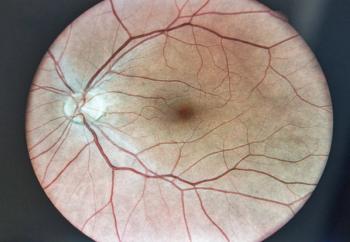
Visara has dosed the first patient in ASCEND, a roughly 244-patient, head-to-head phase 2b trial comparing two doses of its tetravalent VEGF-A/ANG-2 bispecific VIS-101 with aflibercept in treatment-naïve wet AMD. The study will test dosing intervals of up to seven months and select the dose for a global phase 3 program planned as early as 2027.

Mazen Noureddin, MD, MHSc, discusses phase 2 data for GSK’s once-monthly efimosfermin presented at The Liver Meeting 2026, including fibrosis marker results in patients with compensated cirrhosis.

A single dose of Zai Lab’s long-acting bispecific ZL-1503 produced at least 90% inhibition of an atopic dermatitis signaling biomarker through Week 12 in healthy volunteers. Its 40- to 50-day half-life supports a target of dosing every 12 weeks.
FDA has cleared Biolojic Design’s IND for BD200, a bispecific antibody-drug conjugate targeting Trop2 and Nectin-4 whose arms can each bind either target. A global Phase 1 study in solid tumors is expected to begin in the coming weeks.
Blackstone Life Sciences will fund up to $1.5 billion of development costs through 2028 for Pfizer’s monthly GLP-1 receptor agonist berobenatide, in exchange for milestone payments tied to approval and sales. Pfizer keeps full control of the program.
Advertisement
Advertisement
Trending on BioPharm International
1
Biocon’s Pebrilzo Becomes First Breast Cancer Treatment Biosimilar Approved Under EMA’s Tailored Clinical Approach
2
The BioPharm Brief: A Matrix-Targeting ADC in Head and Neck Cancer, an RNAi Approval in Myasthenia Gravis, and AbbVie Bets on AND-Gated Bispecifics
3
Evotec, BMS Gain Second FDA IND Acceptance for Molecular Glue Degrader
4
AbbVie and DISCO Partner on AND-Gated Bispecifics Designed to Recognize Tumor-Selective Protein Pairs
5