

"If they just had immunotherapy alone and the tumor was completely gone, then we would observe them and we wouldn't treat with anything else." – Andrea Cercek, MD, section head, colorectal cancer, Memorial Sloan Kettering Cancer Center
News|Videos|November 18, 2026
Why dMMR Rectal Tumors Respond to PD-1 Blockade Alone, Says MSK's Andrea Cercek
Author(s)Emily Schoenthaler, Andrea Cercek
In the first part of a two-part interview, Andrea Cercek, MD, of Memorial Sloan Kettering Cancer Center explains which early patient responses led to the dostarlimab study behind Jemperli's rectal cancer approval, and why mismatch repair-deficient tumors are so visible to the immune system.
Advertisement
For more than a decade, treatment for locally advanced rectal cancer has combined chemotherapy, radiation, and surgery. For patients whose tumors are mismatch repair deficient (dMMR) or microsatellite instability-high (MSI-H), a single PD-1 antibody may now take the place of all three.
On October 19, 2026, FDA granted
In the first part of a two-part video interview with BioPharm International®,
Cercek said the idea grew out of MSK's use of total neoadjuvant therapy, which moves chemotherapy to the front of treatment. "We noticed that there were a proportion of patients that actually didn't respond or had very rapid disease recurrence after the standard of care and particularly after chemotherapy," she said. "And when we looked, they were mismatch repair deficient."
Because immunotherapy was already approved for refractory, unresectable, or metastatic dMMR disease, those patients could receive it in clinic. "They had these amazing responses in the primary tumor," Cercek said.
Because standard tri-modality therapy is curative, the team built the study as a stepwise approach that would not take away a patient's chance of cure. Patients would receive dostarlimab, be assessed for response, and then move on to chemoradiation and, if needed, surgery.
"We didn't know this initially, we didn't know that we would have such amazing responses," Cercek said. Instead, each patient's tumor was completely gone after dostarlimab alone, and patients entered a nonoperative management protocol with surveillance and no further therapy.
"The immune system is already looking at the tumor going, this is strange, like this is foreign, I want to fight it."– Andrea Cercek, MD, section head, colorectal cancer, Memorial Sloan Kettering Cancer Center
Why are MSI-H/dMMR tumors so responsive to PD-1 blockade?
These tumors lack functional mismatch repair proteins, which normally correct the errors the body makes as tissue grows, Cercek explained. "And so what ends up happening is that these tumors have a ton of mutations," she said.
Those mutations are translated into proteins that act as neoantigens. Cercek described them as "flags on the tumor itself that then look really, really foreign to the person, to the patient's immune system."
The tumor counters with immune checkpoints that keep the immune system from attacking. "So when we give immunotherapy, we simply take away, we block that checkpoint. That's why it's called checkpoint blockade," Cercek said. Lifting that block lets the immune system recruit an army of immune cells and reach and destroy the tumor, she said.
About the Speaker
Andrea Cercek, MD, section head, colorectal cancer, Memorial Sloan Kettering Cancer Center
Andrea Cercek is a gastrointestinal medical oncologist at Memorial Sloan Kettering Cancer Center (MSK), where she is section head of colorectal cancer and founder and co-director of the Center for Young Onset Colorectal and Gastrointestinal Cancers. Her research focuses on novel therapies for early-stage disease, including immunotherapy, and on defining the causes of and improving treatment for early-onset colorectal cancer. She earned her MD at New York Medical College and completed an internal medicine residency at NewYork-Presbyterian/Weill Cornell Medical Center and a hematology/oncology fellowship at MSK.
Advertisement
Related to this article
Mazen Noureddin, MD, MHSc, discusses phase 2 data for GSK’s once-monthly efimosfermin presented at The Liver Meeting 2026, including fibrosis marker results in patients with compensated cirrhosis.

Updated phase 1 data for micvotabart pelidotin, an antibody-drug conjugate that targets a protein in the tumor extracellular matrix, support Pyxis Oncology’s plan to start a phase 3 trial in recurrent/metastatic head and neck squamous cell carcinoma in mid-2027.

DISCO Pharmaceuticals will receive $40 million upfront, with up to $2.5 billion in potential milestones, to discover bispecific therapeutics for AbbVie that recognize pairs of tumor surface proteins, an approach intended to limit toxicity in healthy tissue.
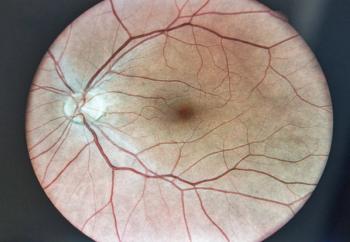
Visara has dosed the first patient in ASCEND, a roughly 244-patient, head-to-head phase 2b trial comparing two doses of its tetravalent VEGF-A/ANG-2 bispecific VIS-101 with aflibercept in treatment-naïve wet AMD. The study will test dosing intervals of up to seven months and select the dose for a global phase 3 program planned as early as 2027.

Merck's Dr Dave Maraldo explains that small-molecule platform agility and flexible conjugation capacity can help biologics manufacturing respond to research needs.

FDA approved Novartis’ secukinumab (Cosentyx) 150 mg for adults with polymyalgia rheumatica who respond inadequately to corticosteroids or cannot tolerate a taper. In the Phase 3 REPLENISH trial, secukinumab doubled sustained remission rates.

In the second part of a two-part interview, Paz Vellanki of Precision for Medicine explains which confirmatory evidence can support a single-trial approval and why she expects FDA's rare disease framework to last.

FDA declined to approve Summit Therapeutics and Akeso’s ivonescimab plus chemotherapy in previously treated EGFR-mutated NSCLC. The agency said the Phase 3 HARMONi trial’s progression-free survival benefit was not enough without a significant overall survival gain.
Advertisement
Advertisement
Trending on BioPharm International
1
Biocon’s Pebrilzo Becomes First Breast Cancer Treatment Biosimilar Approved Under EMA’s Tailored Clinical Approach
2
SELLAS Cancer Vaccine Improves Overall Survival in Phase 3 AML Trial
3
Visara Doses First Patient in Phase 2b Trial Pitting Bispecific VIS-101 Against Aflibercept in Wet AMD
4
The BioPharm Brief: A First for Streamlined Biosimilar Approval, a Head-to-Head Bispecific Trial in Wet AMD, and In Vivo KIR-CAR T
5