





Manufacturing
Latest News
Advertisement
Review of SUT Adoption in Biopharma Manufacturing
The evolution of therapeutic modalities drives the adoption of single-use technologies.

Moving Biosimilars Forward in a Hesitant Market
Despite a growing number of biosimilar approvals, market uptake remains a challenge.

Automating the Future of Fill/Finish
Given the criticality of fill/finish processes, it is clear that automation is the next technological step.

Latest Videos







Advertisement
More News
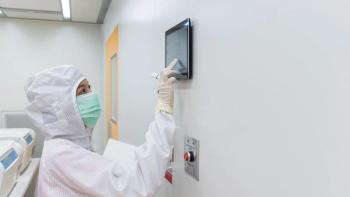
The increasing diversity and complexity of injectable drug products is driving innovation.
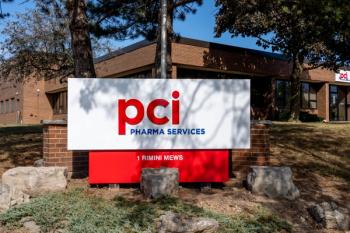
The facility is on the company’s Bedford, NH campus, where another existing building will be repurposed into a Development Center of Excellence.

In discussions at INTERPHEX 2025, company representatives seized upon several common themes, most notably safety, sustainability, and the increasing utility of automation.

Leveraging computerized maintenance management systems software can enhance efficiency, improve quality control, ensure accurate documentation, and strengthen data integrity.

Global scale-up requires developing replicable processes that work the same no matter where they are performed. This can be accomplished with smart factories that utilize fully automated manufacturing platforms.

The poster presentations contain data highlighting the company’s role to date in developing non-replicating HSV-1 technology for use in neurology.

The proposed $700 million, 700,000-square-foot space will support the companies’ future joint portfolio of next-generation obesity medicines.

The White House is instructing FDA to increase fees for and inspections of foreign drug manufacturing plants and reduce the time required to approve such sites that will be newly constructed in the US.
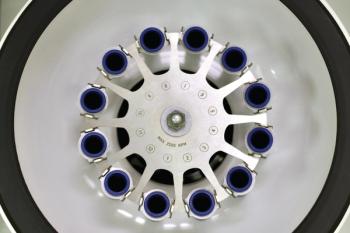
Although automation is increasingly adopted in biomanufacturing, challenges remain in implementing it at the cell harvesting step.

Incorporating sustainable practices into process designs as early as possible ensures optimal performance.
BioPharm International® sat down with Noah Kopcho, field application scientist at Gyros Protein Technologies, to talk about the challenges in the production of AAV vectors.

BioPharm International® spoke with Lun Xin, associate director at WuXi Biologics, about high-concentration biologics and some of the biggest challenges associated with their formulation.

The bio/pharma industry is evolving with intention, intelligence, and a growing sense of shared purpose.

The company’s intent is to establish Merck Wilmington Biotech as the future United States home for producing Keytruda for US patients.

The company’s exhibitions will be focused in the areas of its pipeline, proprietary capsid engineering, and manufacturing.

AnalytiChem has launched the Redipor line of ready-to-use culture media, which brings three well-known brands under one global brand.

Webcasts
Webinar Date/Time: Tue, May 20, 2025 2:00 PM EDT
The investment will be done over five years and will include new, state-of-the-art R&D facilities as well as new or expanded manufacturing sites in multiple US states.

Webcasts
Webinar Date/Time: Thu, May 15, 2025 11:00 AM EDT

Paige’s state-of-the-art foundation models will be integrated with Sonrai’s intuitive cloud-based data analysis and bioinformatics platform.
The 6000-square-foot facility will provide cell therapy developers the support they need to transition to CGMP manufacturing, and an expanded footprint of the new center is expected to open in Philadelphia later in 2025.

Pharmaceutical Technology® Group spoke with Erik Wiklund, CEO of Circio, about the impact of the post-COVID-19 world on the pharmaceutical industry and how that has shifted the talent pool.
Novartis will invest $23 billion during the next five years to expand manufacturing and R&D in the US, which will include seven new facilities and a new research hub.
The spray-dried formulations for Ethris’ mRNA vaccine candidates will be developed at Lonza’s Bend, Ore., Center of Excellence in accordance with GMP standards.
As single use becomes more prevalent, end users are looking for more customization, and regulators are refining their rules, says Todd Andrews of CPC in an interview with Pharmaceutical Technology® Group.
Advertisement
Advertisement