


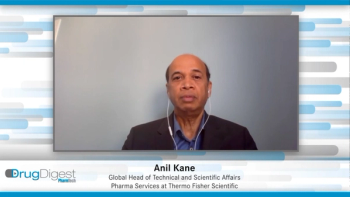
In this episode of Drug Digest, editors discuss what happens in the manufacturing space from a CDMO and a cell/gene therapy perspective.
In this episode of Drug Digest, editors discuss what happens in the manufacturing space from a CDMO and a cell/gene therapy perspective.

Sourcing of donor cells, access to fit-for-purpose reagents and manufacturing systems, and scalability are top issues.

Chime Biologics, Leads Biolabs, and BeiGene have formed a three-way collaboration to advance the development and global manufacturing of Leads Biolabs’ lead mAb candidate, LBL-007.
Use of a small-scale filler can result in increased filling efficiency.

India’s Enzene Biosciences is investing $50 Million into a new biopharma manufacturing plant in Hopewell, NJ.

Mendus and NorthX Biologics will work to develop and commercialize Mendus’ lead asset, vididencel, an allogeneic dendritic cell vaccine.

Charles River’s off-the-shelf lentiviral vector packaging plasmids are intended for use with cell and gene therapies.

The new excipients manufacturing facility is expected to be completed in 2025.
WuXi Biologics is expanding its manufacturing capacity for drug substance and drug product at its sites in Leverkusen and Wuppertal, Germany.

The market potential of nucleic acid-based therapies have been pushed into the spotlight following the success of the COVID-19 vaccines.

Guidance for GMP manufacture of emerging therapies has evolved to accommodate innovation and the broader spectrum of products in development, but greater harmonization is still needed.
Gregor Kawaletz, head of Oral Solid Dose Business Unit at Recipharm, discusses the immediate future of oral biologics

Avid Bioservices has launched new CGMP mammalian cell manufacturing suites at its Myford, Calif., facility.
The BalanCD CHO media portfolio is designed to ensure maximized growth, viability, and productivity of CHO cell lines.

The COVID-19 vaccines opened the door to powerful market potential for other nucleic acid-based therapies.
Samsung Biologics plans to invest more than ₩1.9 trillion (US$1.5 billion) in the new Incheon, South Korea, facility, which will hold a manufacturing capacity of 180,000 L.

Sandoz, a Novartis division, is expected to invest at least $400 million to build a new biologics manufacturing facility in Lendava, Slovenia, to support growing demand for biosimilars.
Under a technology licensing agreement with Bhami Research Laboratory, Catalent intends to develop formulations that will allow for the delivery of high-concentration biologics subcutaneously.
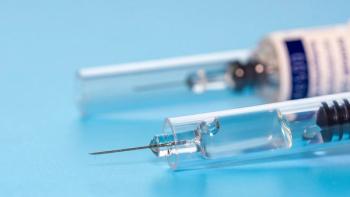
Shifts in pharmaceutical packaging have spurred tremendous growth in the pre-filled syringe fill/finish industry.
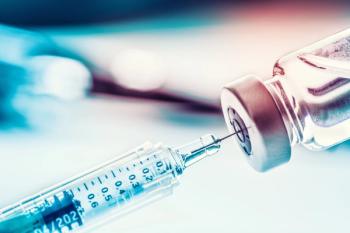
The trends shaping the growth of the biologics outsourcing industry demand attention.
There is an evolution in the way technology and best practices are blended to meet cold-chain supply requirements for temperature-sensitive biotherapeutics.

Alternative approaches to freeze drying are gaining popularity and will help to overcome some of the challenges associated with conventional lyophilization.

In this paper, the authors lay out some commonly accepted HCP analytical methods, the challenges of HCP assay, and provide recommendations on what can easily be accomplished in-house and when it may be better to outsource.
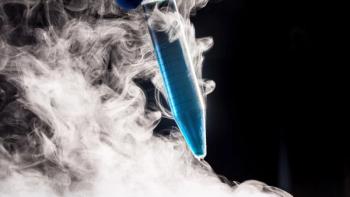
Efforts to optimize the ideal blend of technology and best practices that are needed to protect and deliver time- and temperature-sensitive biologic therapies, vaccines, and cell and gene therapies continue to evolve.
Thermo Fisher Scientific’s new facility in Hangzhou, China, is designed to boost biologics and sterile development and manufacturing capabilities in the Asia-Pacific region.