




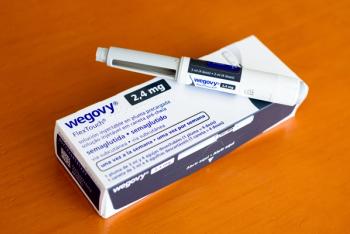
The European Commission has authorized a higher 7.2 mg once-weekly maintenance dose of semaglutide for adults with obesity, supported by Phase III STEP UP data showing greater weight loss versus placebo while preserving muscle function.
The European Commission has authorized a higher 7.2 mg once-weekly maintenance dose of semaglutide for adults with obesity, supported by Phase III STEP UP data showing greater weight loss versus placebo while preserving muscle function.

Phase III data showed sustained IL-5 suppression with 48–58% exacerbation reduction and significant CRSwNP score improvements across 52 weeks.

In part two of an interview, Cardinal Health’s Anna Catalanotto discusses how collaboration, payer education, and streamlined treatment-site workflows accelerate patient access to complex cell and gene therapies.

FDA’s IND clearance advances CStone’s trispecific antibody into Phase II development, expanding multispecific immunotherapy in solid tumors.

Phase III data show that Gazyva/Gazyvaro (obinutuzumab) significantly improved complete remission rates at two years compared with tacrolimus in adults with primary membranous nephropathy, with additional benefits seen across key secondary endpoints and no new safety signals identified.

Sebastian Lykke Skafte Andersen, Joanna Sadowska, PhD, and Neil Sheppard, D.Phil, go behind the headlines.

Under an exclusive license, the joint venture aims to advance HCW11-006 into Phase I for solid tumors, validating TRBC-derived immunotherapy in a global development strategy.

Pharma organizations that approach automation as both a technical and an inventory readiness challenge are best positioned to realize lasting operational benefits.

Carrie Mason with Lonza Integrated Biologics discusses how PAT and AI are transforming biomanufacturing with predictive, integrated bioprocessing that speeds complex biologics through to clinic.

The approval of Uplizna (inebilizumab) for adults with anti-AChR or anti-MuSK antibody–positive generalized myasthenia gravis is supported by Phase III MINT data demonstrating significant improvements in MG-ADL and QMG scores, with twice-yearly maintenance dosing following initial loading infusions.

A preclinical 21-day minipig study found that a hyaluronidase-free, nanoformed subcutaneous formulation of trastuzumab achieved pharmacokinetic exposure comparable to Herceptin HYLECTA, with favorable tolerability, supporting further investigation of nanoparticle-based delivery approaches for monoclonal antibodies.

Stoke has initiated a Phase I trial of STK-002, advancing antisense protein restoration as a potential strategy for genetic optic neuropathies.

Operational missteps, not flawed science, remain a leading cause of drug development delays, as fragmented systems, uneven technology adoption, and transactional sponsor–CRO relationships widen the “clinical execution gap.”

FDA’s acceptance of Precision BioSciences’ IND advances ARCUS gene excision toward clinical validation, signaling progress for durable DMD therapies.

In part one of an interview with Cardinal Health’s Anna Catalanotto, Catalanotto outlines how early, payer-informed commercialization planning keeps cell and gene therapies accessible and financially viable.

VectorY Therapeutics advances ALS R&D with a vectorized antibody strategy that targets TDP-43 pathology to enable sustained CNS exposure and biomarker-driven evaluation.

Akeso’s bispecific antibody gains momentum on the NMPA’s designation, while Phase III data advance a new first-line option for advanced biliary tract cancer.

Lonza’s Michael De Marco emphasizes that early tox milestones strengthen investor confidence, support funding decisions, and reduce development risk for emerging biotechs.

PharmaResearch’s DOT-based nanoparticle platform enters US clinical testing, highlighting delivery innovation aimed at improving tolerability in solid tumor therapies.

NeoVac first-in-human data suggest that optimized lipid nanoparticles may improve mRNA tolerability, enabling repeat dosing and broader therapeutic use.

Integrated CDMO networks streamline complex drug development across advanced modalities like ADCs.

Study data show high-dose nusinersen can improve function and slow neurodegeneration, informing future SMA dosing strategies and lifecycle management.

The Eisai–Henlius partnership expands Japan’s access to a differentiated PD-1 antibody, highlighting cross-border oncology deals targeting high unmet need.

AI, biomarkers, and novel oncology modalities are driving evolution in biopharma pipelines, according to Nmblr CEO Janice MacLennan.

A new Cellares–Stanford collaboration aims to demonstrate how automated platforms could standardize gene-edited stem cell manufacturing and accelerate clinical translation.

FDA’s acceptance of Affinia Therapeutics’ IND positions the company to test lower-dose, heart-targeted AAV gene therapy for BAG3 cardiomyopathy.

The SK bioscience–Gates MRI agreement highlights how scalable mAbs could broaden infant RSV prevention beyond high-income markets.

Industry experts discuss the standout packaging trends from 2025 that will influence the industry’s future.

The VESPER-3 trial results show that extended-interval GLP-1 dosing may expand obesity care by balancing sustained weight loss with reduced injection burden.
Janice MacLennan, CEO of Nmblr, notes how AI is transforming biopharma R&D and market access, forcing teams to prove value beyond science and redesign work around human strengths.