
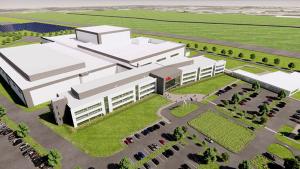



Pfizer will invest $100 million to expand its manufacturing facilities in Sanford, North Carolina.
Pfizer will invest $100 million to expand its manufacturing facilities in Sanford, North Carolina.
FDA requests more detailed information on a post-marketing study for Dynavax’s hep-B vaccine, which will require an extended review time past its August 2017 PDUFA date.
Through its life-sciences business, MilliporeSigma, Merck KGaA will collaborate with Baylor College of Medicine to advance vaccine development for neglected and emerging diseases.
Upon merging, the combined company will be named SELLAS Life Science Group and will focus on cancer treatments with a late-stage pipeline featuring immunotherapies targeting hematology and solid tumors.
The Senate voted 94–1 to approve legislation reauthorizing user fees and a series of program changes.
On August 3, 2017, Bristol-Myers Squibb (BMS) announced that it has agreed to acquire biotech firm, IFM Therapeutics, in a deal worth over $1 billion to develop BMS’ oncology pipeline.
Lonza further expands its micronization services with the acquisition of Swiss contract manufacturer, Micro-Macinazione, following its previous $5.5-billion acquisition of dosage form provider, Capsugel.
The Washington-headquartered biotech firm plans to use the newly purchased facility to produce antibodies for its current and future pipeline.
Following passage by the House in July 2017, the Senate has voted to pass a reauthorization bill for FDA user-fee programs for drugs and medical devices ahead of the user-fee programs’ expiration date.
FDA has approved Mavyret (glecaprevir and pibrentasvir), a new molecular entity (NME), to treat chronic hepatitis C virus (HCV).
FDA has approved Imbruvica (ibrutinib) to treat chronic graft versus host disease (cGVHD), a new indication for the anti-cancer drug.
Horizon to make publicly available its complete annotated CHO cell-line sequence in hopes of driving bioproduction cell-line innovation.
The agency is asking for comments on a reflection paper on developing drugs for the needs of older patients.
The International Society for Pharmaceutical Engineering (ISPE) introduced its Biopharmaceutical Manufacturing Conference, happening December 4–6, 2017 in San Francisco, California.
The agency has developed a business continuity plan to ensure that the public’s health is protected during the agency’s relocation.
FDA advances the progress of biosimilars with acceptance of regulatory filing for biosimilar referencing a blockbuster biologic by Roche.
The CPhI expert panel predicted in past annual reports the advancement of QbD, continuous processing, and a rise in FDA warning letters.
FDA advances biosimilars progress with acceptance of regulatory filing for biosimilar referencing a blockbuster biologic by Roche.
Partnership aims to develop new vaccine regimens against hep B and HIV by combining respective proprietary vaccine technologies.
Stainless-steel particulates were found in one lot of 0.9% Sodium Chloride Injection, USP 1000 mL, prompting the recall to the hospital/user level.
Manufacturers are seeking greater oversight of how providers reimburse for and dispense covered drugs.
Pharma majors AstraZeneca and Merck & Co. form $8.5-billion partnership to develop cancer therapies revolving around AstraZeneca’s PARP inhibitor, Lynparza.
New patent for automated cell processing technology provides commercially viable automated CMC solution for developing CAR-T cell therapies.
Pharma major aims to focus majority of R&D capital into priority therapy areas and plans to cut approximately 30 R&D programs.
Takeda Pharmaceutical partners with US biopharmaceutical company, TESARO, in deal worth up to $340 million to develop and commercialize PARP inhibitor.
Lonza introduces new modular complex that offers flexibility and individually tailored solutions to biomanufacturing challenges.
Corning and Gerresheimer have been working together to accelerate innovations for pharmaceutical glass packaging.
The agency is offering patients with life-threatening diseases a how-to tool on accessing investigational drugs.
Eli Lilly and Incyte face a roughly 18-month application delay for rheumatoid arthritis drug, baricitinib, in the US with a request from FDA for additional clinical data.
Recipharm set up a manufacturing line at its facility in Sweden using LIDD’s NanoZolid technology.