


The approval of an ADCETRIS combination regimen is based on positive data from a Phase III trial where the combination regimen demonstrated a clinically meaningful reduction in the risk of death.
Feliza Mirasol is the science editor for BioPharm International.
The approval of an ADCETRIS combination regimen is based on positive data from a Phase III trial where the combination regimen demonstrated a clinically meaningful reduction in the risk of death.

The company plans to assess alternate payloads for its gene therapy program, which will shift its timeline.
On the back of FDA’s designation, March Biosciences is preparing to advance MB-105, a CD5-targeted CAR-T cell therapy, to a Phase II clinical trial in early 2025.
The approval makes Susvimo the first and only continuous delivery treatment for diabetic macular edema.

Development of new modalities of biotherapeutic molecules will rely on manufacturing, regulatory, and collaborative support.

Under this early stage R&D collaboration, the companies aim to engineer recombinant biologics for blocking Fc receptors, which play a key role in autoimmune diseases.
The committee’s recommendation was based on results from a Phase III trial that demonstrated a 27% reduction in the risk of death versus placebo.

Enduro Genetics will use the funding to expand its cell programming technology for scalable biomanufacturing with microbial cells at its Copenhagen, Denmark site.
Under the expanded distribution service, Distek’s BIOne Benchtop Controllers will now be made available across the UK and Ireland.
Under this collaboration, GSK and Oxford will combine their complementary expertise in the immune system, vaccines, and cancer biology.
The UK MHRA has granted approval for garadacimab for use in preventing angioedema attacks in patients 12 years old and older who have hereditary angioedema.
UK Biocentre will now utilize Azenta Life Sciences’ automated storage system, which gives the center storage capacity for more than 35 million biosamples.
The approval makes Enhertu (fam-trastuzumab deruxtecan-nxki) the first HER2-directed therapy in the United States for treating HER2-low or HER2-ultralow metastatic breast cancer.
FDA has approved an additional indication for LEQEMBI (lecanemab-irmb) as a once-every-four-weeks maintenance therapy for early Alzheimer’s disease.
The 2025 Pharmapack Awards recognize both commercial products and innovations that are shaping the future of pharmaceutical packaging.
Under the partnership, the companies will combine fully automated and digitalized technologies aimed at reducing CGT manufacturing timelines to 2.5 days.
The collaboration will combine Cytiva’s CGT manufacturing technologies with Cellular Origins' robotic manufacturing platform.
Biologic approvals, drug delivery advancements, GLP-1 generics, and the return of funding flow have been identified by Pharmapack as drivers for a record year in 2025.

The manufacturing agreement is expected to run through December 2030, subject to change, with production to take place at Samsung Biologics’ Songdo, South Korea, site.
Lonza will develop spray-dried formulations for an intranasally delivered biologic using a reformulated biologic drug candidate for obesity in Iconovo’s pipeline.
Under a global alliance with the Australian non-profit GC4K and Weill Cornell Medicine, PackGene aims to deliver a custom-tailored gene therapy solution for hereditary spastic paraplegia type 56, an exceptionally rare neurological disease.
This latest fast track designation marks the second such designation by FDA for J&J’s tau-directed investigational therapies for treating Alzheimer’s disease.
The new company will harness splicing technology to innovate safer and more effective RNA therapies for severe genetic diseases.
The $94 million (€90 million) Series A funding will be used to support the development of the company’s pipeline of nCycles, oral macrocycle drugs that will be focused on validated biologic targets.
The approval makes HYQVIA [Immune Globulin Infusion 10% (human) with Recombinant Human Hyaluronidase] the first and only facilitated subcutaneous immunoglobulin to be approved in Japan to treat these disorders.
The companies will advance the development of Innovent’s ADC candidate, IBI3009, which has received IND approvals in the US, China, and Australia.
FDA is reopening the comment period for the Federal Register Notice, “Evaluating the Immunogenicity Risk of Host Cell Proteins in Follow-on Recombinant Peptide Products: Establishment of a Public Docket: Request for Information and Comments”, until March 3, 2025.
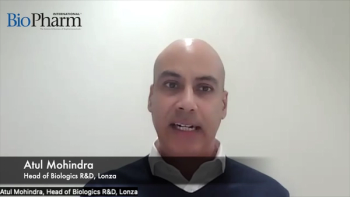
Atul Mohindra, head of Biologics R&D at Lonza, discusses the challenges and successes of bispecific antibodies as well as the field’s future direction from a CDMO perspective.

Advancements in bioprocessing and analytics are crucial to the future development of bispecific antibodies and beyond.
The approval of Hikma Pharmaceuticals’ liraglutide injection marks the first generic version of Victoza, a GLP-1 receptor agonist.