


Syngene has launched a new protein production platform that offers faster production with lower risk.
Feliza Mirasol is the science editor for BioPharm International.
Syngene has launched a new protein production platform that offers faster production with lower risk.
Swiss CDMO CordenPharma and Spain-based Certest will collaborate on the development of ionizable lipids for LNP formulations.
AGC Biologics has completed an expansion at its Copenhagen, Denmark, site, which doubles its bioreactor capacity for mammalian-based cell culture.

CGT manufacturing processes need automation as well as standardization, according to Lonza’s Joe Garrity and Jerry Jiang.
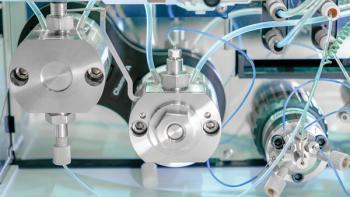
The biopharma industry is looking at continuous chromatography for sensitive molecules.
Joe Garrity and Jerry Jiang from Lonza share their insights on the latest trends and challenges for the commercialization of new CGTs.
FUJIFILM Diosynth Biotechnologies CEO Lars Petersen highlights the company’s strategic goals and meeting market demand for mammalian cell culture capacity.
Raphael Townshend, founder and CEO of Atomic AI, speaks on AI’s usefulness in characterizing molecular structure and advancing molecular engineering.
Andrew Carnegie of Inaphaea BioLabs explains the role of a translational CRO and of PDC models in drug discovery.
Chemify founder and CEO, Lee Cronin gives insight into the combination of digital chemistry, robotics, and AI in the drug discovery process.
Biosimilar analytical assessments focus on demonstrating biosimilarity and interchangeability with the reference biologic.

CGT Catapult and CATTI have developed aligned training standards for the manufacture of advanced therapies.
Cellular Origins will apply its robotic platform to establish automated CGT manufacturing at CGT Catapult’s manufacturing innovation center in Stevenage, UK.

FDA’s priority review status was granted based on positive results from a Phase III study evaluating Sarclisa in combination with VRd in treating transplant-ineligible newly diagnosed multiple myeloma.

Under an agreement, Johnson & Johnson will acquire Numab Therapeutics’ wholly owned subsidiary to gain global rights to NM26, a bispecific antibody targeting atopic dermatitis.
Under this partnership, AGC Biologics and BioConnection will provide development and manufacturing capabilities for biopharmaceutical drug substance and drug product.
The Mirus Bio acquisition will boost Merck KGaA’s viral vector manufacturing services.
Regeneron’s Bari Kowal, senior vice-president, head Development Operations & Portfolio Management, gave insight into how the biopharma industry views the application of AI in R&D.

In an interview with BioPharm International® during the US Pharma and Biotech Summit, Ken Keller, president and CEO, Daiichi Sankyo, discusses what makes a good foundation for partnerships in the bio/pharmaceutical industry.
Studies conducted by a team at Oxford Biomedica demonstrated that HIC can be used to effectively separate non-deamidated capsids from deamidated capsids.
Regeneron’s work in CAR-T cell therapy development includes engineering receptor architecture to improve CAR-T cell sensitivity and improve immune response.
Sven Moller-Tank, PhD, director of Viral Delivery Technologies, Regeneron Genetic Medicines, Regeneron spoke about the use of bispecific antibodies to retarget AAV specificity.
Experiments conducted by the downstream technology team at Spark Therapeutics involving metal ion-containing additives showed improved capsid clearance in AAV production.
Under a partnership, ProPharm and PBL have launched the Cell Factory Box, an enclosed and fully automated cell factory manufacturing device.
The collaboration will target solid tumors using Poseida’s allogeneic CAR-T platform to develop convertibleCAR programs.

Digital transformation is allowing for better handling, analysis, and protection of vast data collection.
A new draft guidance issued by FDA covers human- and animal-derived materials used in the manufacture of advanced therapy medicinal products.
The new draft guidance from FDA provides recommendations for sponsor companies on cell safety testing of human-origin allogeneic cells.
Contract manufacturer SK pharmteco will manufacture as well as conduct testing and release of Ferring Pharmaceuticals’ Adstiladrin (nadofaragene firadenovec-vncg), a gene therapy for bladder cancer.
At INTERPHEX 2024, BioPharm International spoke with Mary Van Gaasbeck, technical services specialist, LS Equipment and Services, at STERIS Life Sciences, about how to effectively conduct sterile powder transfer during the fill/finish step in parenteral drug product manufacturing.