

"It's all about how you look at the world and how you look at your product, either from a biological perspective or a physical perspective, but ideally you need to do both."
News|Videos|August 6, 2026
Nanobiotix CEO Discusses How Physics-Based Drug Delivery Could Improve Therapeutic Performance
Author(s)Emily Schoenthaler, Laurent Levy
Laurent Levy, founder and CEO of Nanobiotix, explains how a physics-based approach to drug delivery could complement existing therapeutic platforms by improving particle behavior in the body while avoiding added complexity.
Advertisement
As drug delivery technologies continue to evolve, developers are seeking new ways to improve how therapeutics reach their intended targets without introducing unnecessary complexity. According to
In a video interview with BioPharm International, Levy discussed the company's NanoPrimer platform and how it may complement a wide range of existing delivery technologies by influencing how therapeutic particles interact with the body.
How could a physics-based perspective improve drug delivery?
Levy noted that many delivery platforms become increasingly complex as developers attempt to improve targeting or other performance characteristics. While those modifications may optimize one aspect of a therapeutic, they can also introduce new biological interactions and tradeoffs.
"It's all about compromise. If you try to make a targeted LNP, you add complexity again to the object, and by adding complexity, you also add potential new interaction, unwanted interaction with the body."
Rather than focusing on redesigning the therapeutic itself, Levy said
NanoPrimer is intended to improve how delivery vehicles behave within the body. The discussion aligns with broader industry interest in improving the performance of
According to Levy, the platform has demonstrated the ability to improve particle delivery across several technologies by changing the way developers think about delivery rather than requiring an entirely new therapeutic design.
Levy emphasized that this shift begins with perspective. Traditional biologic development typically evaluates therapies through biological characteristics such as receptor interactions, pharmacodynamics, and molecular structure. While those considerations remain essential, he believes developers can gain additional insight by also considering the physical properties of therapeutic particles.
Instead of asking only how a molecule functions biologically, Levy encouraged developers to examine characteristics such as particle size, surface properties, and how those features influence interactions within the body.
"If you look at the same object with a different perspective—what's the size of the object, what's the surface, how the surface is going to interact with the physics of the body—you see the object in a very different way."
That physics-based perspective, he said, can create new opportunities to optimize delivery while working alongside established biological approaches.
Ultimately, Levy does not see biology and physics as competing frameworks, but as complementary disciplines that together can improve therapeutic design.
About the Speaker
Laurent Levy, PhD, founder and ceo of Nanobiotix
Laurent brings extensive nanotechnology expertise, previously consulting for Altran Technologies and developing nanotechnologies with Sanofi, Guerbet, Rhodia, and other early-stage biotechs before founding Nanobiotix. He served as President of Valbiotis' Supervisory Board (Euronext Paris: ALVAL), Vice Chairman of the European Technology Platform on Nanomedicine, and a founding member of its Nanomedicine Translation Advisory Board. Author of over 35 scientific publications and holder of several patents, he speaks widely on nanoparticles in cancer treatment. Laurent holds a doctorate in physical chemistry and nanomaterials from UPVI-ESPCI/CEA, and completed postdoctoral work at SUNY Buffalo.
Advertisement
Related to this article
Acuitas CEO Dr Thomas Madden and NanoVation co-founder and president Dr Dominik Witzigmann discuss how LNP engineering is expanding genetic medicine applications to traditionally undruggable targets.
Former FDA oncology reviewer Paz Vellanki, MD, PhD, of Precision for Medicine, discusses how CDER's ARC program supports novel end points such as ctDNA for rare diseases and why sponsors should engage FDA early.

In the OCTANE real-world analysis presented at EASD 2026, adults who switched from injectable semaglutide or tirzepatide to once-daily oral semaglutide lost an average of 4.1% of body weight after 3 months.
LumaLex Law's Dustin Robinson explains why retatrutide compounding remains illegal regardless of the Seventh Circuit's pending classification ruling.

Artiva Biotherapeutics will present data on AlloNK, an allogeneic, non-genetically modified NK cell therapy given with rituximab, in refractory rheumatoid arthritis, Sjögren disease and systemic sclerosis at ACR Convergence 2026, ahead of a planned phase 3 trial in rheumatoid arthritis.

Novartis has secured an exclusive worldwide license to ABO2203, Abogen's investigational mRNA-encoded CD19xCD3 T-cell engager designed to produce the bispecific inside the body to reset B cells in autoimmune disease. The agreement also includes options on other programs built on Abogen's RNA platform.
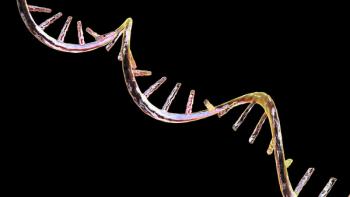
Following an FDA meeting, Wave Life Sciences plans a single 2-year registrational trial of WVE-006, its GalNAc-conjugated RNA editing oligonucleotide for alpha-1 antitrypsin deficiency, with a 1-year interim analysis that could support accelerated approval based on biomarkers.

IMVT-1402 (imeroprubart) failed to reach statistical significance on CLASI-A at Week 12 in a 57-patient proof-of-concept study, and Immunovant will stop development in cutaneous lupus erythematosus. The anti-FcRn antibody continues in five other autoimmune indications.
Advertisement
Advertisement