Discovery Pipeline
Latest News

Latest Videos

More News

The FDA has granted Regenerative Medicine Advanced Therapy designation to Ocugen's OCU410, a one-time AAV gene therapy for geographic atrophy secondary to dry age-related macular degeneration, based on Phase 2 data showing a statistically significant reduction in lesion growth.

Paul Romness, chair, chief executive officer, and president of OS Therapies, discusses how advances in linker chemistry, payload design, and evolving regulatory approaches could shape the next generation of antibody–drug conjugates for oncology.

A preclinical study links a DR5-Lig3 feedback loop to immune recognition and checkpoint inhibitor response in dMMR colorectal cancer.

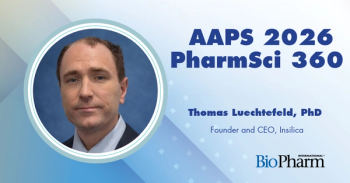
The deal, announced at BIO 2026, carries total potential value exceeding $2.5 billion and will use Insilico's Pharma.AI platform to drive target-to-candidate discovery across neuroinflammatory, neurodegenerative, and rare neurological indications.

Takeda will use Boltz biomolecular AI models to support structure prediction, affinity estimation, and molecular design in preclinical research.

Biohub has released an open-source AI protein design model aimed at early drug discovery, with initial testing in cancer and immune targets.

Artificial intelligence delivers meaningful value in drug development only when it is grounded in real-world constraints and tightly integrated into expert-led workflows, rather than treated as a standalone, model-first solution.

Isomorphic Labs’ $2.1 billion financing will support expansion of its AI-driven drug discovery platform and advancement of therapeutic candidates toward clinical development.

The opening plenary session at this year’s AAPS National Biotechnology Conference will spotlight AI and NAMs as tools that advance predictive toxicology and human-relevant models to improve drug safety and translational research.

Boehringer Ingelheim is expanding its investment in AI for R&D in London to advance computational approaches to disease biology and drug discovery in biopharmaceuticals.

Novo Nordisk intends to apply advanced AI to analyze complex data, improve target identification, and accelerate development of therapies for chronic diseases

Through collaboration, Imagene AI and Daiichi Sankyo will apply multimodal AI to improve biomarker discovery with the goals of advancing precision oncology and enhancing clinical trial success rates.

The funding will support expansion of evolution-derived molecule datasets, enabling discovery of novel bioactive compounds and improving AI model performance in drug development.

In a new collaboration, Tempus and Daiichi Sankyo will apply AI-driven biomarker discovery to improve ADC patient selection with the aim of advancing precision strategies in competitive oncology pipelines.

With Sanofi as one of its backers, Earendil Labs is set to advance its AI-native biologics platform to scale antibody discovery, accelerate IND filings, and expand partnerships in autoimmune and oncology research.

The launch of Excalipoint Therapeutics brings to the table multi-specific T-cell engager platforms that aim to overcome tumor microenvironment barriers and expand efficacy into solid tumors and immunology indications.

Johnson & Johnson reports encouraging Phase 1b data for its bispecific antibody pasritamig in combination with docetaxel in metastatic castration-resistant prostate cancer, showing strong PSA responses and manageable safety

Under the collaboration, Merck and Mayo Clinic will integrate multimodal clinical and genomic datasets with AI models to enhance target biology insights and translational decision-making.

AdvanCell and 48Hour Discovery align peptide discovery with a Lead-212 infrastructure to build a durable targeted alpha therapy pipeline aimed at oncology markets.

Agentic AI enables closed-loop, autonomous drug discovery workflows that accelerate biopharma R&D, improve efficiency, and reshape innovation.

The company’s major long-term capital commitment highlights how global drugmakers are anchoring future innovation, advanced modalities, and supply resilience within China’s life sciences ecosystem.

Next-gen antibody R&D is shifting to multifunctional modalities driven by manufacturing scale and regulatory acceleration.

The new GSK–Oxford BioTherapeutics partnership capitalizes on proteomics-driven oncology target discovery for advancing antibody therapeutics development.

RxCelerate and Constructive Bio will combine programmable biology with integrated discovery tools to speed engineered biologics for hard-to-treat diseases.

The $94 million (€90 million) Series A funding will be used to support the development of the company’s pipeline of nCycles, oral macrocycle drugs that will be focused on validated biologic targets.