
“New cutting-edge technologies are enhancing our ability to innovate with the potential to bring important new therapies to patients faster. By working with Mayo Clinic, we aim to integrate high-quality clinical data and AI-enabled insights into discovery research to improve target identification and, ultimately, the probability of success for our programs.”
News|Articles|February 19, 2026
Merck–Mayo Clinic Partnership Aligns Clinical Data with AI Drug Discovery
Author(s)Feliza Mirasol
Listen
0:00 / 0:00
Key Takeaways
- Merck will apply AI/ML-enabled discovery tools, including virtual cell modeling, to refine disease characterization and improve confidence in preclinical go/no-go decision-making.
- Mayo Clinic Platform enables secure, de-identified aggregation of clinical, molecular, imaging, genomic, and real-world healthcare data spanning US sites and international partners.
Under the collaboration, Merck and Mayo Clinic will integrate multimodal clinical and genomic datasets with AI models to enhance target biology insights and translational decision-making.
Advertisement
Under a new
Their collaboration reflects a broader industry shift toward platform-based partnerships designed to address persistent challenges in target identification and translational success across drug development pipelines.2
“New cutting-edge technologies are enhancing our ability to innovate with the potential to bring important new therapies to patients faster,” said
How can multimodal clinical data improve target identification and early development decisions?
Under the agreement, Merck will access the Mayo Clinic Platform infrastructure, which aggregates de-identified clinical, molecular, imaging, and real-world healthcare data within a secure research environment. The platform integrates datasets from Mayo Clinic’s US operations and international partner network, enabling large-scale analysis across diverse patient populations.
Through the Mayo Clinic Platform_Orchestrate program, Merck researchers will utilize
Why are platform-based AI collaborations becoming central to biopharma R&D strategy?
The collaboration represents Mayo Clinic’s first partnership of this scale with a global biopharmaceutical company and highlights growing industry reliance on integrated data ecosystems to support AI-driven research.1,3
Rather than applying AI solely as a downstream analytics tool, the
Initial research efforts will focus on therapeutic areas for which multimodal data integration may accelerate precision medicine strategies, including inflammatory bowel disease in gastroenterology, atopic dermatitis in dermatology, and multiple sclerosis in neurology. By aligning large-scale clinical datasets with AI-enabled discovery platforms, the partners aim to identify biologically defined patient subgroups and support development of more targeted therapeutic interventions.
“By combining Mayo Clinic Platform's de-identified data, clinical expertise and Platform technology with Merck's … research and development capabilities, we are poised to speed innovative breakthroughs to patients and redefine drug development,” said
What does this collaboration signal for AI adoption across drug development pipelines?
The agreement builds on Merck’s broader strategy to incorporate AI foundation models, computational and spatial biology, and real-world data into discovery workflows. Across the industry, such collaborations are increasingly viewed as a means to reduce attrition rates by improving biological validation prior to clinical entry.1
As biopharmaceutical companies seek to improve R&D productivity amid rising development costs, partnerships linking clinical data platforms with AI-enabled discovery capabilities may play an expanding role in shaping next-generation precision medicine pipelines.
References
- Merck.
Merck and Mayo Clinic Announce New Research and Development Collaboration to Support AI-Enabled Drug Discovery and Precision Medicine . Press Release. Feb. 18, 2026. - Jones CH, Beitelshees M, Hill A, et al. Framework to identify innovative sources of value creation from platform technologies. Proc. Natl. Acad. Sci. U.S.A. 2025;122(21):e2424665122. doi:
10.1073/pnas.2424665122 - Bhushan A, Misra P. Unlocking the potential: multimodal AI in biotechnology and digital medicine—economic impact and ethical challenges. npj Digit. Med. 2025;8:619. doi:
10.1038/s41746-025-01992-6
Advertisement
Related to this article

Zylidac will test whether optogenetic cell lines that hit 21 g/L in small-scale CHO runs can deliver higher-yield complex biologics at GMP scale.
At PharmSci 360, Insilica CEO Thomas Luechtefeld will present on auditable agentic AI systems and how they are expanding computational toxicology beyond single predictive models.

EA2251, the 7th registrational trial of ivonescimab, will test it plus chemotherapy vs pembrolizumab or durvalumab regimens in first-line BTC.
Insilica's Dr Thomas Luechtefeld argues process traceability, not benchmark accuracy alone, determines whether AI toxicology decisions can be trusted.

Risvutatug rezetecan extended median progression-free survival to 5.5 months vs 1.4 months with chemotherapy in pretreated osteosarcoma.
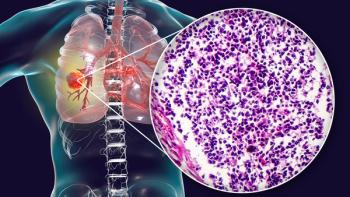
Izalontamab brengitecan extended median progression-free survival to 11.1 months vs 5.7 months with chemotherapy after EGFR TKI failure.

This year's PharmSci 360 will close with a plenary on fixing drug development economics given by Averin's Dr Berry.
Dr Karunakar Sukuru of Catalent explains how lipid-based softgels address physiological barriers to oral peptide delivery as approvals increase.
Advertisement
Advertisement
Trending on BioPharm International
1
Merck and Kelun’s Sac-TMT Extends Survival by Nearly 7 Months in Pretreated Endometrial Cancer
2
BMS Reports Death in Phase 1 Zolacabtagene Autoleucel MS Study
3
BioNTech’s HER2 ADC Hits Phase 3 Goal, but Companies See Limited Benefit
4
The BioPharm Brief: Survival Gains, a Modest ADC Win, and CAR-T in Multiple Sclerosis
5