

“Our focus is ultimately on patients suffering from diseases that still lack effective treatment options. This funding greatly strengthens our ability to translate AI-enabled innovation into potentially transformative medicines and provides opportunities to partner with global leaders to accelerate our research and development programs worldwide.”
News|Articles|March 20, 2026
Earendil Labs to Scale AI-Driven Biologics Platform with $787 Million Funding
Author(s)Feliza Mirasol
Listen
0:00 / 0:00
Key Takeaways
- Earendil Labs secured $787 million from investors including Sanofi and Hillhouse/Pfizer’s Biotech Development Fund to expand AI-native biologics R&D capacity and multidisciplinary hiring.
- Its platform applies AI from target ID through clinical progression, aiming for a continuous production engine; >40 programs exist, with half-life–extended anti-TL1A HXN-1001 Phase II–ready.
With Sanofi as one of its backers, Earendil Labs is set to advance its AI-native biologics platform to scale antibody discovery, accelerate IND filings, and expand partnerships in autoimmune and oncology research.
Advertisement
Earendil Labs announced on March 20, 2026 that it has raised $787 million in
The financing included participation from multiple global investors, including Sanofi and the Biotech Development Fund (created by Hillhouse and Pfizer), and will be used to scale the company’s R&D infrastructure, expand interdisciplinary teams, and advance a growing pipeline of
The announcement reflects increasing investment in
How is AI being integrated across biologics discovery and development?
Earendil Labs applies AI across the full biologics R&D lifecycle, from target identification and molecular design to optimization and clinical progression. Unlike earlier approaches that used AI primarily for discrete discovery tasks, the company positions its platform as a continuous “production engine” for therapeutic programs.1
The platform has generated more than 40 biologics programs to date, including HXN-1001, a half-life–extended anti-TL1A antibody that is ready for Phase II clinical development. The company also plans multiple investigational new drug submissions in 2026 and 2027.
By integrating computational modeling with experimental validation, the approach aims to systematically produce differentiated candidates with improved pharmacokinetics and target specificity. This model is intended to address persistent inefficiencies in biologics R&D, including long development timelines and high attrition rates.
“AI is at the core of everything we do—not as a research tool, but as a production engine for real therapeutic programs,” said
What role do partnerships play in validating AI-driven platforms?
Strategic collaborations remain a key component of validating AI-enabled discovery platforms, particularly as large biopharmaceutical companies seek access to differentiated biologics pipelines. Earendil Labs has established collaborations with Sanofi, including a worldwide exclusive license agreement announced in 2025 for next-generation bispecific antibodies targeting autoimmune and inflammatory bowel diseases. The agreement covers programs such as HXN-1002 and HXN-1003.3
More recently, the companies expanded their collaboration to apply Earendil’s AI-driven platform across multiple autoimmune and inflammatory disease programs, underscoring growing industry interest in AI-enabled biologics design.
“Our focus is ultimately on patients suffering from diseases that still lack effective treatment options,” said
Can AI-native platforms scale biologics pipelines more efficiently?
With this financing, Earendil Labs plans to scale its AI-driven infrastructure across discovery and development, expand scientific and engineering teams, and advance multiple internal programs toward clinical milestones.
The company’s model combines internal pipeline development with external partnerships to diversify risk and accelerate validation across multiple therapeutic areas, including oncology, autoimmune diseases, and inflammatory conditions.
As AI adoption expands across the biopharmaceutical sector, platforms capable of generating reproducible, clinic-ready candidates at scale may play an increasingly central role in shaping next-generation drug development strategies.4
References
- Earendil Labs. Earendil Labs announces $787 million in financing to scale AI-driven biologics discovery and development. Published March 20, 2026. Accessed March 20, 2026.
https://www.prnewswire.com/news-releases/earendil-labs-announces-787-million-in-financing-to-scale-ai-driven-biologics-discovery-and-development-302719748.html - Hie BL, Shanker VR, Xu D, et al. Efficient evolution of human antibodies from general protein language models. Nat. Biotechnol. 2024;42:275-283. doi:
10.1038/s41587-023 -01763-2 - Earendil Labs. Earendil Labs announces worldwide exclusive license agreement with Sanofi for next-generation bispecific antibodies for autoimmune and inflammatory bowel diseases. Published online April 17, 2025. Accessed March 20, 2026.
https://www.prnewswire.com/news-releases/earendil-labs-announces-worldwide-exclusive-license-agreement-with-sanofi-for-next-generation-bispecific-antibodies-for-autoimmune-and-inflammatory-bowel-diseases-302431020.html - Dharmasivam M, Kaya B, Akinware A, et al. Leading artificial intelligence–driven drug discovery platforms: 2025 landscape and global outlook. Pharmacol. Rev. 2026;78(1):100102. doi:
10.1016/j.pharmr.2025.100102
Advertisement
Related to this article
BMS's Dr Nathan Pennell outlines how biomarker testing barriers and trial diversity affect patient access to targeted oncology drugs.

EST-201 and EST-101 target the genetic root cause of ADPKD, a disease affecting more than 8 million people worldwide, with trials starting 2027-2028.

Dr Julie Gerberding and Dr David Berry will headline the October 25-28 New Orleans meeting, which adds a USP standards workshop and AI, organoid tracks.
Backed by €400 million (US$449 million) in EU-cleared German aid, the new Frankfurt facility is designed to secure insulin supply for people with diabetes from 2032.

EA2251, the 7th registrational trial of ivonescimab, will test it plus chemotherapy vs pembrolizumab or durvalumab regimens in first-line BTC.

Interim phase 1 data presented at UEG Week 2026 showed Bionyra Pharma’s Fc-engineered anti-TL1A antibody BYN-002 suppressed soluble TL1A with a half-life supporting potential every-3-to-6-month maintenance dosing in IBD.
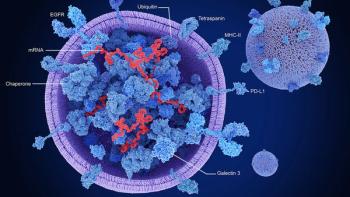
Inhaled EXO-CD24 kept 85% of patients with ARDS free of respiratory failure at day 7 vs 33.3% with placebo in a 90-patient phase 2b trial.

Nuravax will test AV-1959R in a 160-adult phase 2 trial to see whether the amyloid vaccine can prevent Alzheimer disease before symptoms begin.
Advertisement
Advertisement
Trending on BioPharm International
1
Nuravax Alzheimer Vaccine AV-1959R Earns FDA Fast Track Designation
2
Nano24's Inhaled EXO-CD24 Cuts ARDS Mortality in Phase 2b Trial
3
METiS TechBio, Lilly Partner on AI-Designed LNPs for Tissue-Specific Delivery
4
The BioPharm Brief: Lung Injury Survival, Alzheimer Prevention, and Longer Dosing Intervals
5