

“Collaborating with Daiichi Sankyo reflects a shared commitment to advancing biomarker discovery as a key driver of development success. By working together, we are integrating multimodal discovery and quantitative IHC scoring to move from biomarker hypothesis to patient stratification with greater confidence.”
News|Articles|April 10, 2026
Daiichi Sankyo Taps Imagene AI for Biomarker Discovery
Author(s)Feliza Mirasol
Listen
0:00 / 0:00
Key Takeaways
- Imagene’s multimodal platform will fuse histopathology, omics, and clinical outcomes to generate biologically grounded biomarker hypotheses earlier, addressing persistent issues in patient selection and outcome variability.
- ADC programs particularly benefit from biomarker-driven development because efficacy and toxicity are tightly coupled to target expression and tumor biology, making response-linked biomarkers pivotal for clinical success.
Through collaboration, Imagene AI and Daiichi Sankyo will apply multimodal AI to improve biomarker discovery with the goals of advancing precision oncology and enhancing clinical trial success rates.
Advertisement
US-based Imagene AI has formed a
The deal comes at a time when
How can multimodal AI improve biomarker discovery in oncology trials?
The collaboration focuses on integrating histopathology data, including hematoxylin and eosin and immunohistochemistry (IHC) images, with molecular profiles and longitudinal clinical outcomes. Using its CanvOI foundation model and a large-scale real-world data lake, Imagene aims to generate biologically grounded insights that can inform biomarker hypotheses earlier in development.
This approach reflects an industry trend toward multimodal data integration, in which combining imaging, omics, and clinical datasets enables more robust identification of predictive biomarkers. In practice, such an approach can help refine patient selection criteria and reduce variability in clinical trial outcomes, which remain two persistent challenges in oncology drug development.3
“Collaborating with Daiichi Sankyo reflects a shared commitment to advancing biomarker discovery as a key driver of development success,” said
Why is biomarker-driven patient stratification critical for ADC development?
The collaboration will focus in part on supporting select ADC programs from Daiichi Sankyo, for which precise patient selection is essential to maximize therapeutic benefit while minimizing toxicity, according to the companies. ADCs rely on target expression levels and tumor biology, making accurate biomarker identification a key determinant of clinical success.4
Under the agreement, Imagene will deploy AI-driven pipelines to identify biomarkers correlated with treatment response, map associated biological pathways, and evaluate histologic features. A central component is its composite continuous scoring system, which quantifies IHC-based target expression using a continuous scale rather than traditional categorical thresholds.
This quantitative approach could improve how patients are matched to therapies by capturing more nuanced variations in target expression, potentially leading to better response prediction and more efficient trial design.
What does this collaboration signal for AI adoption in clinical development?
The partnership highlights
For Daiichi Sankyo, the collaboration aligns with a broader strategy to differentiate oncology assets, particularly in the ADC space, through biomarker-driven development. As pipelines become more crowded and trial costs rise, the ability to identify responsive patient populations earlier may offer a competitive advantage.
The deal also reflects a shift from exploratory biomarker research to operational integration of AI tools within clinical development workflows. By embedding multimodal analytics into trial design and execution, companies aim to improve probability of success while accelerating timelines.2
As oncology pipelines grow more complex, collaborations such as this suggest that data integration and predictive modeling will play an increasingly central role in translating scientific insights into clinically meaningful outcomes.5
References
- Imagene AI. Imagene AI announces collaboration with Daiichi Sankyo to advance multimodal biomarker discovery in oncology. Published April 9, 2026. Accessed April 10, 2026.
https://imagene-ai.com/press-release/imagene-ai-announces-collaboration-with-daiichi-sankyo-to-advance-multimodal-biomarker-discovery-in-oncology/ - Lipkova J, Chen RJ, Chen B, et al. Artificial intelligence for multimodal data integration in oncology. Cancer Cell. 2022;40(10):1095-1110. doi:
10.1016/j.ccell.2022.09.012 - Vanguri RS, Luo J, Aukerman AT, et al. Multimodal integration of radiology, pathology and genomics for prediction of response to PD-(L)1 blockade in patients with non-small cell lung cancer. Nat. Cancer 2022;3:1151–1164. doi:
10.1038/s43018-022-00416-8 - Ascione L, Guidi L, Prakash A, et al. Unlocking the potential: Biomarkers of response to antibody-drug conjugates. Am Soc Clin Oncol Educ Book 2024;44:e431766. doi:
10.1200/EDBK_431766 - García-Lezana T, Bobowicz M, Frid S, et al. New implementation of data standards for AI in oncology: Experience from the EuCanImage project. GigaScience 2025;14:giae101. doi:
10.1093/gigascience/giae101
Advertisement
Related to this article
Gilead will develop up to three PRO-XTEN T-cell engagers discovered by Vir Biotechnology for solid tumors in a deal worth up to $1.74 billion.
Rona's ALK7 RNAi candidate, licensed to Roche for up to $1.06 billion in milestones, aims to cut visceral fat while sparing lean mass.
Roche will take ex-China development of Hansoh’s two preclinical ADCs and multiple programs against Roche-proposed targets once Hansoh completes global phase 1a trials. The deal includes $400 million upfront and more than $15 billion in potential milestones.
When large pharmaceutical companies deprioritize drug candidates, smaller developers may license or acquire them, but due diligence, deal structure, and trial planning determine whether a program can move forward.

Interim phase 1 data presented at UEG Week 2026 showed Bionyra Pharma’s Fc-engineered anti-TL1A antibody BYN-002 suppressed soluble TL1A with a half-life supporting potential every-3-to-6-month maintenance dosing in IBD.
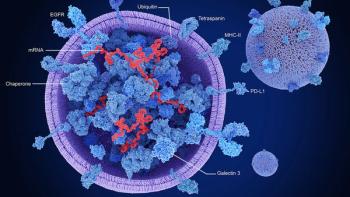
Inhaled EXO-CD24 kept 85% of patients with ARDS free of respiratory failure at day 7 vs 33.3% with placebo in a 90-patient phase 2b trial.

Nuravax will test AV-1959R in a 160-adult phase 2 trial to see whether the amyloid vaccine can prevent Alzheimer disease before symptoms begin.
BMS's Dr Nathan Pennell outlines how biomarker testing barriers and trial diversity affect patient access to targeted oncology drugs.
Advertisement
Advertisement
Trending on BioPharm International
1
Regeneron's Libtayo Earns CHMP Nod for Expanded EU Dosing
2
Nuravax Alzheimer Vaccine AV-1959R Earns FDA Fast Track Designation
3
Roche, Hansoh Sign Second ADC Pact Covering Preclinical and Roche-Selected Targets
4
Nano24's Inhaled EXO-CD24 Cuts ARDS Mortality in Phase 2b Trial
5