




Manufacturing, Gene Therapies
Latest News

Opus Genetics’ OPGx-LCA5 Gene Therapy Shows Sustained Vision Gains Ahead of Phase 3
Advertisement
Latest Videos




Advertisement
More News
uniQure submitted a Biologics License Application to the FDA and a Marketing Authorisation Application to the UK's MHRA for ifezuntirgene inilparvovec (AMT-130), an AAV5 gene therapy for Huntington's disease, based on three-year Phase I/II data — a potential first disease-modifying treatment for a condition with no approved therapies that slow progression.
Ultragenyx published 96-week phase 3 data for GENGLYCOS, its AAV8 gene therapy for glycogen storage disease type Ia, in The Journal of Inherited Metabolic Disease, showing sustained cornstarch-intake reductions and continued glycemic control roughly six weeks after the therapy's FDA accelerated approval.

NewBiologix's Xcell platform aims to replace costly transfection with stable cell lines for Synastra's high-dose DMD gene therapy.
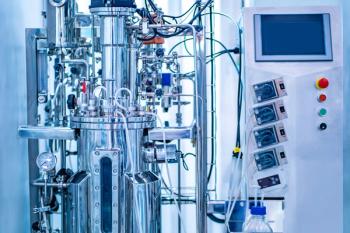
4basebio and Genezen have entered an expanded, non-exclusive collaboration giving drug developers access to 4basebio's hpDNA cell-free synthetic DNA technology within Genezen's viral vector development and manufacturing services, aiming to streamline gene and cell therapy programs from early development through commercial manufacturing.

The FDA has approved Genglycos (pariglasgene brecaparvovec-opnr), a one-time AAV8 gene therapy, to reduce cornstarch dependence in patients eight and older with GSDIa, the first approved treatment to target the disease's underlying genetic cause.

AbelZeta Pharma has reclaimed global rights to prizloncabtagene autoleucel from Janssen and secured FDA clearance to begin US trials, positioning the anti-CD20/CD19 bispecific CAR-T for patients who relapse after existing CAR-T therapies.

Genprex moves its diabetes gene therapy toward the clinic, tapping a CGMP CDMO after preclinical models reversed hyperglycemia in mice.

Outsourced cell and gene therapy manufacturing is set to grow nearly 6-fold by 2035 as biotech pipelines outpace in-house capacity.

The European Medicines Agency has granted orphan designation to Atsena Therapeutics' ATSN-101 and ATSN-201, AAV gene therapies for Leber congenital amaurosis 1 and X-linked retinoschisis, as both programs advance toward pivotal Phase 3 trials.
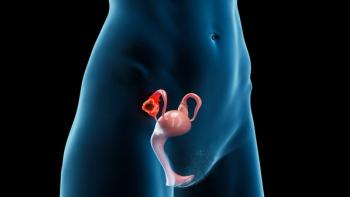
Imunon has reported positive preliminary data from its phase 2 minimal residual disease study of IMNN-001, a DNA-based IL-12 gene immunotherapy, showing a lower MRD-positive rate, higher ctDNA clearance, and more patients reaching no evidence of disease compared to standard chemotherapy alone in frontline advanced ovarian cancer.
MilliporeSigma's Sebastián Arana outlines why flexible, platform-based manufacturing and workforce training are now table stakes for competitive biomanufacturers.

As part of our continuing coverage from the BIO International Convention 2026, Pharmaceutical Executive spoke with Martha Fowler, founder of Steer Bio, about the company's regenerative medicine platform, its lead program for cancer-related lymphedema, and how non-dilutive funding is supporting its path toward first-in-human studies.

Voyager Therapeutics presented six-month GLP toxicology data showing its tau-silencing AAV gene therapy VY1706 was well tolerated and reduced tau protein by up to 75% in key brain regions of non-human primates, with a clinical trial in Alzheimer's disease expected to begin in the second half of 2026.

The FDA has approved a label expansion for Casgevy, the first CRISPR-based gene therapy, lowering the eligible age from 12 to 2 years in sickle cell disease — a move that significantly broadens the potential patient population and marks another milestone in the clinical maturation of CRISPR-based genomic medicine.

Q&A: Cytiva’s Pierre-Alain Ruffieux on Scaling Cell and Gene Therapy Manufacturing for Global Access
Cytiva’s Pierre-Alain Ruffieux discusses standardization, regionalization, talent gaps, and regulatory pathways shaping advanced biomanufacturing’s future ahead of BIO 2026.
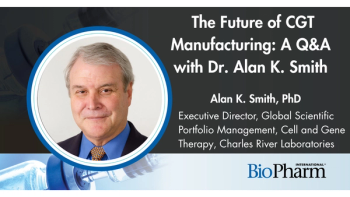
Charles River Laboratories’ Dr. Alan K. Smith explains how early commercial planning, modular manufacturing, and AI-driven automation may accelerate scalable manufacturing for cell and gene therapies.

AI and PAT have been shown to reduce manufacturing variability in advanced therapies, which leads to improved process control and accelerated patient access to lifesaving treatments.

Automated density gradient ultracentrifugation boosts the efficiency of AAV purification.

AI and automation may streamline cell and gene therapy manufacturing by reducing labor demands while improving efficiency and supporting scalable production, says Dr. Alan Smith of Charles River Laboratories.
Dr. Alan Smith of Charles River Laboratories explains why early manufacturing planning and scalable processes are critical to ensure successful commercialization of complex cell and gene therapies as part of his panel discussion at INTERPHEX 2026.

Astellas taps Dyno’s AI-designed AAV capsid to boost skeletal muscle gene delivery, aiming for lower doses and safer next-gen therapies.

The approval introduces a one-time gene therapy for LAD-I that restores immune function and addresses the underlying cause of a life-threatening pediatric disease.

Key 2025 FDA draft and final guidances emphasize the modernization of biotech regulations, acceleration of rare-disease therapies, and streamlining of biosimilar pathways.

Autolomous and Trenchant’s partnership, begun early in 2025, addresses unmet CGT manufacturing needs, including slashing costs and cutting timelines.

Charles River has launched a second cohort to speed CGT innovation with technical guidance and scalable manufacturing support.
Advertisement
Advertisement
Trending on BioPharm International
1
Adalvo Acquires Enzene’s Romiplostim Biosimilar Program for ITP
2
Genmab’s Petosemtamab Plus Pembrolizumab Cuts Risk of Death by 50% in Phase 3 Head and Neck Cancer Trial
3
How Lipid-Based Softgels Protect Oral Peptides from Degradation
4
Immatics’ PRAME-Targeted TCR Bispecific IMA402 Shows 32% Response Rate in PRAME-High Tumors
5