



Manufacturing, Gene Therapies
Latest News
Advertisement
Latest Videos

Advertisement
More News
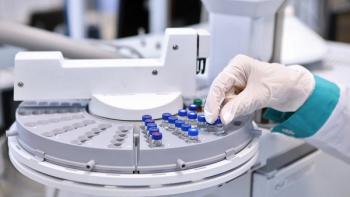
ElevateBio BaseCamp Achieves First Multi-Modality ICMC Certification in Commercial CGT Manufacturing
Third-party ICMC certification verifies multi-modality manufacturing readiness, meeting US and EU standards for advanced genetic therapies.

The Hopewell, N.J., site adds scalable, end-to-end viral vector production with integrated quality systems to speed clinical and commercial gene therapy programs.

The newly launched facility is located in The Woodlands, Texas, and will produce plasmid DNA as well as strengthen biopharma supply chains.

The company’s gene therapy, AAVB-039, for the treatment of Stargardt disease progresses to a Phase I/II clinical trial.

The consortium will focus on the delivery of a fully automated robotics cell and gene therapy manufacturing platform.

The industry is diversifying pipelines from traditional small-molecule drugs to embrace complex and exciting new modalities.

Novel nucleases with diverse properties represent promising solutions, emphasizing their potential to overcome current limitations in genome editing and therapeutic delivery.

Global scale-up requires developing replicable processes that work the same no matter where they are performed. This can be accomplished with smart factories that utilize fully automated manufacturing platforms.

The investment will be done over five years and will include new, state-of-the-art R&D facilities as well as new or expanded manufacturing sites in multiple US states.
Having completed its €40 million (US$43 million) investment in Slovenia, Novartis has opened its first specialized viral vector production facility in Europe, following earlier significant investments in R&D that has driven the growth of Slovenia’s workforce.
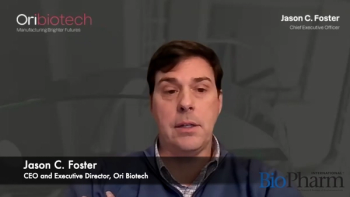
Jason C. Foster, CEO and executive director of Ori Biotech, discusses the milestone achievement in commercial-scale CGT manufacturing with the company’s IRO platform.
Prior to this announcement, Rentschler announced in September 2024 it would be launching an expanded service offering at its advanced therapies site in Stevenage, UK, which is now being shut down.

Under the partnership, the companies will combine fully automated and digitalized technologies aimed at reducing CGT manufacturing timelines to 2.5 days.
The collaboration will combine Cytiva’s CGT manufacturing technologies with Cellular Origins' robotic manufacturing platform.

Jane True, Dr Andreas Kuhn, and Dr Andy Geall discuss mRNA risks, costs, effectiveness, manufacturing logistics, public messaging, and regulatory challenges.
Jane True, Dr Andreas Kuhn, and Dr Andy Geall discuss mRNA risks, costs, effectiveness, manufacturing logistics, public messaging, and regulatory challenges.
Jane True, Dr Andreas Kuhn, and Dr Andy Geall discuss mRNA risks, costs, effectiveness, manufacturing logistics, public messaging, and regulatory challenges.
Under a global alliance with the Australian non-profit GC4K and Weill Cornell Medicine, PackGene aims to deliver a custom-tailored gene therapy solution for hereditary spastic paraplegia type 56, an exceptionally rare neurological disease.

Optimizing the harvest of viral particles is important for the yield and purity of the final product.

Contract development and manufacturing organizations (CDMOs) are more critical than ever as the demand for advanced therapies continues to grow.

Synthesis of DNA via cell-free methods has many benefits versus fermentation.
EXO Biologics and its subsidiary, ExoXpert, have received GMP certification of a European exosomes manufacturing facility and have successfully loaded mRNA and DNA payloads into GMP-grade exosomes for drug delivery.
TrakCel's OCELLOS, an IT platform, has been selected to orchestrate the administration of five out of seven autologous or matched allogenic cell therapy products approved or expected to be approved in 2024.

In this episode of the Ask the Expert video series, Peter Walters, Fellow of Advanced Therapies at CRB Group, discusses how facilities used for solid dosage manufacturing may be retrofitted into sustainable cell and gene therapy production facilities.

Laks Pernenkil, Brian Feth, and Alex Philippidis go behind the headlines to discuss the impact of recent news, including FDA’s drug shortage list update, Nobel prize winners in microRNA and AI, and a big-potential research win for RNA editing.
Advertisement
Advertisement