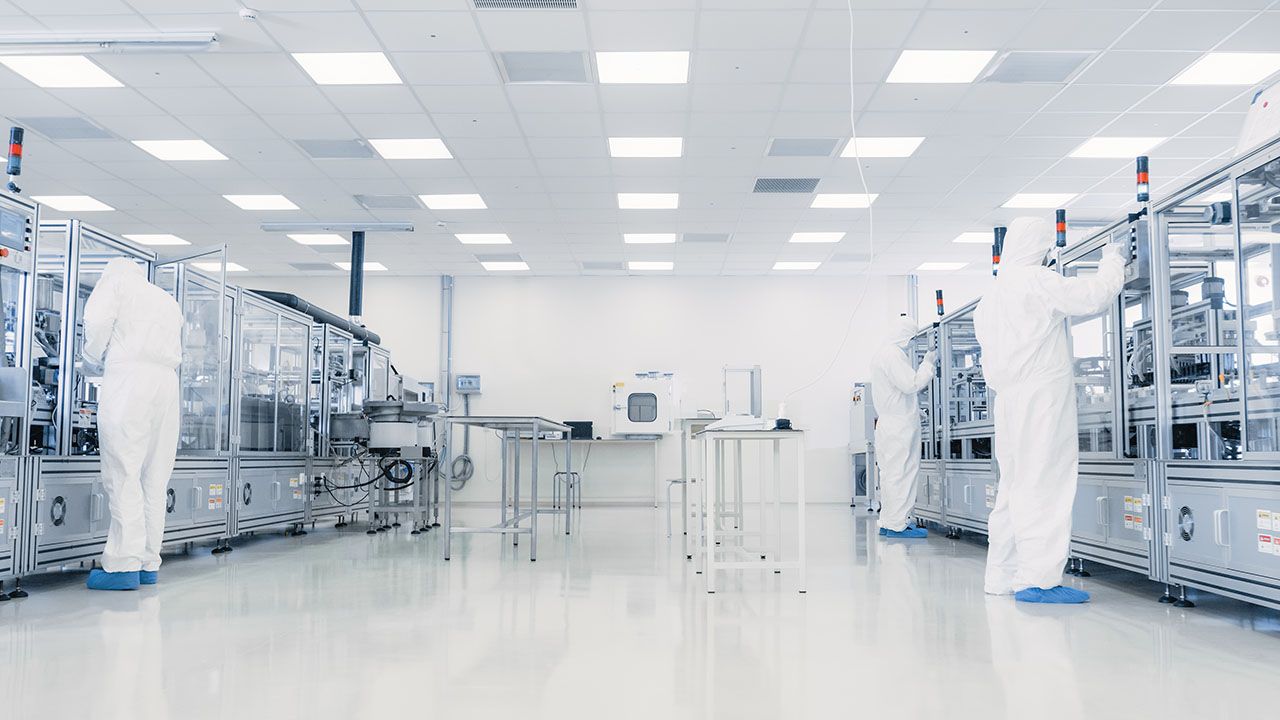

Corning’s new Ascent fixed bed reactor (FBR) system is an automated bioproduction platform designed to significantly improve yields and reduce bioproduction costs.
Corning’s new Ascent fixed bed reactor (FBR) system is an automated bioproduction platform designed to significantly improve yields and reduce bioproduction costs.
AGC Biologics has acquired Novartis’ Longmont, Colorado, manufacturing facility for the commercial production of cell and gene therapies.
The University of Sheffield has launched an innovative gene therapy program that could pave the way for novel treatments for neurodegenerative diseases.

The benefits of single-use technologies for upstream viral-vector processes clearly outweigh their disadvantages.
PerkinElmer has entered into an agreement to acquire BioLegend, a global developer and manufacturer, in a deal valued at $5.25 billion.
Pall has secured a manufacturing contract with Exothera for the suspension-based manufacture of gene therapies and viral vector-based vaccines.
Kriya Therapeutics completes $100 Million Series B financing to advance its platform for designing, developing, and manufacturing gene therapies.
Gene therapy products present a unique set of challenges for the control of host cell protein impurities.
Univercells Technologies and VectorBuilder to produce custom viral vectors for cell and gene therapies as well as vaccine applications.
A new media panel, gene kit, and advanced resins that are now in Thermo Fisher Scientific’s gene therapy portfolio aim to reduce manufacturing costs and increase gene therapy viability.

New challenges in extractable and leachable studies for cell and gene therapy products.
CDMO Yposkesi will increase its current gene therapy vector capacity through French government’s “Plan de Relance” scheme.
The Cell and Gene Therapy Catapult will establish offices and laboratories in Edinburgh, Scotland.
Genezen Laboratories has broken ground on a new current good manufacturing practice (CGMP)-compliant lentiviral vector production facility.
The University of Birmingham has been confirmed as the third National Training Centre in the Advanced Therapies Skills Training Network (ATSTN) initiative
Ilya Pharma has been granted approval by the Swedish Medical Product Agency and Swedish Ethical Review Authority for initiation of a Phase II clinical trial of its ILP100 gene therapy.
Horiba has joined a consortium aimed at accelerating the development of process analytical technologies for cell and gene therapy manufacturing
Yposkesi is building its second commercial facility for cell and gene therapy manufacturing at its campus on Corbeil-Essonnes, France.
The CGT Catapult has formed a consortium aimed at advancing the technology development and lowering costs of cell and gene therapy manufacturing.
VIVEbiotech has opened its new lentiviral vector manufacturing facilities in Spain, expanding capacity for lentiviral vectors for use in cell and gene therapies.
The increased number of regulatory filings for cell and gene therapies requires reevaluation of bioassay methods because of their complexity.
The Discovery Labs has signed a foundational lease with the University of Pennsylvania Gene Therapy Program to build a new life sciences cluster in King of Prussia, Pa.
Biogen and Ginkgo Bioworks have partnered to develop a next-generation AAV production platform to accelerate Biogen’s gene therapy drug development efforts.
The Committee for Medicinal Products for Human Use of the European Medicines Agency presented a positive opinion of bluebird bio’s SKYSONA (elivaldogene autotemcel, Lenti-D), a one-time gene therapy for the treatment of early cerebral adrenoleukodystrophy, an X-linked metabolic disorder.
Univercells will introduce the intermediate capacity scale-X carbo system to NIBRT’s facility for hands-on demonstration and training in CGT.