



Shortages spur efforts to overhaul manufacturing oversight.
Accurately targeted immunotherapies through reliable neoantigen recognition enable personalized medicine development.

Proprietary cell lines offer opportunities for achieving high AAV titers.

In the ATMP space, CGTs are hitting their stride with unprecedented approvals in the past year alone.

Shortages spur efforts to overhaul manufacturing oversight.
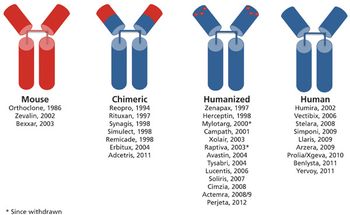
Innovative products and a range of indications drive the therapeutic antibody market.
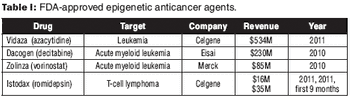
Therapeutics targeting epigenetic mechanisms of disease will change the pharmaceutical marketplace.
Shortages spur efforts to overhaul manufacturing oversight.

The EU fine-tunes the Falsified Medicines Directive.

White House and Congress likely to struggle over funding for bio/pharmaceutical regulation.
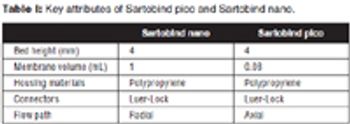
The authors describe the development of an ultra scale-down anion exchange membrane adsorber, and demonstrate scalability to larger-scale devices.

This month, Sharon Strause, an industry consultant, provides a look back at "Computer System Validation Part I: Testing and Verification of Applications Software" by Leonard J. Goren.
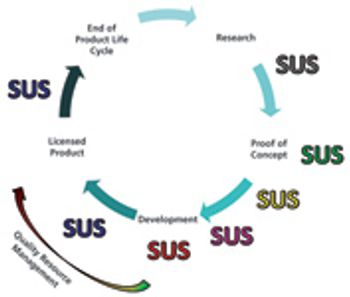
Insights on single-use systems implementation and exploitation in biopharmaceutical manufacturing and processing, based on a QbD approach.
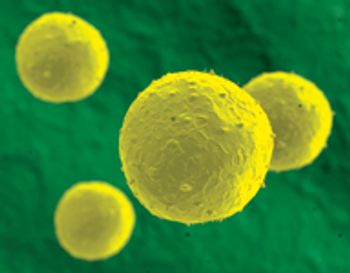
Scaling up stem-cell cultures requires careful consideration of the bioreactor design.
Manufacturing and in-depth characterization provide basis for demonstrating product equivalence.

AET BioTech and BioXpress Therapeutics have entered into an agreement to codevelop a biosimilar version of Abbott's tumor necrosis factor inhibitor monoclonal antibody adalimumab.
User fees aim to speed approvals and support inspections.
Recently published research demonstrates how nanoparticles can be used to overcome hurdles in localized drug delivery.
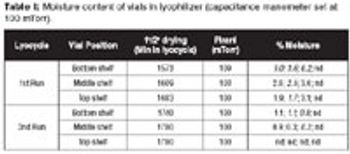
Using an alternate moisture-generation method may provide more accurate data for regulatory submissions.
USP Hosts Symposium on Science and Standards

The authors demonstrate how an integrated model is helping to achieve regulatory flexibility. This article is part of a special section on biopharmaceutical trends.
Manufacturers and regulators struggle to control phony versions of crucial medicines.

Import controls and risk strategies aim to promote quality and spur new drug development.
A team from Northwestern University has demonstrated the feasibility of topical delivery of small interfering RNA (siRNA).
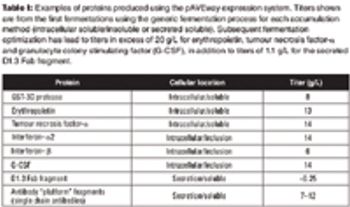
Industry experts discuss methods for optimizing protein expression in bacterial and mammalian cell lines.

Multiple initiatives are moving forward to maintain US leadership in biopharm R&D.
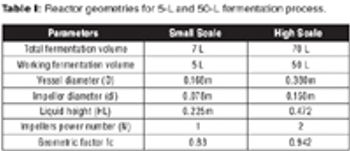
The authors present scale-up from a 5-L fermentor to a 50-L pilot-scale using the criterion of constant power consumption per unit liquid volume.

In a special anniversary interview, Washington Editor Jill Wechsler speaks with with FDA Deputy Commissioner Deborah Autor about where the agency is headed.
Panayiotis P. Constantinides of Biopharmaceutical & Drug Delivery Consulting on growth of nanoparticle delivery systems.