
A new report from The Pharmaceutical Care Management Association alleges that FDA hinders competition in the pharmaceutical industry and influences how a drug's price is calculated.
A new report from The Pharmaceutical Care Management Association alleges that FDA hinders competition in the pharmaceutical industry and influences how a drug's price is calculated.
Amgen wants the regulatory agency to ensure biosimilar applicants follow the rules of the patent dispute resolution process delineated by the BPCIA.

Manufacturers face regulatory overhaul, while brand-generic debates escalate over biosimilars and labeling changes.
The final guidance explains some principles for developing biosimilars and establishes some rules about extrapolation across indications for various medical conditions.
Many European biosimilar groups argue that biological qualifiers should not be implemented in countries where the brand name or INN of a drug is already well established.
ABP 501, a biosimilar candidate for Humira, was shown to have a immunogenicity and efficacy profile comparable to that of the innovator product.
USP expresses its support for a consensus-based global approach to the naming of biologics.
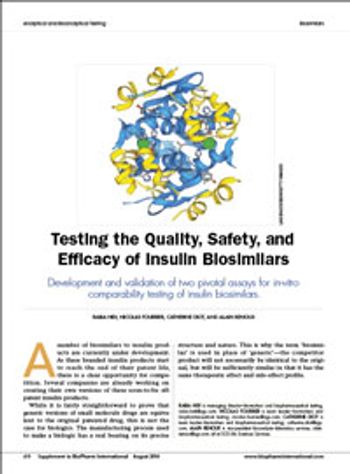
Development and validation of two pivotal assays for in-vitro comparability testing of insulin biosimilars.
FDA seeks high quality applications and products to facilitate approvals and reduce safety and supply problems.
Several groups, including pharmacies, call on FDA to preserve accepted International Nonproprietary Name conventions for biosimilars.
A new report from GlobalData states that biosimilars will overtake the market share after 2019.
Draft guidance addresses the use of clinical pharmacology studies to determine biosimilarity of biologics.
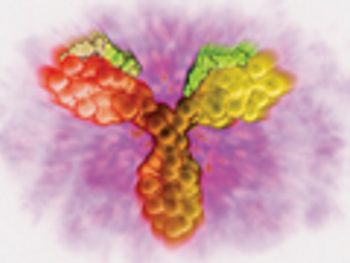
The approval and acceptance of monoclonal antibody biosimilars is necessary if the biosimilars market is to experience real growth.

High technology assessments are having an impact on biosimilars development in Europe.
Automated sample handling, advanced glycan analysis and specially designed columns are helping biosimilar manufacturers speed up confirmation of the biosimilarity of their products.

Mike Jenkins, general manager of Catalent Biologics discusses the evolving landscape of the biologics market and hurdles faced in the development and manufacture of these innovative products.

As the complex requirements of manufacturing biologics are manifold, it is important that biomanufacturing companies adopt quality-by-design principles.
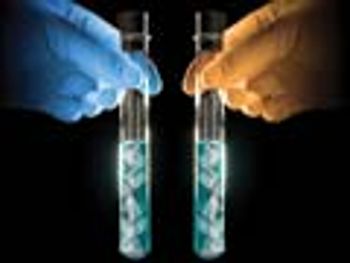
Review the importance of characterization studies during biosimilars development and related analytical methods.
The California State Assembly becomes the latest state to specify requirements allowing substitution of biosimilars.
FDA releases FY 2014 generic-drug user fees.

FDA funds research to further development of innovative generics, while working to address review and approval issues.
The EMA's Committee for Medicinal Products for Human Use has recommended granting of marketing authorizations for the first two monoclonal antibody biosimilars.
Global program seeks to confirm biosimilarity to support regulatory submissions in the US and EU.
Maryland is the latest state to consider whether to include additional requirements for substitution of biological products.

Sound policies are needed to govern the substitution of interchangeable biologics.