




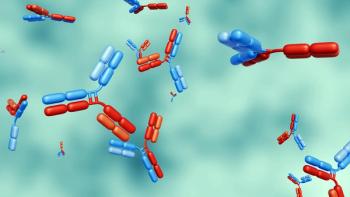
With $137 million in Series B funding led by Novartis and other firms, Sidewinder Therapeutics will support development of bispecific ADCs designed to improve tumor targeting, enhance drug delivery, and reduce off-target toxicity in cancer.
With $137 million in Series B funding led by Novartis and other firms, Sidewinder Therapeutics will support development of bispecific ADCs designed to improve tumor targeting, enhance drug delivery, and reduce off-target toxicity in cancer.

As 2026 marches forward, the biopharma industry finds itself balancing therapeutic innovation with operational discipline across manufacturing, data integrity, and next-gen precision medicine

Drug development has evolved from a linear, data-driven expectation into a complex, iterative process shaped by scientific uncertainty, modality-specific challenges, and increasing demands for differentiation, real-world value, and reimbursement.
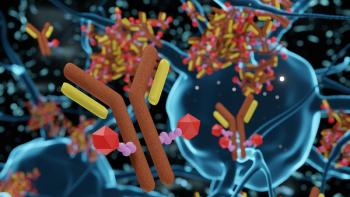
The acquisition aims to advance next-gen ADCs that target NaPi2b and 5T4 and that show early clinical activity in solid tumors, which highlight advances in precision payload delivery and durability.

A disciplined approach is needed to address complexity, limited knowledge, lack of platform processes and standard analytics, and regulatory uncertainty.

For World Health Day 2026, we examine how today’s global partnerships are increasingly aimed at translating research into real-world care and scalable therapies while expanding access worldwide and utilizing AI-driven oncology tools.

CGT is rapidly transforming oncology and rare disease research, with patient-derived models, advanced imaging, CRISPR/Cas9, and 3D organoids driving innovation while solid tumor modeling remains a critical frontier.

Reliable, domain-specific AI models grounded in validated clinical evidence are emerging as essential to safely scaling generative AI across healthcare applications.

BioNTech’s decision to close its Singapore manufacturing facility reflects mounting financial pressure, ongoing restructuring efforts, and uncertainty around the pace at which next-generation mRNA therapies will scale.

While allowing for high throughput and efficiency, the bulk fill/finish process exerts extreme stress on glass containers, resulting in cosmetic defects and breakage.

New phase 3 data from AstraZeneca suggest that adding systemic agents to embolization can significantly delay disease progression in early hepatocellular carcinoma.

Indirect comparison data from Novo Nordisk show oral semaglutide achieved greater HbA1c reduction and weight loss than Lilly’s orforglipron.

Experts from Acuitas, Mana.bio, NanoVation, and ReCode share their input on targeted LNP engineering, which is accelerating pipeline expansion of nucleic acid therapies for chronic and rare diseases beyond the liver.
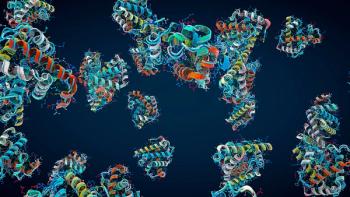
The funding will support expansion of evolution-derived molecule datasets, enabling discovery of novel bioactive compounds and improving AI model performance in drug development.

Practical insights into early phase trial design that highlight important statistical considerations and recent developments shaping early phase research.

FDA approval of a denosumab (Prolia) biosimilar and dual filing acceptances by FDA and EMA for an omalizumab (Xolair) biosimilar candidate from Teva signal increasing competition in the biosimilar markets as well as expanded access for allergy and immunology patients.
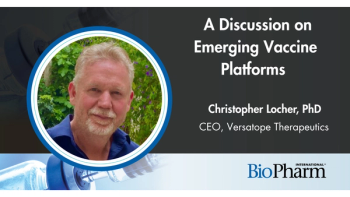
Christopher Locher, PhD, CEO, Versatope Therapeutics, discusses how emerging vaccine platforms are advancing the pursuit of a universal influenza vaccine, while highlighting the scientific, regulatory, and economic barriers that continue to shape its path to reality.

The approval introduces a one-time gene therapy for LAD-I that restores immune function and addresses the underlying cause of a life-threatening pediatric disease.

Bristol Myers Squibb’s Dr. Manisha Desai, senior vice president of Product Development, notes how strategic bioprocessing alliances accelerate drug development by integrating R&D and manufacturing to scale complex biologics and ensure reliability.

Today’s podcast talks about RNA therapy optimization, AI-driven development, and collaborative models improving efficiency, scalability, and long-term outcomes.

FDA’s approval of a high-dose nusinersen from Biogen improves SMA treatment durability and supports evolving therapy sequencing strategies in a competitive neuromuscular market.
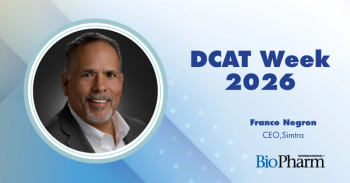
In the final part of the interview, Franco Negron, CEO, Simtra BioPharma Solutions notes the question frequently heard from sponsors and predicts where the CDMO market is heading.

Phase 3 data from AstraZeneca show IL-33 inhibition reduces COPD exacerbations across broad populations, supporting a new biologic approach beyond eosinophil-driven disease.
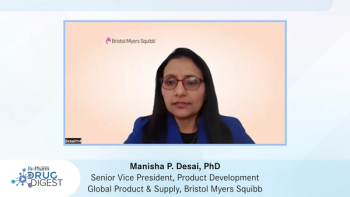
Explore how strategic partnerships are reshaping bioprocessing and biopharma drug development, from early process design to scalable biologics manufacturing, with Manisha P. Desai, PhD, senior vice president, Product Development, at Bristol Myers Squibb.
In the second part of the interview, Franco Negron, CEO, Simtra BioPharma Solutions discusses the decision between insourcing manufacturing or partnering with a CDMO.

In a new collaboration, Tempus and Daiichi Sankyo will apply AI-driven biomarker discovery to improve ADC patient selection with the aim of advancing precision strategies in competitive oncology pipelines.
Franco Negron, CEO, Simtra BioPharma Solutions touches on rising demand for biologics and high-potency therapies and how driving early, large-scale investment in injectable manufacturing capacity keeps pace with market growth.

Novo Nordisk and TUL report phase 2 data showing UBT251 delivers strong glycemic and weight reductions, making it a strong contender in the GLP-1 arena.
Today’s podcast spotlights major funding and a high-profile deal surrounding emerging multispecific immune-engaging biologics that demonstrate improved targeting precision and safety control across complex oncology and autoimmune indications.
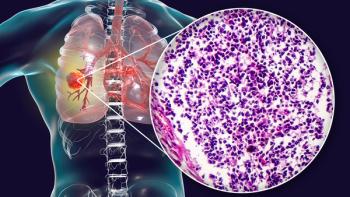
GSK’s B7-H3-targeted ADC has shown durable responses in SCLC, supporting regulatory momentum and advancing targeted approaches for high-unmet-need lung cancers.