




Conference Coverage
Latest

Advertisement
Shorts
0:48
How Surrogate Endpoints Accelerate Patient Access to Innovation
3 days ago
by
Emily Schoenthaler(+2 more)
0:36
Why Amino-Acid Counting Decides Regulatory Fate
10 days ago
by
Feliza Mirasol(+1 more)
0:54
Why Basel is the Global Hub for Immune Engineering
18 days ago
by
Feliza Mirasol(+1 more)
0:39
Building the Future of Immune Engineering
19 days ago
by
Feliza Mirasol(+1 more)
1:15
How AI and 'Lane Assist' are Transforming Cancer Care
20 days ago
by
Emily Schoenthaler(+2 more)

0:35
The Core Mission: Translation in Immune Engineering
a month ago
by
Feliza Mirasol(+1 more)

0:33
Why Structure is the Ultimate Risk Management in M&A
a month ago
by
Emily Schoenthaler(+1 more)
1:08
How AI Shrinks Clinical Trial Design from Months to Minutes
a month ago
by
Emily Schoenthaler(+2 more)
0:42
Can Vaccines Overcome Cancer Immune Suppression?
a month ago
by
Feliza Mirasol(+2 more)
0:35
The Manufacturing Challenge: Scaling Personalized Cancer Treatment
2 months ago
by
Feliza Mirasol(+2 more)
Analytics for Bispecific Antibody Product Release
Planning the analytical strategy for product release should be started as early as possible to ensure product quality and regulatory success.

FAQ: What You Need to Know About Analytical Method Validation
We answer readers’ top questions on limit of blank, limit of detection, limit of quantitation, acceptance criteria, and equivalence testing in analytical method validation.

Digital Standards Aim to Modernize Quality Assurance Without Compromising Confidence
As quality control labs move toward more connected, data-driven operations, digital technologies must be adopted in a way that upholds patient safety.

What FDA's AI Warning Letter Tells Us About GMP Accountability
An FDA warning letter to Purolea Cosmetics Lab shows that AI-assisted drafting can support documentation work only when the resulting document is subject to quality-system controls.

Expedited Regulatory Pathways for Biologics
This episode of the BioPharm Drug Digest will examine strategic triggers that have thus far won expedited regulatory review for biologics in development.

Videos

Advertisement
All News
Advertisement

Tecentriq plus chemotherapy gains FDA approval for stage III dMMR colon cancer after a phase 3 trial showed improved disease-free survival.
New clinical milestones, manufacturing investments, and regulatory incentives could help developers overcome barriers to delivering treatments for patients with rare diseases.

Genglycos, the gene therapy that earned the voucher, will fund new Ultragenyx therapies for other rare and ultra-rare diseases.

Series A led by Oxford Science Enterprises and up to $20 million in public funding will move cell-based mRNA production toward clinical-grade scale.

Rocket’s modified protocol keeps the first three patients in a 12-patient efficacy population, with topline Danon disease data expected in mid-2028.
New regulatory decisions, manufacturing partnerships, and financing pressures are reshaping access, supply, and development pathways for emerging advanced therapies.

Caribou is halting vispa-cel and CB-011, allogeneic CAR-T therapies that showed up to 92% response rates, citing a difficult financing environment.

Celltrion USA's Omlyclo, the first interchangeable biosimilar to Xolair, reaches the U.S. market across four allergic and inflammatory indications.

Alvotech turns to a CDMO's 40,000-liter Syracuse facility for biosimilar drug substance as it expands its manufacturing network.

AbbVie's c-Met ADC Temab-A showed a 15.6% response rate in late-line colorectal cancer ahead of its 2 new FDA breakthrough designations.
Advertisement
New data and partnerships are advancing brain-penetrant enzyme therapy, targeted antibodies, flexible obesity dosing, and frontline lymphoma treatment strategies.
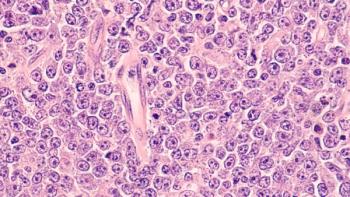
Topline phase 3 data show epcoritamab plus R-CHOP reduced the risk of progression or death by 51% in newly diagnosed diffuse large B-cell lymphoma.

Part 2 of the VK2735 maintenance study tests whether daily or weekly oral tablets can hold weight loss first achieved with weekly subcutaneous injections.

CSL and Alentis will co-develop lixudebart, an antibody targeting claudin-1, across 3 rare kidney and liver disease indications.

AL050 aims to treat GBA1-driven Parkinson disease by delivering a GCase enzyme across the blood-brain barrier.
Advertisement
Advertisement