
“The emerging profile of CLD-423 strengthens our conviction in the potential of dual IL-23p19 and TL1A inhibition.”
— Praveen Tipirneni, MD, MBA, chief executive officer, Caldera Therapeutics
News|Articles|November 5, 2026
Caldera’s IL-23p19×TL1A Bispecific CLD-423 Shows 40-Day Half-Life in Phase 1a, Supporting Dosing Every 8 to 12 Weeks
Author(s)Emily Schoenthaler
Healthy-volunteer data show sustained TL1A suppression and a profile supporting infrequent subcutaneous dosing. Caldera also licensed a second bispecific, targeting IL-17 and TL1A, from Qyuns Therapeutics.
Advertisement
Caldera Therapeutics’ CLD-423, a bispecific antibody that blocks both IL-23p19 and TL1A, showed an estimated intravenous (IV) half-life of more than 40 days and sustained TL1A suppression in a phase 1a trial in healthy volunteers, supporting planned subcutaneous (SC) maintenance dosing every 8 or 12 weeks.¹ The company also licensed a second preclinical bispecific antibody, targeting IL-17 and TL1A, from Qyuns Therapeutics.¹
Praveen Tipirneni, MD, MBA, chief executive officer of Caldera, said the emerging profile of CLD-423 “strengthens our conviction in the potential of dual IL-23p19 and TL1A inhibition.”¹
How is CLD-423 designed?
CLD-423 combines two inflammatory bowel disease (IBD) targets in a single molecule.¹ IL-23p19 is already validated by approved antibodies, including Eli Lilly’s Omvoh (mirikizumab), Johnson & Johnson’s Tremfya (guselkumab), and AbbVie’s Skyrizi (risankizumab).² TL1A is a cytokine linked to both inflammation and fibrosis, and several anti-TL1A antibodies have shown encouraging Phase 2 results in ulcerative colitis and Crohn’s disease, as BioPharm International®
What did the phase 1a trial show?
The randomized, placebo-controlled, first-in-human trial enrolled 56 healthy volunteers, 42 of whom received CLD-423 and 14 of whom received placebo, across five single-dose and two multiple-dose cohorts using IV and SC dosing.¹ Exposure increased roughly in proportion to dose, and mean absolute SC bioavailability was approximately 89%.¹ Pharmacokinetics after multiple doses were consistent with single-dose results.¹
Free TL1A fell below the lower limit of quantification within two hours at all doses and routes, and suppression was sustained after single and multiple doses.¹
CLD-423 was generally well tolerated, with no dose-limiting toxicities, no deaths, and no treatment-emergent adverse events above Grade 2.¹ One participant in a multiple-dose IV cohort discontinued after a Grade 2 infusion reaction.¹ Treatment-emergent anti-drug antibodies were detected in eight of the 42 treated participants, generally at low to moderate titers two to three months after dosing, and none occurred while drug concentrations remained in the projected therapeutic range.¹
Longer dosing intervals are a focus across IBD biologics. In a BioPharm International
Where did CLD-423 come from?
Caldera licensed CLD-423 from Qyuns Therapeutics in April 2025 for $10 million upfront, an equity stake of just under 25%, and up to $545 million in milestones.³ Caldera launched in January 2026 with $112.5 million in Series A financing from investors including Atlas Venture, LAV, venBio, and Omega Funds.² The company plans to go public through a merger with Synlogic, supported by an approximately $278 million private placement, with closing expected in early 2027.⁴ The combined company will operate as Caldera Therapeutics and intends to list on NYSE American under the ticker CALD.⁴
The new IL-17×TL1A program, also licensed from Qyuns, is preclinical, and Caldera said it will disclose more details in 2027.¹ Financial terms were not disclosed.⁴
What happens next?
Caldera plans to file an Investigational New Drug application with FDA in the fourth quarter of 2026 for a global, double-blind, placebo-controlled phase 2b dose-ranging trial in ulcerative colitis, with first dosing in early 2027 and induction results expected by the end of 2028.¹ A phase 2a open-label proof-of-concept trial in Crohn’s disease in China is expected to begin dosing in early 2027, with initial data in late 2027.¹
Flag: This is a fragment of a longer quote, and the same words appear in the body. If you’d rather not repeat it, use Caldera’s line about breaking through the “efficacy ceiling” in IBD, taken from the full release.
References
Caldera Therapeutics reports new CLD-423 Phase 1a data and expands immunology and inflammation pipeline with anti IL-17 x TL1A bispecific antibody program . News release. Caldera Therapeutics. November 5, 2026. Accessed November 5, 2026.Caldera launches with $112M, former Morphic CEO and IBD drug from China . Fierce Biotech. January 14, 2026. Accessed November 5, 2026.Caldera biotech startup licenses Qyuns IBD drug targeting TL1A and IL-23 . BioPharma Dive. January 14, 2026. Accessed November 5, 2026.Synlogic, Inc. Form 425: Caldera Therapeutics press release . US Securities and Exchange Commission. November 5, 2026. Accessed November 5, 2026.
Advertisement
Related to this article

The half-life-extended antibody failed its primary endpoints in two Phase 2 SKYWAY sub-studies, so Spyre is dropping it in rheumatic diseases and moving it into a combination trial in hidradenitis suppurativa.
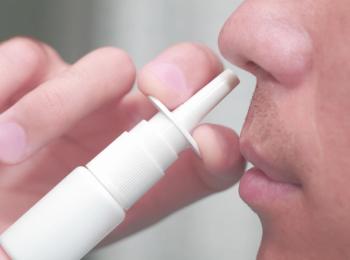
In the Phase 2a INFORM-MS trial, Tiziana’s nasal foralumab reduced microglial activation on PET imaging at 50 µg in non-active secondary progressive MS, while the 100-µg dose showed no significant effect.

The first-in-class molecule, licensed to Dianthus as DNTH212 outside Greater China, is designed to block type 1 interferon production and BAFF/APRIL-driven B-cell activity with a single drug.

Updated phase 2 IOV-LUN-202 data show Iovance’s TIL cell therapy lifileucel produced a 24.6% response rate in previously treated non-squamous metastatic NSCLC, rising to 52.0% in KRAS and HER2 wild-type patients, as the company launches a biomarker-enriched registrational cohort.
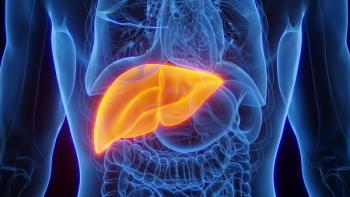
Akeso won NMPA priority review for ivonescimab plus chemotherapy in first-line biliary tract cancer after a phase 3 win over durvalumab plus chemo.

VG801 gene therapy improved vision through 12 months in a Stargardt disease trial as VeonGen aligned with FDA on its pivotal phase 3 design.

UCB will use Cradle’s AI-driven protein design platform in selected discovery projects, from hit generation through preclinical readiness, expanding its digital antibody engineering program.
Matt Trupo, Richard Jaenisch, and Brian Drapeau explore how AI advances biological insights, drug-target discovery, and supply chains.
Advertisement
Advertisement
Trending on BioPharm International
1
Policy Leaders Urge Treasury to Narrow Biotech Outbound Investment Rule
2
Spyre’s Anti-TL1A Antibody SPY072 Misses in Psoriatic Arthritis and Axial Spondyloarthritis, Shifts Focus to Hidradenitis Suppurativa
3
The BioPharm Brief: A $7 Billion Oncology Option Deal, a TL1A Pivot, and Oral Adalimumab Heads to the Clinic
4
Boehringer Ingelheim Licenses Six Preclinical ADC and T-Cell Engager Programs From SBP Group in Deal Worth Up to $7 Billion
5