





CDER's new program will create discussion around AI and be administered through the Emerging Drug Safety Technology Program.

The digital transformation of quality-by-design assessment workflows can improve efficiency, reduce human errors, and facilitate integration within a much broader digital ecosystem.

The authors discuss subjectivity in the ICH Q9 (R1) guidance document.

Understanding how to apply phase-appropriate GMPs is crucial for achieving successful regulatory approval.

CDER's new program will create discussion around AI and be administered through the Emerging Drug Safety Technology Program.
Reports by USP and FDA detail drug shortage numbers and challenges through 2023.

CGT manufacturing processes need automation as well as standardization, according to Lonza’s Joe Garrity and Jerry Jiang.

Determining E&L risk from single-use components can be used to build the level of extractable profiling and PERLs.
CGT Catapult and CATTI have developed aligned training standards for the manufacture of advanced therapies.

Asking why things are done a certain way will help make an accurate assessment of an organization’s EM program, says Susan Schniepp, distinguished fellow at Regulatory Compliance Associates, and Zachary S. Anderson, global market segment lead—Sterility Assurance, Nelson Laboratories.

FDA’s priority review status was granted based on positive results from a Phase III study evaluating Sarclisa in combination with VRd in treating transplant-ineligible newly diagnosed multiple myeloma.
Bkemv (eculizumab-aeeb) is the first interchangeable biosimilar to Soliris (eculizumab) to treat paroxysmal nocturnal hemoglobinuria and atypical hemolytic uremic syndrome.

This article looks at the relationship between a CDMO quality organization and the client.
Breyanzi is made from the patient’s own T cells, which are genetically reengineered into CAR-T cells and then delivered through infusion as a one-time treatment.

Digital transformation is allowing for better handling, analysis, and protection of vast data collection.
A new draft guidance issued by FDA covers human- and animal-derived materials used in the manufacture of advanced therapy medicinal products.
Guidance documents and interaction with FDA can help manufacturers stay in GMP compliance, says Siegfried Schmitt, VP Technical, at Parexel.
The new draft guidance from FDA provides recommendations for sponsor companies on cell safety testing of human-origin allogeneic cells.
Shanghai Henlius Biotech’s first biosimilar has previously received approvals by the European Commission and National Medical Products Administration.
Beqvez (fidanacogene elaparvovec-dzkt), a one-time gene therapy, helps adults with hemophilia B produce factor IX themselves instead of receiving regular intravenous infusions.
The approval, given across three indications, follows a previous approval for second-line use in esophageal squamous cell carcinoma.
GSK’s supplemental Biologics License Application for its PD-1-blocking antibody therapy has been accepted for review by FDA.
The BioMaP-Consortium includes members of the biopharmaceutical industry and supports BARDA.
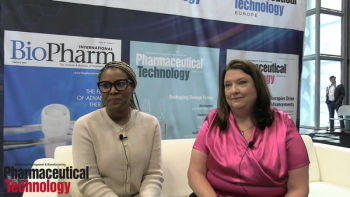
BioPharm International sat down with Christa Myers of CRB Group and Nadiyra Walker Speight of Fujifilm Diosynth Biotechnologies at INTERPHEX 2024 to examine the implementation of Annex 1.
At INTERPHEX 2024, a panel of experts gave insight on new regulatory requirements for contamination control and provided advice for how to implement a contamination control strategy in existing facilities.
The outcomes of a workshop organized by WHO and ICMRA regarding COVID-19 vaccine strain updates are presented in a report published by regulators.

At INTERPHEX 2024, Susan Schniepp, distinguished fellow, Regulatory Compliance Associates, and co-chair of board of directors, Parenteral Drug Association, explores the impact of QMS on quality maturity.
Former FDA drug investigator, Daniel Roberts, discusses the importance of updating process validation and maintaining proper data integrity at a keynote session during INTERPHEX.

This article explores a grouping strategy for therapeutic peptides incorporating theoretical and experimental methodology and results to define a practical and scientifically justified cleaning procedure.