



Brazil to locally produce HIV/AIDS antiretroviral drug atazanavir.

Brazil to locally produce HIV/AIDS antiretroviral drug atazanavir.

Neil Lewis, chief technology officer at Malvern Instruments, talks about the challenges associated with biologics.

The South Korean market is characterized by its aging population and an affluent population. Growth potential is limited as it has evolved to a developed market and industry players expect it to have established regulations.

Can postapproval FDA filings immunize pharma companies from patent lawsuits?

An introduction to a new series on manufacturing within global markets.

Recent research examines the sequence of events underlying cellular reprogramming, which may aid in better control of the production of induced pluripotent stem cells.
Results from the 2012 employment survey.
Creating an effective nucleic acid-based vaccine requires protecting the fragile nucleic acid from degradation, effective transfection of the targeted cells, and producing high enough levels of antigen to evoke a robust immune response.
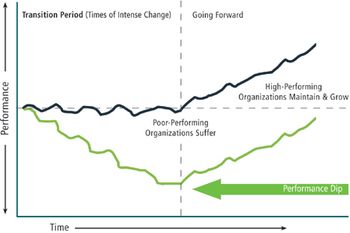
A disciplined approach to changing behavior can achieve change agility.

The government of Turkey is drawing up a program in coordination with the pharmaceutical industry to create ways to make the country a regional production center for pharmaceuticals serving Europe, Central Asia, and the Middle East.

India has enforced stricter patent laws compared to other countries. For a drug to be patentable in India, the invention has to be novel, inventive, and industrially applicable.
Recently published research demonstrates how nanoparticles can be used to overcome hurdles in localized drug delivery.

A handful of therapeutics have performed extremely well in 2012, but as a whole, life-sciences are still down from 2010.

Working together affords many unseen opportunities for pharmaceutical innovation.

Using a competency-based approach to effectively train biopharmaceutical industry staff.
NIH has awarded ten laboratories two-year grants to develop tissue chip technology, with part of the funding coming from the recently established National Center for Advancing Translational Science.

Brazil's regulatory health authority, Anvisa, plans to establish quality requirements for locally produced pharmaceutical excipients, Anvisa told BioPharm International.

After a series of government reforms, the Japanese pharma market is making a comeback.
A team from Northwestern University has demonstrated the feasibility of topical delivery of small interfering RNA (siRNA).

Now that the Supreme Court has upheld the Affordable Care Act, what's next for biopharma?
Steven S. Kuwahara, PhD, principal consultant at GXP BioTechnology LLC, gives an update on "Engineering the Cell-System Interface."

Collaborative R&D models coincide with new ways to fund translational research.
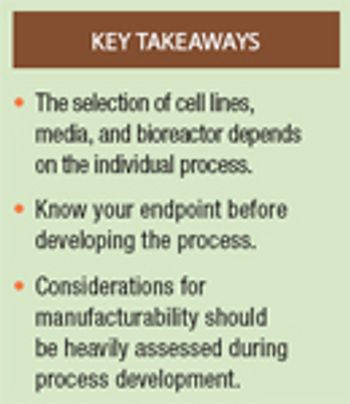
Selection of the right cell line, culture medium, and bioreactor conditions is key to setting up the upstream portion of the biopharmaceutical manufacturing process.

BIO is calling for a more patient-centric approach to user-fee reauthorization.

In a special anniversary interview, Washington Editor Jill Wechsler speaks with with FDA Deputy Commissioner Deborah Autor about where the agency is headed.