






Biohub has released an open-source AI protein design model aimed at early drug discovery, with initial testing in cancer and immune targets.
Biohub has released an open-source AI protein design model aimed at early drug discovery, with initial testing in cancer and immune targets.

Olezarsen’s latest pancreatitis data, Apogee’s advancing atopic dermatitis program, and Jade Biosciences’ first-in-human autoimmune trial highlight continued momentum in RNA therapeutics, immunology, and antibody development across the biopharmaceutical industry.

Advances in predictive modeling, translational bioanalytics, and human-relevant research systems may help reduce reliance on animal testing while improving the clinical relevance of preclinical drug development. Experts say these approaches could streamline IND preparation, lower costs, and support more informed decision-making across biopharmaceutical R&D.

SENN Development CEO Dr. Johannes Eisenhut discusses how Basel’s expanding life sciences ecosystem supports biopharma innovation through research infrastructure and specialized talent growth.

Vir Biotechnology announced complete 96-week Phase 2 SOLSTICE trial data evaluating the combination of tobevibart and elebsiran in chronic hepatitis delta virus infection, with results showing sustained virologic suppression and liver function improvements.

Jade Biosciences announced dosing of the first participant in a Phase 1 clinical trial evaluating JADE201, an investigational anti-BAFF-R monoclonal antibody designed for autoimmune diseases including rheumatoid arthritis.

Apogee Therapeutics reported positive 16-week Phase 2 data for zumilokibart in moderate-to-severe atopic dermatitis, with the investigational anti-IL-13 antibody meeting all primary and secondary endpoints and supporting advancement into Phase 3 trials later this year.
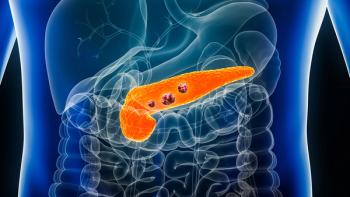
New analysis of phase 3 data shows Sobi's olezarsen reduced acute pancreatitis events and triglycerides in a pooled CORE/CORE2 subgroup with severe hypertriglyceridemia.
Today’s BioPharm Brief covers promising Phase 1 data for Eli Lilly’s gene-editing therapy VERVE-102, evolving CAR-T and bispecific competition in multiple myeloma, and new preclinical findings for a Parkinson’s disease regenerative therapy candidate.

Andrea Zobel and Marco Hogenboom of Cencora World Courier discuss the operational and logistical challenges shaping the radiopharmaceutical sector as therapies move toward broader commercialization. The executives outline how regulatory complexity, short delivery windows, AI-enabled logistics systems, and global coordination requirements are redefining advanced therapy supply chains.

Celltrion’s Dr. Juby Jacob-Nara discussed how subcutaneous infliximab may improve convenience, adherence, and sustained remission for patients with inflammatory bowel disease, while reducing reliance on infusion centers and supporting broader patient-centered treatment goals.

Charles River Laboratories’ Dr. Alan K. Smith explains how early commercial planning, modular manufacturing, and AI-driven automation may accelerate scalable manufacturing for cell and gene therapies.

New Phase 1 data from Eli Lilly’s investigational gene-editing therapy VERVE-102 showed durable LDL cholesterol reductions of up to 62% after a single dose, highlighting growing momentum for one-time cardiovascular genetic medicines targeting PCSK9.

A new DelveInsight pipeline report highlights how late-stage CAR-T and bispecific antibody therapies are driving the next wave of innovation in multiple myeloma, with several BCMA-targeted biologics advancing toward potential regulatory milestones. The report underscores growing industry focus on earlier-line immunotherapy use, durable responses, and evolving treatment sequencing strategies in relapsed and refractory disease.

TreeFrog Therapeutics reports that TFG-001 preclinical data suggest early dopamine release and graft-derived reinnervation in Parkinson disease models.
Today’s BioPharm Brief covers major developments in oncology, rare disease therapeutics, and ADC manufacturing, including positive Phase 3 data for Kelun-Biotech’s sac-TMT in triple-negative breast cancer, promising hypochondroplasia results for vosoritide, and new perspectives on risk-based cleaning validation for highly potent drug manufacturing.
Subcutaneous infliximab may help improve treatment convenience, dosing consistency, and long-term adherence for patients with inflammatory bowel disease, according to discussions at DDW 2026. Clinicians highlighted the potential for self-administered infliximab to support sustained remission while reducing infusion-center burden and improving patient-centered care.

Risk-based ADC cleaning validation must integrate degradation profiling, HBEL-aligned analytical methods, and dual large/small molecule strategies for facility safety, according to STERIS technical services director, Paul Lopolito.

Kelun-Biotech reported positive Phase 3 results for sacituzumab tirumotecan in first-line metastatic triple-negative breast cancer, demonstrating a statistically significant improvement in progression-free survival versus chemotherapy. The findings further strengthen momentum behind TROP2-directed antibody-drug conjugates in oncology and highlight growing competition in the metastatic breast cancer treatment landscape.

The Phase 3 CANOPY-HCH-3 data show statistically significant gains in annualized growth velocity, standing height, and arm span at 52 weeks; regulatory filings planned for Q3 2026.
This edition of The BioPharm Brief highlights major advances in obesity, oncology, and regenerative medicine, including Merck’s Phase 3 ADC study in metastatic colorectal cancer, Eli Lilly’s promising retatrutide obesity trial results, and manufacturing progress supporting Klotho cell therapy development. Together, these updates reflect the biopharma industry’s accelerating focus on targeted therapies, next-generation weight loss drugs, and scalable cell therapy innovation.

Circio CEO Erik Wiklund discussed how circular RNA technology may improve the safety, durability, and cost-efficiency of AAV gene therapies for cardiovascular diseases at ASGCT 2026. Early animal data suggest the platform reduces cellular stress responses while increasing gene expression, potentially expanding access to safer and more scalable gene therapy treatments.

Study startup delays persist due to multiple factors, with improved performance increasingly tied to aligning feasibility and activation planning with real-world site capacity, maintaining early momentum, and reducing operational friction through clearer coordination and enabling technologies.

Merck has dosed the first patient in the Phase 3 PROCEDE-CRC-03 trial evaluating investigational antibody-drug conjugate precemtabart tocentecan in metastatic colorectal cancer. The CEACAM5-targeted ADC is being studied against standard chemotherapy in previously treated patients, highlighting growing industry momentum around targeted oncology therapies and next-generation antibody-drug conjugates.

Eli Lilly’s investigational obesity drug retatrutide produced up to 28.3% average weight loss in the Phase 3 TRIUMPH-1 study, strengthening momentum behind next-generation triple agonist therapies.

Life science organizations that will lead the next decade ar those that deploy systems that are scientifically credible, clinically defensible, regulatorily traceable, and operationally sustained.

Avaí Bio and Austrianova have completed a GMP master cell bank for an early-stage α-Klotho cell therapy program.
New clinical trial updates highlight advances in RNA editing for alpha-1 antitrypsin deficiency, semaglutide data in MASH liver disease, and improved joint outcomes in psoriatic arthritis treatment comparisons.

Dr. Edwin Stone, CEO of Cellular Origins, emphasizes that scalable manufacturing must support, not limit, development of safe and effective biological therapies like cell therapies while speaking at the 2026 ASGCT Annual Meeting.

Novo Nordisk presented new EASL 2026 data highlighting semaglutide’s liver safety profile and subgroup efficacy in metabolic dysfunction-associated steatohepatitis, reinforcing the growing role of GLP-1 therapies in chronic liver disease management.