


Speaking from the show floor at BIO 2026, Dr Anil Kane, Thermo Fisher Scientific's global head of technical and scientific affairs, details how AI partnerships are accelerating drug development decisions across the CDMO continuum.
Speaking from the show floor at BIO 2026, Dr Anil Kane, Thermo Fisher Scientific's global head of technical and scientific affairs, details how AI partnerships are accelerating drug development decisions across the CDMO continuum.
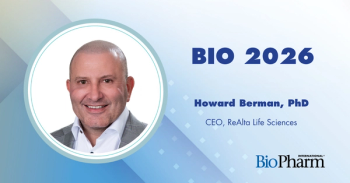
At BIO 2026, Dr Howard Berman, ReAlta Life Sciences’ CEO, explains how an astrovirus-derived anti-inflammatory peptide targets multiple pathways that drive neonatal hypoxic-ischemic encephalopathy (HIE).
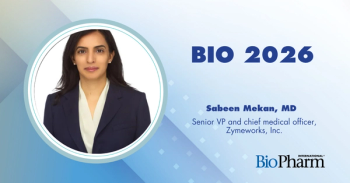
At BIO International Convention 2026, Sabeen Mekan, MD, Vice President of Clinical Development at Zymeworks and panelist for The Next Generation of ADCs: Building Kinder, Gentler Cancer Therapeutics, discusses why safety is becoming an increasingly important differentiator in antibody-drug conjugate development and how biomarker-driven patient selection may help guide future treatment decisions.
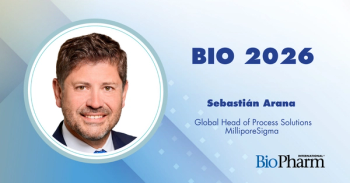
MilliporeSigma Global Head of Process Solutions Sebastián Arana outlines why manufacturing flexibility, not just capacity, is now the strategic priority for biomanufacturers at BIO 2026.
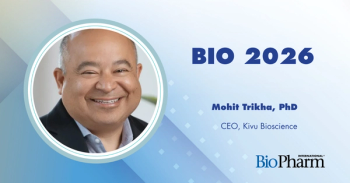
At the BIO International Convention 2026, oncology drug development expert Mohit Trikha, PhD, CEO, Kivu Bioscience, discusses the promise and limitations of organoids and other human-based preclinical models, emphasizing the need for stronger validation, cross-functional collaboration, and early regulatory engagement to improve clinical trial success rates.
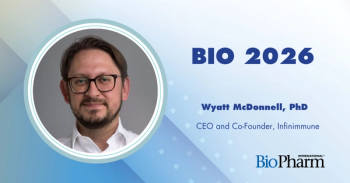
Dr Wyatt McDonnell, Infinimune CEO and co-founder, posits that translatable, decision-linked single-cell data, and not data volume, are what drive effective therapeutic antibody development in this second segment of an interview at BIO 2026.
Speaking at BIO 2026, Infinimune's Dr Wyatt McDonnell explains how the company’s human-derived antibody platform enables multi-objective optimization that AI alone and transgenic models cannot replicate.
At BIO International Convention 2026, Dr. Sabeen Mekan of Zymeworks, Inc., discusses how advances in ADC conjugation, payload selection, and antibody engineering could improve tolerability and therapeutic index for cancer patients.

The deal, announced at BIO 2026, carries total potential value exceeding $2.5 billion and will use Insilico's Pharma.AI platform to drive target-to-candidate discovery across neuroinflammatory, neurodegenerative, and rare neurological indications.
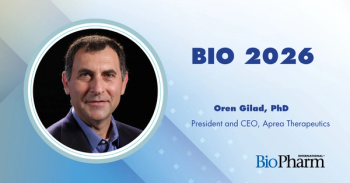
Speaking prior to the start of BIO 2026, Aprea Therapeutics CEO Dr Oren Gilad explains how biomarker-driven oncology strategies are advancing targeted therapies designed to improve efficacy while reducing treatment-related toxicity.

Cytiva’s Pierre-Alain Ruffieux discusses standardization, regionalization, talent gaps, and regulatory pathways shaping advanced biomanufacturing’s future ahead of BIO 2026.
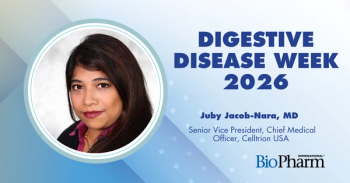
Celltrion’s Dr. Juby Jacob-Nara discussed how subcutaneous infliximab may improve convenience, adherence, and sustained remission for patients with inflammatory bowel disease, while reducing reliance on infusion centers and supporting broader patient-centered treatment goals.
Subcutaneous infliximab may help improve treatment convenience, dosing consistency, and long-term adherence for patients with inflammatory bowel disease, according to discussions at DDW 2026. Clinicians highlighted the potential for self-administered infliximab to support sustained remission while reducing infusion-center burden and improving patient-centered care.
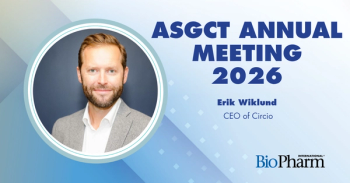
Circio CEO Erik Wiklund discussed how circular RNA technology may improve the safety, durability, and cost-efficiency of AAV gene therapies for cardiovascular diseases at ASGCT 2026. Early animal data suggest the platform reduces cellular stress responses while increasing gene expression, potentially expanding access to safer and more scalable gene therapy treatments.
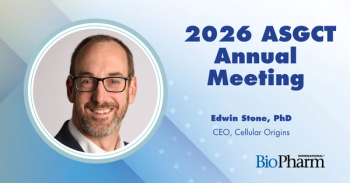
Dr. Edwin Stone, CEO of Cellular Origins, emphasizes that scalable manufacturing must support, not limit, development of safe and effective biological therapies like cell therapies while speaking at the 2026 ASGCT Annual Meeting.
Erik Wiklund discusses how circular RNA-based AAV expression systems may improve gene therapy durability, reduce toxicity, and lower dosing requirements for next-generation therapies.
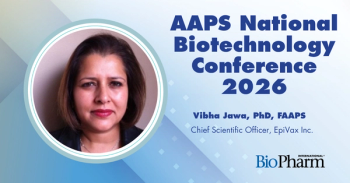
Vibha Jawa, PhD, discussed evolving approaches to preclinical development, animal use reduction, and immunogenicity assessment during an interview with BioPharm International at AAPS NBC 2026.
Cell therapy developers are prioritizing scalable manufacturing strategies alongside efficacy to support broader commercial deployment, notes Cellular Origins CEO Dr. Edwin Stone at the 2026 ASGCT Annual Meeting.

Preclinical ASGCT 2026 data suggest JCR Pharmaceuticals’ JUST-AAV platform may improve central nervous system delivery while reducing liver exposure in AAV-based gene therapies for rare neurodegenerative diseases.
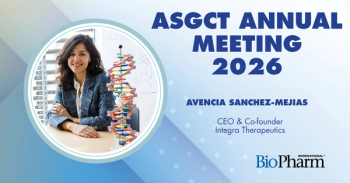
Integra Therapeutics is advancing its FICAT gene writing platform to enable more sophisticated CAR T-cell engineering, combining CRISPR precision with high-capacity DNA integration for next-generation cancer therapies.
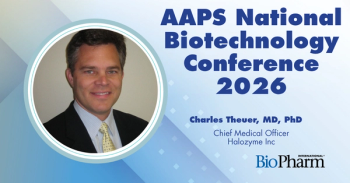
A new European Union regulatory framework known as MIDBA may streamline auto-injector approvals for biologics by reducing the need for repetitive pharmacokinetic (PK) bridging studies. Charles Theuer discussed how the model-based approach could accelerate drug-device combination development and potentially influence future FDA policy.
At AAPS NPC 2026, Charles Theuer discussed how converting biologics from intravenous (IV) infusion to subcutaneous (sub-q) administration is reshaping patient experience, safety profiles, and regulatory development strategies. The shift toward pharmacokinetic (PK)-based approvals and label extrapolation is enabling faster development of subcutaneous oncology and biologic therapies.
Emerging sequential treatment study designs may simplify and accelerate IV-to-subcutaneous biologic conversions by reducing variability and shrinking clinical trial sizes. Charles Theuer discussed how streamlined pharmacokinetic (PK)-driven regulatory pathways and evolving EU initiatives are reshaping subcutaneous biologic development.
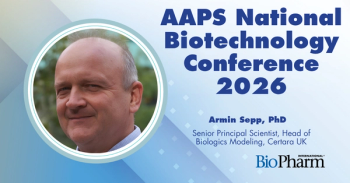
Certara UK’s Dr. Armin Sepp, who spoke at the 2026 AAPS National Biotechnology Conference, explains how quantitative systems pharmacology may improve CAR T-cell safety and efficacy by modeling immune activation, tumor response, and cell persistence.
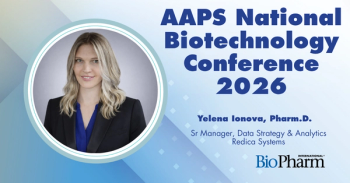
Yelena Ionova, Pharm.D., Redica Systems, discusses how benchmarking inspection data, strengthening sterile manufacturing controls, and adopting continuous regulatory intelligence strategies can help cell and gene therapy manufacturers improve inspection readiness and quality system performance.
Yelena Ionova, Pharm.D., Redica Systems, described how FDA and EMA standards for cell and gene therapy chemistry, manufacturing, and controls are increasingly aligned, yet manufacturers continue to struggle with basic GMP elements such as quality oversight, sterile processing, and staff training. She emphasized that newer CGT facilities have a critical opportunity to design quality systems and data integrity controls correctly from the outset to avoid costly remediation later.
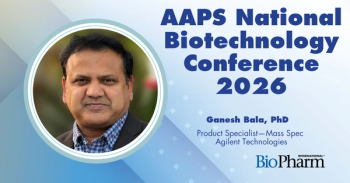
Multi-attribute LC–MS methods improve characterization of complex bioconjugates, supporting scalable and regulatory-ready biotherapeutic development, says Agilent Technologies’ Dr. Ganesh Bala, who spoke at the 2026 AAPS National Biotechnology Conference.

The opening plenary session at this year’s AAPS National Biotechnology Conference will spotlight AI and NAMs as tools that advance predictive toxicology and human-relevant models to improve drug safety and translational research.

Ensorcell has entered the cell and gene therapy manufacturing market with its VersaWeld sterile tube welding platform, unveiled at INTERPHEX 2026 where it also won Best New Product/Service.
Highlights at INTERPHEX 2026 include digital integration and supply chain innovation to improve scalability, resilience, and efficiency in biomanufacturing.