

Latest Conference Content
Advertisement
Advertisement

In contrast to earlier conferences in 2025, experts interviewed as part of the BIO conference in Boston did not come to a consensus about lasting impacts of recent changes in US government policy.
Matthew Stober and Campbell Bunce of Abzena talk about the CDMO’s role in accelerating the path of newer and more effective modalities to market.

The department’s newly announced partnerships were part of a weeklong visit that included discussions held at BIO 2025.
FUJIFILM representatives talked about the rebrand of the company’s life sciences businesses, partnerships with Regeneron and other companies, and the importance of having a presence at conferences like BIO 2025.
Advertisement
Bartłomiej Czubek, director of Business Development at Mabion, discussed what’s working, and the challenges set forth by what isn’t working, in the relationships built within the present biologics CDMO market.
Tevard Biosciences CEO Daniel Fischer discusses tackling Dravet syndrome with a scalable, mutation-targeted approach and building a mission-led company culture.

The Purolite AP+50 affinity chromatography resin has a 50-micron bead size that offers dynamic binding capacity of the AP resin platform while providing durability for monoclonal antibody capture.
Korro Bio CEO and president Ram Aiyar, PhD, delves into his company’s partnership with Novo Nordisk as a means of reaching a larger patient population with new ideas and approaches.
Advertisement
BioPharm International® spoke with Robert Cornog, senior director, Product Development, at Quotient Sciences about how commercial manufacturing and tech transfer impact biopharmaceuticals at the development stage.
Korro Bio CEO Ram Aiyar discusses his company’s platform that tunes the RNA editing process to target a wider range of rare diseases.
The facility is on the company’s Bedford, NH campus, where another existing building will be repurposed into a Development Center of Excellence.
Nicholas Giovannone of Regeneron explained the strategies behind overcoming re-administration challenges in a recap of his presentation at ASGCT 2025.
In this recap of a poster presentation, Austin Daniels of Yokogawa Fluid Imaging Technologies explains how flow imaging microscopy can detect the amount and types of both subvisible and visible particles in samples not often detected by traditional methods.
Jerry Chapman of Redica Systems spoke with BioPharm International® about how artificial intelligence can assist in analyzing a clinical site to determine risk factors and spotlight potential future risks.

In discussions at INTERPHEX 2025, company representatives seized upon several common themes, most notably safety, sustainability, and the increasing utility of automation.
The company’s presence at ASGCT included not only a booth on the show floor, but also one oral and nine poster presentations.
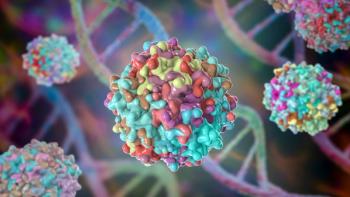
A late-breaking poster presented at ASGCT 2025 described the enhanced central nervous system transduction and safety of the vector.

A pediatric patient with a rare genetic disorder safely received a personalized CRISPR therapy, marking the first known case of a personalized CRISPR-based medicine administered to a single patient.
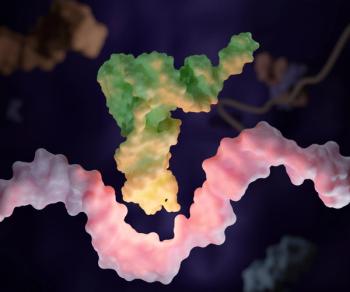
Tevard's tRNA therapy appears to restore full-length dystrophin and motor function in a Duchenne muscular dystrophy model, showing promise for nonsense mutation treatments.

The poster presentations contain data highlighting the company’s role to date in developing non-replicating HSV-1 technology for use in neurology.

The company’s technology was used to create CAR-T cells that demonstrated the expression of complex CARs in a single DNA donor.
BioPharm International® spoke with Ryan Larson, PhD, SVP, Head of Research at Umoja BioPharma about how emerging modalities in cancer treatments, including cell therapies, are evolving.
The company has had abstracts accepted for three oral presentations and five posters.
The company hopes that its proprietary circVec technology platform will become a gold standard for nucleic acid and viral therapeutics.
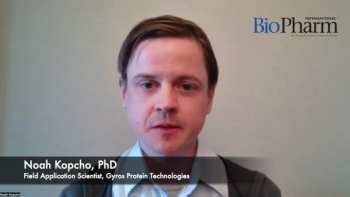
BioPharm International® sat down with Noah Kopcho, field application scientist at Gyros Protein Technologies, to talk about the challenges in the production of AAV vectors.
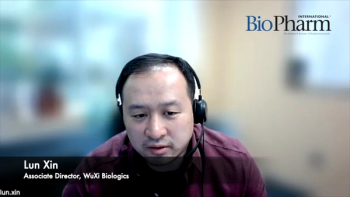
BioPharm International® spoke with Lun Xin, associate director at WuXi Biologics, about how automation can accelerate and improve the formulation of high-concentration biologics.
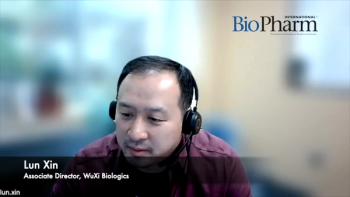
BioPharm International® spoke with Lun Xin, associate director at WuXi Biologics, about high-concentration biologics and some of the biggest challenges associated with their formulation.
Advertisement
Advertisement