

As the biopharmaceutical industry moves increasingly toward applied AI in GMP manufacturing, emphasizing real-world use, PDA Week 2026 is expected to evolve as it further dives into risk management and data-driven quality decisions.
As the biopharmaceutical industry moves increasingly toward applied AI in GMP manufacturing, emphasizing real-world use, PDA Week 2026 is expected to evolve as it further dives into risk management and data-driven quality decisions.

In the second half of an interview at the close of INTERPHEX 2026, Avantor’s Jerry Keybl explains that digital integration and AI-driven analytics enable predictive bioprocess control and can thus improve consistency, scalability, and data-driven manufacturing decisions.
Consistent fluid management across scales supports efficient bioproduction and reduces risk during scale-up of complex therapeutic modalities, says Avantor’s Jerry Keybl at INTERPHEX 2026.

AI and automation may streamline cell and gene therapy manufacturing by reducing labor demands while improving efficiency and supporting scalable production, says Dr. Alan Smith of Charles River Laboratories.
Dr. Alan Smith of Charles River Laboratories explains why early manufacturing planning and scalable processes are critical to ensure successful commercialization of complex cell and gene therapies as part of his panel discussion at INTERPHEX 2026.
ADC cleaning validation requires risk-based strategies to manage degradation and ensure safe limits for highly potent, dual-modality therapeutics, says Paul Lopolito, STERIS’ director of Technical Services, at INTERPHEX 2026.
At PDA Week this year, industry leaders highlighted the shift to applied AI in bio/pharma manufacturing and quality and compliance, while focusing on real-world implementation, say Kate Malachowski, PhD, and Malav Parikh, the co-chairs of PDA Week 2026, as they share their insights from the event.
Recapping this year’s PDA Week, Kate Malachowski, PhD, and Malav Parikh, the co-chairs of PDA Week 2026, share their insights on how AI and knowledge management are shaping the future of bio/pharma quality.
In the final part of the interview, Franco Negron, CEO, Simtra BioPharma Solutions notes the question frequently heard from sponsors and predicts where the CDMO market is heading.
In the second part of the interview, Franco Negron, CEO, Simtra BioPharma Solutions discusses the decision between insourcing manufacturing or partnering with a CDMO.
Franco Negron, CEO, Simtra BioPharma Solutions touches on rising demand for biologics and high-potency therapies and how driving early, large-scale investment in injectable manufacturing capacity keeps pace with market growth.
Ben Edwards of Avance Clinical explains how generative AI and adaptive trials speed early-stage drug development by improving data access and capital efficiency.
As the J.P. Morgan Healthcare Conference gets underway, Lonza’s Michael De Marco weighs in on regional manufacturing shifts as biotech pipelines mature, signaling new therapy launches within 12–18 months.
In part two of an interview, Daniel Delubac, iOrganBio CEO, explains how digitized, in-vitro human biology models aim to improve preclinical drug testing.
AI-driven human cell models aim to replace animal testing and deliver more accurate, data-driven insights, says iOrganBio CEO Daniel Delubac ahead of the J.P. Morgan Healthcare Conference.

With artificial intelligence and digital technologies transforming the CDMO space, industry leaders at CPHI Frankfurt shared their successes and identified pitfalls.
Experts at AAPS PharmSci 360 discuss industry-wide transformation from AI implementation and the ripple effect on workforce development.
Eric Hill, Chief Scientific Officer, BA Sciences, discusses the how E&L testing principles can be adapted to biologic products and the unique challenges biologic drugs face regarding E&Ls.
Eric Hill, Chief Scientific Officer, BA Sciences, discusses the analytical challenges involved in conducting E&L testing for biologic drug products.
Reliable bioanalysis and regulatory-compliant study design enhance drug development, says Alturas’s Sara Underwood at AAPS PharmSci 360.
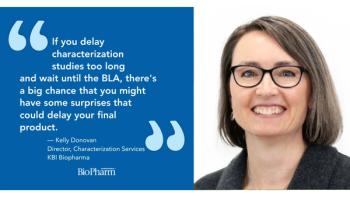
At AAPS PharmSci 360, Kelly Donovan says tailored analytical strategies are necessary for reducing development delay risks.
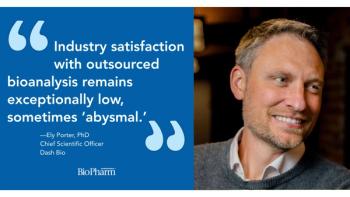
At AAPS PharmSci 360, Ely Porter, PhD, says automated platforms enhance drug production velocity and assay excellence.
At AAPS PharmSci 360 2025, Siddhant Sojitra, Alexion, defines an agitation model to reliably test stability for early-stage biologics.

At AAPS PharmSci 360, Siddhant Sojitra defines a scientifically justified agitation model for the early-stage development of high-concentration biologics.

Financing strategies for new modalities and AI will be central at PharmSci 360, shaping how advanced therapeutics move toward global patient access.
AI, gene therapy, top research breakthroughs, and more will be highlighted at this year’s AAPS PharmSci 360, according to programming chair, Mei He.
Digital transformation, data integrity protocols, and regionalized supply chains are crucial strategies for optimizing drug development and manufacturing efficiency, as revealed in our exclusive interviews.
Shilpa Biologicals CEO Sridevi Khambhampaty addresses funding pressures, regional supply strategies, and expanding ADC development.
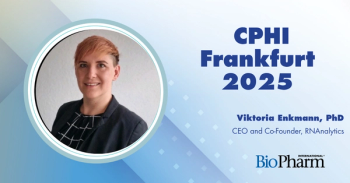
A wide-ranging discussion with RNAnalytics’ Viktoria Enkmann touched upon the technology and equipment necessary for modern nanoparticle analysis, as well as global concerns.
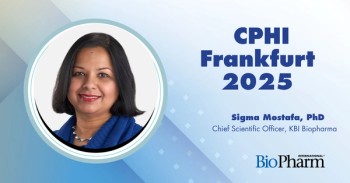
Biologics output improves via planning and automation as digitalization predicts batch outcomes, requiring strong data and worker expertise, KBI Biopharma’s Sigma Mostafa explains.