
Dr Wyatt McDonnell, Infinimune CEO, details how FDA's non-animal model guidances are reshaping non-clinical safety strategies for mAb developers in his talk at BIO 2026.
Dr Wyatt McDonnell, Infinimune CEO, details how FDA's non-animal model guidances are reshaping non-clinical safety strategies for mAb developers in his talk at BIO 2026.
At BIO 2026, Baker McKenzie's Oren Livne explains how MFN pricing, tariffs, and geopolitical risk are driving demand for flexible deal structures in biopharma licensing.
Industry experts from Sanofi, GxP Frame, and Open Biopharma outline how AI is transforming drug discovery, manufacturing, and workforce strategy through biopharma partnerships in the latest episode of Drug Digest.
Crystalys Therapeutics CEO Dr James Mackay explains at BIO 2026 that gout remains an underserved therapeutic are and represents a compelling drug development target due to its unmet need and simple biology.
MilliporeSigma's Sebastian Arana identifies process characterization gaps, tech transfer complexity, and analytical lag as top CGT manufacturing scale-up barriers at BIO 2026.

Speaking from the show floor at BIO 2026, Dr Anil Kane, Thermo Fisher Scientific's global head of technical and scientific affairs, details how AI partnerships are accelerating drug development decisions across the CDMO continuum.
At BIO 2026, Dr Howard Berman, ReAlta Life Sciences’ CEO, explains how an astrovirus-derived anti-inflammatory peptide targets multiple pathways that drive neonatal hypoxic-ischemic encephalopathy (HIE).
Speaking at BIO 2026, Infinimune's Dr Wyatt McDonnell explains how the company’s human-derived antibody platform enables multi-objective optimization that AI alone and transgenic models cannot replicate.
At BIO International Convention 2026, Dr. Sabeen Mekan of Zymeworks, Inc., discusses how advances in ADC conjugation, payload selection, and antibody engineering could improve tolerability and therapeutic index for cancer patients.
Speaking prior to the start of BIO 2026, Aprea Therapeutics CEO Dr Oren Gilad explains how biomarker-driven oncology strategies are advancing targeted therapies designed to improve efficacy while reducing treatment-related toxicity.
Basel’s innovation campus is expanding with new research institutes, laboratories, and collaborative infrastructure for life sciences growth.
Flexible laboratory and good manufacturing practice-ready infrastructure in Basel is designed to support biopharma startups, manufacturing scale-up, and innovation growth, says SENN Development CEO Dr. Johannes Eisenhut.
Five-year follow-up data from the Phase 3 Kimmtrak trial are providing new evidence that precision immunotherapy approaches can deliver durable benefits in metastatic uveal melanoma, a disease long considered resistant to immune-based treatments.
SENN Development CEO Dr. Johannes Eisenhut discusses how Basel’s expanding life sciences ecosystem supports biopharma innovation through research infrastructure and specialized talent growth.
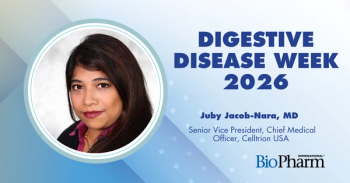
Celltrion’s Dr. Juby Jacob-Nara discussed how subcutaneous infliximab may improve convenience, adherence, and sustained remission for patients with inflammatory bowel disease, while reducing reliance on infusion centers and supporting broader patient-centered treatment goals.
Subcutaneous infliximab may help improve treatment convenience, dosing consistency, and long-term adherence for patients with inflammatory bowel disease, according to discussions at DDW 2026. Clinicians highlighted the potential for self-administered infliximab to support sustained remission while reducing infusion-center burden and improving patient-centered care.
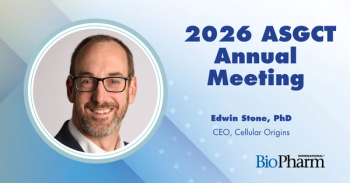
Cell therapy developers are prioritizing scalable manufacturing strategies alongside efficacy to support broader commercial deployment, notes Cellular Origins CEO Dr. Edwin Stone at the 2026 ASGCT Annual Meeting.
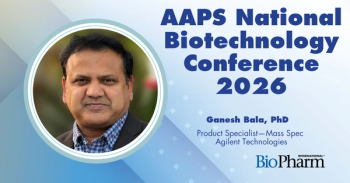
Multi-attribute LC–MS methods improve characterization of complex bioconjugates, supporting scalable and regulatory-ready biotherapeutic development, says Agilent Technologies’ Dr. Ganesh Bala, who spoke at the 2026 AAPS National Biotechnology Conference.
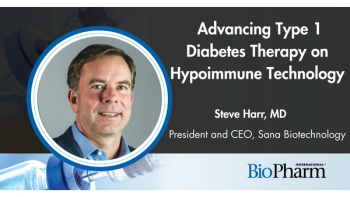
Hypoimmune cell engineering may enable scalable type 1 diabetes therapies without immunosuppression, advancing regenerative medicine approaches, according to Dr. Steve Harr, president and CEO of Sana Biotechnology.
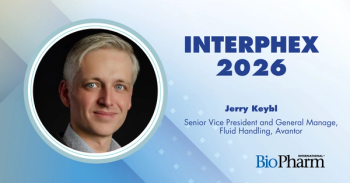
In the second half of an interview at the close of INTERPHEX 2026, Avantor’s Jerry Keybl explains that digital integration and AI-driven analytics enable predictive bioprocess control and can thus improve consistency, scalability, and data-driven manufacturing decisions.
Consistent fluid management across scales supports efficient bioproduction and reduces risk during scale-up of complex therapeutic modalities, says Avantor’s Jerry Keybl at INTERPHEX 2026.
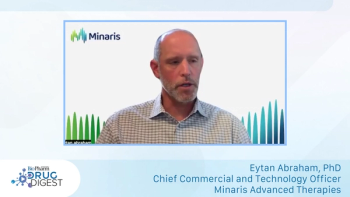
Minaris Advanced Therapies’ Dr. Eytan Abraham joins the discussion on how the biopharmaceutical industry is revolutionizing the design, durability, and global scalability of new biotherapeutic modalities through innovations in molecule design and next-generation delivery platforms.

AI and automation may streamline cell and gene therapy manufacturing by reducing labor demands while improving efficiency and supporting scalable production, says Dr. Alan Smith of Charles River Laboratories.
Dr. Alan Smith of Charles River Laboratories explains why early manufacturing planning and scalable processes are critical to ensure successful commercialization of complex cell and gene therapies as part of his panel discussion at INTERPHEX 2026.
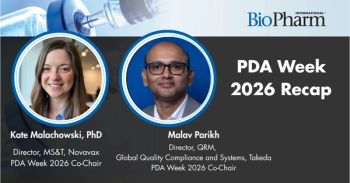
At PDA Week this year, industry leaders highlighted the shift to applied AI in bio/pharma manufacturing and quality and compliance, while focusing on real-world implementation, say Kate Malachowski, PhD, and Malav Parikh, the co-chairs of PDA Week 2026, as they share their insights from the event.
Recapping this year’s PDA Week, Kate Malachowski, PhD, and Malav Parikh, the co-chairs of PDA Week 2026, share their insights on how AI and knowledge management are shaping the future of bio/pharma quality.
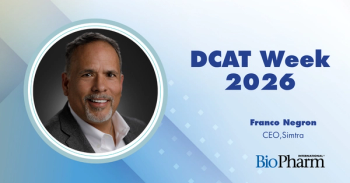
In the final part of the interview, Franco Negron, CEO, Simtra BioPharma Solutions notes the question frequently heard from sponsors and predicts where the CDMO market is heading.
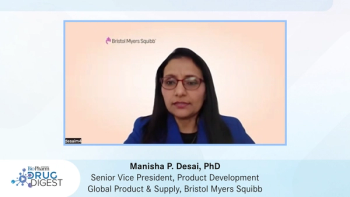
Explore how strategic partnerships are reshaping bioprocessing and biopharma drug development, from early process design to scalable biologics manufacturing, with Manisha P. Desai, PhD, senior vice president, Product Development, at Bristol Myers Squibb.
In the second part of the interview, Franco Negron, CEO, Simtra BioPharma Solutions discusses the decision between insourcing manufacturing or partnering with a CDMO.
Franco Negron, CEO, Simtra BioPharma Solutions touches on rising demand for biologics and high-potency therapies and how driving early, large-scale investment in injectable manufacturing capacity keeps pace with market growth.