Emily Schoenthaler

Emily Schoenthaler is content producer for BioPharm International®.

Articles by Emily Schoenthaler

Andrea Zobel and Marco Hogenboom of Cencora speak during an interview about radiopharmaceutical logistics, regulatory complexity, and supply chain coordination for advanced cancer therapies.

Andrea Zobel and Marco Hogenboom of Cencora World Courier discuss the operational and logistical challenges shaping the radiopharmaceutical sector as therapies move toward broader commercialization. The executives outline how regulatory complexity, short delivery windows, AI-enabled logistics systems, and global coordination requirements are redefining advanced therapy supply chains.

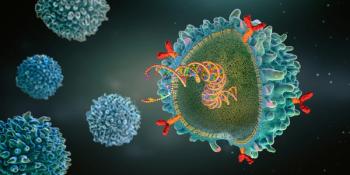
3D medical illustration of genetically engineered CAR-T immune cells designed to target and destroy multiple myeloma cancer cells during immunotherapy treatment.. | Image Credit: © Anastasiia -stock.adobe.com

A new DelveInsight pipeline report highlights how late-stage CAR-T and bispecific antibody therapies are driving the next wave of innovation in multiple myeloma, with several BCMA-targeted biologics advancing toward potential regulatory milestones. The report underscores growing industry focus on earlier-line immunotherapy use, durable responses, and evolving treatment sequencing strategies in relapsed and refractory disease.

Today’s BioPharm Brief covers major developments in oncology, rare disease therapeutics, and ADC manufacturing, including positive Phase 3 data for Kelun-Biotech’s sac-TMT in triple-negative breast cancer, promising hypochondroplasia results for vosoritide, and new perspectives on risk-based cleaning validation for highly potent drug manufacturing.

Subcutaneous infliximab may help improve treatment convenience, dosing consistency, and long-term adherence for patients with inflammatory bowel disease, according to discussions at DDW 2026. Clinicians highlighted the potential for self-administered infliximab to support sustained remission while reducing infusion-center burden and improving patient-centered care.

Rendering of Antibody drug conjugates (ADCs) delivering chemotherapy agents to cancer cells. | Image Credit: © Nasnunt  -stock.adobe.com

Kelun-Biotech reported positive Phase 3 results for sacituzumab tirumotecan in first-line metastatic triple-negative breast cancer, demonstrating a statistically significant improvement in progression-free survival versus chemotherapy. The findings further strengthen momentum behind TROP2-directed antibody-drug conjugates in oncology and highlight growing competition in the metastatic breast cancer treatment landscape.

This edition of The BioPharm Brief highlights major advances in obesity, oncology, and regenerative medicine, including Merck’s Phase 3 ADC study in metastatic colorectal cancer, Eli Lilly’s promising retatrutide obesity trial results, and manufacturing progress supporting Klotho cell therapy development. Together, these updates reflect the biopharma industry’s accelerating focus on targeted therapies, next-generation weight loss drugs, and scalable cell therapy innovation.

Erik Wiklund, CEO of Circio, discusses circular RNA technology and next-generation AAV gene therapy platforms at ASGCT 2026 in Boston.

Circio CEO Erik Wiklund discussed how circular RNA technology may improve the safety, durability, and cost-efficiency of AAV gene therapies for cardiovascular diseases at ASGCT 2026. Early animal data suggest the platform reduces cellular stress responses while increasing gene expression, potentially expanding access to safer and more scalable gene therapy treatments.

Illustration of an antibody-drug conjugate (ADC) mechanism targeting colorectal cancer cells, showing monoclonal antibody binding, linker technology, and cytotoxic payload delivery used in targeted oncology drug development. | © Design Cells -stock.adobe.com |

Merck has dosed the first patient in the Phase 3 PROCEDE-CRC-03 trial evaluating investigational antibody-drug conjugate precemtabart tocentecan in metastatic colorectal cancer. The CEACAM5-targeted ADC is being studied against standard chemotherapy in previously treated patients, highlighting growing industry momentum around targeted oncology therapies and next-generation antibody-drug conjugates.

At AAPS NPC 2026, Charles Theuer discussed how converting biologics from intravenous (IV) infusion to subcutaneous (sub-q) administration is reshaping patient experience, safety profiles, and regulatory development strategies. The shift toward pharmacokinetic (PK)-based approvals and label extrapolation is enabling faster development of subcutaneous oncology and biologic therapies.