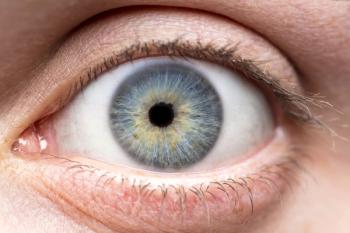
Genentech, a member of the Roche Group, announced today that the FDA has accepted and granted priority review to a supplemental Biologics License Application (sBLA) for satralizumab (Enspryng) for the treatment of thyroid eye disease (TED).¹ The FDA is expected to make a decision on approval by October 15, 2026.¹ If approved, Enspryng would become the first and only at-home subcutaneous treatment option for TED, expanding the monoclonal antibody treatment pipeline for a disease that currently relies on infusion-based biologic therapy.
What is TED, and why does treatment convenience matter?
TED, also known as Graves' ophthalmopathy, is a complex inflammatory autoimmune disease affecting the area around the eyes, capable of causing sight-threatening, debilitating, and disfiguring complications.¹ Common symptoms include redness, eyelid retraction, a staring appearance, proptosis (eye bulging), diplopia (double vision), and pain. The disease is rare, affecting approximately 155 people out of every 100,000, and most commonly occurs in people with hyperthyroidism — roughly half of whom experience at least mild TED — though it can also affect people with hypothyroidism or normal thyroid function.¹
Despite existing approved treatments, Genentech notes that a medical need remains for therapies that are effective, well-tolerated, and offer a convenient route of administration.¹ The current standard of care, teprotumumab (Tepezza), is a fully human monoclonal antibody targeting IGF-1R administered via intravenous infusion.² Enspryng's subcutaneous, at-home format would represent a meaningful shift in how patients access disease-modifying therapy for TED.
What did the SatraGO trials show?
The filing acceptance is based on results from two randomized, placebo-controlled global phase 3 studies — SatraGO-1 (NCT05987423) and SatraGO-2 (NCT06106828) — evaluating Enspryng's safety and efficacy in patients with moderate to severe TED.¹ The identically designed trials enrolled 258 patients across 19 countries, randomized 1:1 to receive Enspryng or placebo, with data presented at the American Society of Ophthalmic Plastic and Reconstructive Surgery meeting in October 2025.¹

For the primary endpoint of proptosis response at week 24, 53% of patients treated with Enspryng in SatraGO-2 achieved a proptosis reduction compared to 23% on placebo, meeting statistical significance.¹ In SatraGO-1, 49% of patients achieved a proptosis response compared to 31% on placebo; while this difference did not reach statistical significance, the company describes it as offering additional confirmatory evidence of benefit.¹ Enspryng also drove meaningful secondary improvements, including reductions in clinical activity score (CAS) for 78% to 90% of patients with active TED, and improvements in diplopia for 44% to 61% of patients with active TED across the two studies.¹ No new safety signals were identified, with Enspryng's safety profile consistent with its established use in neuromyelitis optica spectrum disorder (NMOSD).¹
How does enspryng work, and where else is it being developed?
Enspryng was developed by Chugai, a member of the Roche Group, as a humanized monoclonal antibody that targets interleukin-6 (IL-6) receptor activity, a key chemical messenger in the body's inflammatory response.¹ The antibody was engineered using recycling antibody technology, giving it pH-dependent binding affinity to IL-6R so it binds under neutral plasma conditions but dissociates in the slightly acidic environment of endosomes, allowing it to be recycled back into circulation rather than degraded — extending its plasma half-life relative to conventional antibody technology.³
This kind of precision engineering reflects a broader industry shift toward optimizing antibody-level design for clinical differentiation. As Dr. Wyatt McDonnell, CEO of Infinimmune, noted in a recent BioPharm International interview, “For complex biologics, where small changes in sequence can mean the difference between a drug and a development failure, having that human-relevant data at every stage isn't just a nice-to-have, it's also risk mitigation. So, I think we're heading toward a model where human data is the default at every stage."
Enspryng is currently approved in approximately 90 countries for NMOSD, with a safety profile established across more than 10,000 patients.¹ Genentech is pursuing additional indications for the antibody in neurological autoimmune and inflammatory disease, including autoimmune encephalitis (AIE) and myelin oligodendrocyte glycoprotein antibody-associated disease (MOGAD), the latter of which recently delivered positive phase 3 results with regulatory submissions planned this year.¹ The drug holds orphan drug designation in the US and EU for NMOSD, with investigational orphan designations for MOGAD and two forms of autoimmune encephalitis.¹
"By targeting the underlying disease biology with a novel mechanism of action, this subcutaneous therapy has the potential to introduce a new treatment approach that combines clinical efficacy and a favorable safety profile with the convenience of at-home administration."
— Levi Garraway, MD, PhD, chief medical officer and head of Global Product Development, Genentech
"The FDA's decision to grant priority review to Enspryng is an important step toward expanding treatment options for people living with thyroid eye disease," said Levi Garraway, MD, PhD, chief medical officer and head of Global Product Development at Genentech. "By targeting the underlying disease biology with a novel mechanism of action, this subcutaneous therapy has the potential to introduce a new treatment approach that combines clinical efficacy and a favorable safety profile with the convenience of at-home administration."¹
References
- Genentech, Inc. FDA Grants Priority Review To Genentech’s Application for Enspryng, the First and Only At-Home Subcutaneous Treatment Option for Thyroid Eye Disease (TED). (2026 Jun 29). Genentech. https://www.gene.com/media/press-releases/15118/2026-06-29/fda-grants-priority-review-to-genentechs
- Smith TJ, Kahaly GJ, Ezra DG, et al. (2017 May 4). Teprotumumab for thyroid-associated ophthalmopathy. N Engl J Med. https://www.nejm.org/doi/full/10.1056/NEJMoa1614949?__cf_chl_f_tk=aNWSu_fZKgCrWDabopPaKbFW0cDUOkpV2Xb83yaJJ3Y-1782835666-1.0.1.1-uzb8Hhj8rue2J42PStiQQW2Ntl9BNdzoiWKUDjPQL0A
- A Study to Evaluate the Efficacy and Safety of Satralizumab in Participants With Active Thyroid Eye Disease (SatraGO-2). Clinicaltrials.gov. https://clinicaltrials.gov/study/NCT06106828
- A Study to Evaluate the Efficacy and Safety of Satralizumab in Participants With Active Thyroid Eye Disease (SatraGO-1). Clinicaltrials.gov. https://clinicaltrials.gov/study/NCT05987423
- Paton, DM. (2021 Mar). Satralizumab: a humanized anti-IL-6 receptor monoclonal recycling antibody, for the treatment of neuromyelitis optica spectrum disorder. Drugs Today. https://pubmed.ncbi.nlm.nih.gov/33729218/