Register Now: Reshoring Maufacturing and Securing Cold-Chain Supply For Biopharma

Emily Schoenthaler

Emily Schoenthaler is content producer for BioPharm International®.

Articles by Emily Schoenthaler

T cells attacking cancer cells in immunotherapy response representing botensilimab balstilimab checkpoint inhibitor combination in MSS metastatic colorectal cancer. | Image Credit: © k_e_n - stock.adobe.com

Three-year follow-up data from Agenus' Phase 2 trial of botensilimab plus balstilimab in refractory microsatellite-stable metastatic colorectal cancer show a 33% overall survival rate at three years — with evidence of a plateau on the Kaplan-Meier curve beyond two years — representing an unprecedented durability signal in a tumor type historically resistant to immune checkpoint therapy.

Today's BioPharm Brief explores three distinct ways researchers are engineering the immune system, from a first-in-human bispecific T-cell engager for ovarian cancer and the FDA's first regulatory T-cell immunotherapy to promising vaccine data against antibiotic-resistant Shigella.

Antibody binding to human cell receptors representing bispecific T-cell engager NTB-928 mechanism of action in platinum-resistant ovarian cancer | Image Credit: © Tatiana Shepeleva

92Bio, Inc. has dosed the first patient in a Phase 1 trial of NTB-928, a fully human bispecific T-cell engager targeting FOLR1 and CD3, designed to selectively kill FOLR1-overexpressing ovarian cancer cells while sparing normal tissue — addressing a key limitation of prior FOLR1-directed therapies in platinum-resistant ovarian cancer.

Young child receiving oral vaccine from a healthcare worker representing Shigella disease prevention in pediatric global health. | Image Credit: © Meow Creations -stock.adobe.com.

A phase 2 controlled human infection trial has found that two doses of WRSs2, a live-attenuated oral vaccine candidate against Shigella sonnei, achieved 89% protection — the highest efficacy reported for any Shigella vaccine candidate — with no serious adverse events, advancing a century-long quest for a licensed vaccine against the diarrheal pathogen.

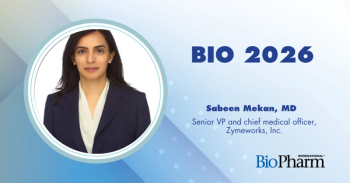
At BIO International Convention 2026, Sabeen Mekan, MD, Vice President of Clinical Development at Zymeworks and panelist for The Next Generation of ADCs: Building Kinder, Gentler Cancer Therapeutics, discusses why safety is becoming an increasingly important differentiator in antibody-drug conjugate development and how biomarker-driven patient selection may help guide future treatment decisions.

Multiple myeloma malignant plasma cells in bone marrow representing Innovent IBI3003 GPRC5D BCMA CD3 trispecific antibody Phase 3 TriadicMM-1 clinical trial. | Image Credit: © LASZLO - stock.adobe.com

Innovent Biologics has dosed the first patient in TriadicMM-1, a pivotal phase 3 trial evaluating IBI3003, a GPRC5D/BCMA/CD3 trispecific antibody, for relapsed or refractory multiple myeloma — marking the second trispecific antibody globally to reach pivotal phase 3 development in this setting and the first with independent intellectual property rights in China.

Conceptual illustration of TL1A cytokine pathway targeting in inflammatory bowel disease representing TrueLab Bionyra bispecific antibody license agreement | Image Credit: © Sebastian Kaulitzki - stock.adobe.com

Newly launched Bionyra Pharma has raised $165 million in Series A financing and secured exclusive global rights to two TL1A-targeting biologics from China's TrueLab Biopharmaceutical — an anti-TL1A monoclonal antibody and a TL1A×IL-23p19 bispecific antibody — in a deal worth up to $985 million, positioning the company to compete in an IBD drug class already drawing attention from Merck, Roche, and the Sanofi/Teva partnership.

Illustration of T-cell and B-cell immune interaction representing mosunetuzumab bispecific antibody and polatuzumab vedotin ADC combination therapy for relapsed refractory large B-cell lymphoma| Image Credit: © HN Works - stock.adobe.com

The FDA has accepted Roche's supplemental BLA for a chemotherapy-free combination of mosunetuzumab (Lunsumio VELO) and polatuzumab vedotin (Polivy) in adults with relapsed or refractory large B-cell lymphoma, based on Phase 3 SUNMO trial data showing a 59% reduction in the risk of disease progression or death compared to standard salvage chemotherapy.