

Conference Coverage
Latest
Oct 05, 2026 | News
The BioPharm Brief: Obesity Data and Manufacturing Shape Drug Progress

Litifilimab Shows Sustained Skin Responses at 52 Weeks in Phase 2 AMETHYST Data in Cutaneous Lupus Erythematosus
Oct 05, 2026

FDA Delays Novo Nordisk's Denecimig Over Facility Fixes
Oct 05, 2026

Alvotech Wins FDA Nod for 2nd Simlandi Manufacturing Suite
Oct 05, 2026

Survodutide Meets Co-Primary Weight Loss Endpoints in Phase 3 SYNCHRONIZE-2 Trial in Obesity and Type 2 Diabetes
Oct 05, 2026



Advertisement
Shorts
0:36
Why Amino-Acid Counting Decides Regulatory Fate
4 days ago
by
Feliza Mirasol(+1 more)

0:54
Why Basel is the Global Hub for Immune Engineering
12 days ago
by
Feliza Mirasol(+1 more)

0:39
Building the Future of Immune Engineering
13 days ago
by
Feliza Mirasol(+1 more)
1:15
How AI and 'Lane Assist' are Transforming Cancer Care
14 days ago
by
Emily Schoenthaler(+2 more)

0:35
The Core Mission: Translation in Immune Engineering
25 days ago
by
Feliza Mirasol(+1 more)

0:33
Why Structure is the Ultimate Risk Management in M&A
a month ago
by
Emily Schoenthaler(+1 more)
1:08
How AI Shrinks Clinical Trial Design from Months to Minutes
a month ago
by
Emily Schoenthaler(+2 more)

0:42
Can Vaccines Overcome Cancer Immune Suppression?
a month ago
by
Feliza Mirasol(+2 more)
0:35
The Manufacturing Challenge: Scaling Personalized Cancer Treatment
2 months ago
by
Feliza Mirasol(+2 more)
0:40
The Billion-Dollar Secret to a Successful Product Launch
2 months ago
by
Kirsten Detrick(+1 more)
Analytics for Bispecific Antibody Product Release
Planning the analytical strategy for product release should be started as early as possible to ensure product quality and regulatory success.

FAQ: What You Need to Know About Analytical Method Validation
We answer readers’ top questions on limit of blank, limit of detection, limit of quantitation, acceptance criteria, and equivalence testing in analytical method validation.

Digital Standards Aim to Modernize Quality Assurance Without Compromising Confidence
As quality control labs move toward more connected, data-driven operations, digital technologies must be adopted in a way that upholds patient safety.

What FDA's AI Warning Letter Tells Us About GMP Accountability
An FDA warning letter to Purolea Cosmetics Lab shows that AI-assisted drafting can support documentation work only when the resulting document is subject to quality-system controls.

Expedited Regulatory Pathways for Biologics
This episode of the BioPharm Drug Digest will examine strategic triggers that have thus far won expedited regulatory review for biologics in development.

Videos



Advertisement
All News
Advertisement
CaseBioscience joins an ARPA-H effort to develop room-temperature cell therapy preservation, Novartis licenses an mRNA-encoded T-cell engager from Abogen, and AstraZeneca, Daiichi Sankyo, and Summit plan to combine Datroway with ivonescimab.
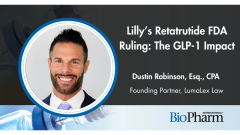
LumaLex Law's Dustin Robinson explains why retatrutide compounding remains illegal regardless of the Seventh Circuit's pending classification ruling.

Artiva Biotherapeutics will present data on AlloNK, an allogeneic, non-genetically modified NK cell therapy given with rituximab, in refractory rheumatoid arthritis, Sjögren disease and systemic sclerosis at ACR Convergence 2026, ahead of a planned phase 3 trial in rheumatoid arthritis.

Novartis has secured an exclusive worldwide license to ABO2203, Abogen's investigational mRNA-encoded CD19xCD3 T-cell engager designed to produce the bispecific inside the body to reset B cells in autoimmune disease. The agreement also includes options on other programs built on Abogen's RNA platform.

The 15-month project could let living cell therapies ship and store at room temperature, cutting cold-chain costs that limit patient access.

A planned phase 3 trial will test the TROP2 ADC and PD-1/VEGF bispecific together in 1st-line triple-negative breast cancer.
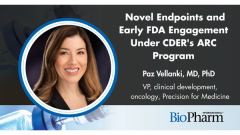
Former FDA oncology reviewer Paz Vellanki, MD, PhD, of Precision for Medicine, discusses how CDER's ARC program supports novel end points such as ctDNA for rare diseases and why sponsors should engage FDA early.

Following an FDA meeting, Wave Life Sciences plans a single 2-year registrational trial of WVE-006, its GalNAc-conjugated RNA editing oligonucleotide for alpha-1 antitrypsin deficiency, with a 1-year interim analysis that could support accelerated approval based on biomarkers.
Patients suffered pyrogenic reactions before Fresenius Kabi recalled 3 contaminated batches at its 430,000-sq-ft Melrose Park, Ill., biologics plant.

Sanofi is paying Regeneron up to $8 billion to co-develop REGN20423 and 3 other long-acting antibodies beyond dupilumab (Dupixent).
Advertisement
Real-world data show weight loss after switching to the Wegovy pill, Lilly reports positive hand and foot atopic dermatitis data, and Teva wins FDA approval for a Xgeva biosimilar.

In the OCTANE real-world analysis presented at EASD 2026, adults who switched from injectable semaglutide or tirzepatide to once-daily oral semaglutide lost an average of 4.1% of body weight after 3 months.

Denosumab-adet now covers all 3 Xgeva indications, widening lower-cost treatment access for cancer patients with bone complications.

More than half of patients achieved clear or almost clear hands and feet with lebrikizumab by week 16, and 77% reported satisfaction with clearance.
Sponsored
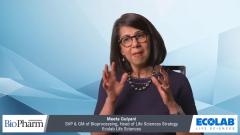
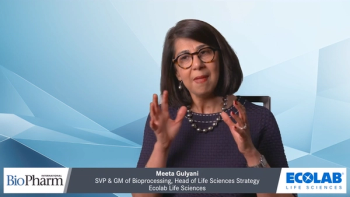
Meeta Gulyani, Ecolab Life Sciences, shares where biomanufacturing is headed next and why the relationship between drug developers and their suppliers is changing along with it.
Advertisement
Advertisement