

“FDA career staff continue to evaluate applications granted a CNPV, meet commitments for accelerated review and enhanced engagement, and assess best practices emerging from the pilot program.” —HHS spokesperson
News|Articles|November 13, 2026
FDA Reportedly Shelves National Priority Voucher Pilot and Pauses CRL Publication
Author(s)Emily Schoenthaler
Listen
0:00 / 0:00
Key Takeaways
- The CNPV pilot targets one- to two-month reviews for products aligned to five national priorities, using a multidisciplinary “review council” model while leaving final decisions with FDA centers.
- Voucher activity has reportedly halted since the prior commissioner’s resignation, with no new awards, a dormant council, and nine remaining candidates managed under career-scientist timelines.
FDA has effectively paused its Commissioner’s National Priority Voucher pilot and appears to have halted new complete response letter postings, according to reports. HHS says work on the program is ongoing.
Advertisement
FDA has effectively shelved its Commissioner’s National Priority Voucher (CNPV) pilot program, which promised drug and biologic reviews in as little as one to two months, according to an exclusive Reuters report citing six sources and internal documents.¹˒² The agency also appears to have paused publishing complete response letters (CRLs), with no new entries added to its public CRL database in roughly three months, Fierce Pharma reported.¹
A Department of Health and Human Services (HHS) spokesperson disputed that the program had been shelved, telling Fierce Pharma that work under the CNPV is “ongoing.”¹ “FDA career staff continue to evaluate applications granted a CNPV, meet commitments for accelerated review and enhanced engagement, and assess best practices emerging from the pilot program,” the spokesperson said.¹
What is the CNPV program?
FDA announced the pilot in June 2025 under former Commissioner Marty Makary, MD, as a pathway to dramatically reduce review times for drug and biological product applications.³ Products must align with one of five national priorities: public health crisis response, innovative breakthrough therapies, large unmet medical needs, onshoring and supply chain resilience, or affordability.³ The target review time is one to two months, compared with six months or more under FDA’s other priority review programs.³ Review teams share recommendations with a multidisciplinary, “tumor board-style” CNPV Review Council, while the final approval decision remains with the relevant FDA center.³
Twenty-two drug programs have received vouchers, with 12 approvals and one rejection to date.¹ No new vouchers have been awarded since Makary resigned in mid-May, and the review council has gone dormant, according to Reuters.¹˒² FDA is still accepting applications but is not reviewing or granting new ones, Reuters reported, citing one person familiar with the process.¹ Nine drugs remain in the program, and FDA career scientists have resumed overseeing their review timelines, Reuters reported.²
How have biologics fared under the program?
Biologics account for several of the program’s approvals. In May, FDA announced the seventh approval under the pilot, Partner Therapeutics’ bispecific antibody Bizengri (zenocutuzumab-zbco), for adults with NRG1 fusion-positive cholangiocarcinoma, the first approved drug for that population.⁴ Other biologics approved with vouchers include Johnson & Johnson’s Tecvayli plus Darzalex, Regeneron’s gene therapy Otarmeni, Vertex’s cell therapy Casgevy, and GSK’s Jemperli (dostarlimab), according to an independent tracker of the program.⁵ Merck’s antibody-drug conjugate sacituzumab tirumotecan also holds a voucher but has not yet been filed.⁵
The program has also drawn controversy over a biologic. In May, Sanofi reportedly asked that its monoclonal antibody Tzield (teplizumab) be withdrawn from the CNPV track after then-acting director of FDA’s Center for Drug Evaluation and Research, Tracy Beth Høeg, MD, PhD, tried to overturn staff’s recommendation for approval.¹ Critics have also cited political favoritism, limited transparency, and strain on agency resources, and Rep. Jake Auchincloss (D-Mass.) questioned FDA’s statutory authority for the program.¹
Compressed timelines also put pressure on manufacturing readiness. In a
What is happening with CRL publication?
In July 2025, FDA published more than 200 CRLs issued from 2020 through 2024, with Makary saying the move would reduce the “guessing game” for drug developers and investors.⁶ The agency later began publishing CRLs in real time, but law firm Covington & Burling argued in a citizen petition filed in April that the practice could violate federal confidentiality protections.¹ FDA has since asked Congress, in its fiscal year 2027 budget request, for clear statutory authority to disclose CRL information.¹ The most recent entry in the database is a manufacturing-related CRL for ITM Isotope Technologies Munich’s radiopharmaceutical candidate ITM-11 in early August.¹
“The FDA remains committed to the proactive release of Complete Response Letters and will continue to publish appropriately redacted CRLs,” an FDA spokesperson told Fierce Pharma.¹
What happens next?
FDA has been without a permanent commissioner since Makary’s departure in May.² HHS said FDA will continue advancing reforms aimed at improving efficiency and accelerating scientific review, and that the agency is reviewing feedback from a June public hearing to refine the pilot.¹˒²
References
- Liu A.
FDA appears to pause controversial speedy review program, complete response letter disclosures . Fierce Pharma. Published November 12, 2026. Accessed November 13, 2026. - Wingrove P, Abutaleb Y.
Exclusive: US FDA shelves commissioner’s voucher program for speedy drug reviews, sources say . Reuters. Published November 12, 2026. Accessed November 13, 2026. Commissioner’s National Priority Voucher (CNPV) pilot program . US Food and Drug Administration. Updated October 19, 2026. Accessed November 13, 2026.FDA grants seventh approval under the national priority voucher pilot program . News release. US Food and Drug Administration; May 8, 2026. Accessed November 13, 2026.CNPV dashboard . PRV Watch. Accessed November 13, 2026.- Cole C.
FDA publishes more than 200 complete response letters . Pharmaceutical Technology. Published July 11, 2025. Accessed November 13, 2026.
Advertisement
Related to this article
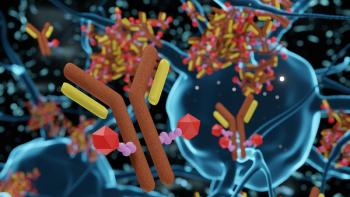
FDA has cleared Biolojic Design’s IND for BD200, a bispecific antibody-drug conjugate targeting Trop2 and Nectin-4 whose arms can each bind either target. A global Phase 1 study in solid tumors is expected to begin in the coming weeks.

FDA granted RMAT and Fast Track designations to AbelZeta’s anti-CD20/CD19 CAR-T therapy prizlon-cel for relapsed or refractory large B-cell lymphoma. The company plans US studies after prior CAR-T therapy and in the second-line setting.
FDA’s draft framework would let sponsors add patient-specific genome editing variants to an approved BLA using in vitro data. Here is what the guidance proposes, what evidence it asks for, and what remains unresolved.

A single dose of Zai Lab’s long-acting bispecific ZL-1503 produced at least 90% inhibition of an atopic dermatitis signaling biomarker through Week 12 in healthy volunteers. Its 40- to 50-day half-life supports a target of dosing every 12 weeks.

In the first part of a two-part interview, Paz Vellanki of Precision for Medicine explains what sponsors should bring to early FDA meetings and how manufacturing and assay readiness can delay rare disease trials.

FDA clears the IND for Biolojic Design’s BD200, an AI-designed Trop2/Nectin-4 multibody ADC; Blackstone Life Sciences agrees to provide Pfizer up to $1.5 billion to develop its monthly GLP-1 receptor agonist berobenatide; and enGene Therapeutics plans a year-end BLA for detalimogene voraplasmid in BCG-unresponsive non-muscle invasive bladder cancer.
Blackstone Life Sciences will fund up to $1.5 billion of development costs through 2028 for Pfizer’s monthly GLP-1 receptor agonist berobenatide, in exchange for milestone payments tied to approval and sales. Pfizer keeps full control of the program.

Gene-corrected nula-cel freed all 3 RESTORE patients from transfusions, with sickle hemoglobin below 20% in the 2 followed for over 6 months.
Advertisement
Advertisement
Trending on BioPharm International
1
Blackstone to Provide Pfizer Up to $1.5 Billion for Monthly GLP-1 Berobenatide Development
2
The BioPharm Brief: An AI-Designed Multibody ADC Enters the Clinic, Blackstone Backs Pfizer’s Monthly GLP-1, and enGene Readies a Bladder Cancer BLA
3
enGene Plans Year-End BLA for Detalimogene in BCG-Unresponsive NMIBC
4
ImvivaBio’s Dual-Target Allogeneic CAR-T Sustains Lupus Remission Through 12 Months
5