Register Now: From Clinical to Commercial: Accelerating ADC Late-Stage Development with Technology Innovation and Integrated Platform
News|Podcasts|November 12, 2026 (Updated: November 12, 2026)

The BioPharm Brief: An AI-Designed Multibody ADC Enters the Clinic, Blackstone Backs Pfizer’s Monthly GLP-1, and enGene Readies a Bladder Cancer BLA

FDA clears the IND for Biolojic Design’s BD200, an AI-designed Trop2/Nectin-4 multibody ADC; Blackstone Life Sciences agrees to provide Pfizer up to $1.5 billion to develop its monthly GLP-1 receptor agonist berobenatide; and enGene Therapeutics plans a year-end BLA for detalimogene voraplasmid in BCG-unresponsive non-muscle invasive bladder cancer.

Welcome to The BioPharm Brief, your daily snapshot of developments shaping the biopharmaceutical industry. Today: an AI-designed ADC heads into first-in-human testing, private capital funds a late-stage obesity program, and a non-viral gene therapy moves toward filing.
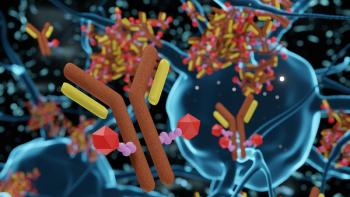
First, FDA has cleared the investigational new drug application for Biolojic Design’s BD200. The company calls it an AI-designed bispecific antibody-drug conjugate and the first “multibody” to enter clinical trials. Each arm can bind either Trop2 or Nectin-4, so the molecule can adjust to which antigens a tumor expresses. The aim is to get around single-antigen ADCs losing effectiveness as tumors become heterogeneous. A global phase 1 study is expected to start in the coming weeks.

Next, Blackstone Life Sciences will cover up to $1.5 billion of development costs for Pfizer’s berobenatide through 2028. Berobenatide is an investigational monthly GLP-1 receptor agonist peptide that Pfizer gained when it acquired Metsera. Blackstone gets no rights or ownership in the drug. Instead, it can earn milestone payments tied to U.S. approval and certain sales targets. In phase 2b, the 4.8-milligram monthly regimen showed up to 12.3% placebo-adjusted weight loss at week 28. Pfizer has 10 ongoing or planned phase 3 berobenatide trials.


And finally, enGene Therapeutics plans to begin its BLA submission for detalimogene voraplasmid by the end of 2026. Detalimogene is a non-viral genetic medicine being studied in high-risk, BCG-unresponsive non-muscle invasive bladder cancer. In updated results from pivotal cohort 1 of the phase 2 LEGEND trial, 56% of patients had a complete response at any time, up from 54% in an April analysis.

That’s today’s BioPharm Brief. For analysis and expert insights, please visit BioPharmInternational.com.

Key takeaways

  • AI in drug design: BD200’s phase 1 will be an early clinical test of whether an ADC that can bind either of two targets holds up against tumors whose antigen expression varies.
  • Alternative financing: Pfizer is funding obesity development with private capital while keeping full ownership of the drug.
  • Non-viral gene therapy: enGene’s planned filing could add another option for bladder cancer patients whose disease no longer responds to BCG.

Related to this article

The BioPharm Brief: FDA Designations for a Bispecific CAR-T, a BLA for Friedreich’s Ataxia, and Phase 2b MASH Data for Efinopegdutide
FDA grants RMAT and Fast Track designations to AbelZeta’s CD20/CD19 bispecific CAR-T prizlon-cel in relapsed or refractory large B-cell lymphoma, Larimar Therapeutics completes a BLA seeking accelerated approval of nomlabofusp for Friedreich’s ataxia, and Merck’s GLP-1/glucagon receptor agonist efinopegdutide meets its primary endpoint in a phase 2b MASH trial.
The BioPharm Brief: argenx Bets on Peptides, a Two-Bispecific Regimen in Prostate Cancer, and a New Take on T-Cell Engagers
argenx agrees to acquire macrocyclic peptide developer Unnatural Products for up to about $1.15 billion, Johnson & Johnson’s pasritamig and JNJ-9401 bispecific regimen achieves a 73% PSA response in phase 1 in metastatic castration-resistant prostate cancer, and Janux Therapeutics’ TRBV6-targeted T-cell engager JANX011 shows deep B-cell depletion in healthy volunteers.
The BioPharm Brief: A Bispecific Approval in Head and Neck Cancer, TCR Bispecifics Head to the Clinic, and a New Antibody Target in Essential Thrombocythemia
FDA grants accelerated approval to Johnson & Johnson’s subcutaneous EGFR/MET bispecific Rybrevant Faspro for previously treated head and neck squamous cell carcinoma, T-Therapeutics raises a $133 million Series B to take TCR-CD3 bispecifics into clinical trials, and Alethio Therapeutics raises a $90 million Series A to advance its first-in-class G6B antibody for essential thrombocythemia.
The BioPharm Brief: Ivonescimab Priority Review in China, Stargardt Gene Therapy Moves Toward Phase 3, and Longer Dosing Intervals for an IBD Bispecific
China’s NMPA grants priority review to Akeso’s PD-1/VEGF bispecific ivonescimab with chemotherapy for first-line biliary tract cancer, VeonGen Therapeutics aligns with FDA on a phase 3 design for its dual-AAV Stargardt gene therapy VG801, and Caldera Therapeutics’ IL-23p19×TL1A bispecific CLD-423 shows a half-life of more than 40 days in a phase 1a trial.
The BioPharm Brief: A $7 Billion Oncology Option Deal, a TL1A Pivot, and Oral Adalimumab Heads to the Clinic
Boehringer Ingelheim licenses six preclinical ADC and T-cell engager programs from Sino Biopharmaceutical in a deal worth up to $7 billion, Spyre Therapeutics drops anti-TL1A antibody SPY072 in rheumatic diseases after phase 2 misses and turns to hidradenitis suppurativa, and Biora Therapeutics gets ethics approval for a first-in-human trial of its BioJet oral adalimumab capsule.