

"This decision was not made lightly, knowing the impact on our colleagues who have worked tirelessly to build ArsenalBio. We are deeply grateful to our colleagues for their extraordinary commitment to scientific advancement and rigor, their willingness to take on some of the most difficult challenges in cell therapy, and above all, their commitment to patients."
— Ken Drazan, M.D., co-founder, chairman, and chief executive officer, ArsenalBio
News|Events|September 2, 2026
ArsenalBio Sheds Most of Staff, Pivots Entirely to In Vivo CAR T
Author(s)Emily Schoenthaler
Listen
0:00 / 0:00
ArsenalBio is halting all development of its ex vivo CAR T programs for solid tumors and laying off the majority of its workforce as it pivots the company entirely toward in vivo CAR T therapy, joining a fast-growing field that already includes Johnson & Johnson, Eli Lilly, and several other developers.
Advertisement
ArsenalBio announced a strategic shift to focus the company entirely on in vivo CAR T-cell therapy, ending development of its ex vivo autologous cell therapy programs for solid tumors.¹ The transition draws on the company's existing investment in T-cell biology, synthetic biology, computation, and cell engineering, and will pursue a broader range of diseases, including hematologic malignancies and autoimmune conditions, beyond the solid-tumor focus that defined ArsenalBio's earlier pipeline.¹ To align its organization with the new direction, the company is cutting the substantial majority of its workforce: a spokesperson confirmed to Fierce Biotech that the reduction affects 99 of ArsenalBio's 127 employees, with a core team remaining to advance the in vivo strategy.²
Ken Drazan, MD, co-founder, chairman, and chief executive officer of ArsenalBio, said, "We founded ArsenalBio with the belief that deeply understanding and engineering T cell biology could unlock entirely new possibilities for medicine. The standard we have always set at ArsenalBio is that the science and the data must guide our decisions, particularly when developing potential therapies for people living with serious chronic diseases. Over the past several years, we have built an extraordinary foundation of technology, scientific capabilities and knowledge through our work in solid tumors. However, we now believe this technology is enabling outside of solid tumors. We plan to apply our foundational understanding of T cell biology and compositions to in vivo, where we believe our technology will advance the field and help patients win."¹
Why is ArsenalBio moving away from ex vivo solid-tumor CAR T?
ArsenalBio had raised $325 million with backing from Bristol Myers Squibb and Regeneron, and held a partnership with Roche's Genentech, to pursue CAR T therapies for solid tumors.² No CAR T therapy has yet been approved for a solid tumor;
How does in vivo CAR T differ from the ex vivo approach ArsenalBio is leaving behind?
Conventional, or ex vivo, CAR T manufacturing requires collecting a patient's T cells through leukapheresis, genetically modifying them outside the body, expanding the modified cells, and reinfusing them after chemotherapy-based lymphodepletion, a process that typically takes weeks and carries substantial manufacturing complexity and cost. In vivo approaches instead aim to generate CAR T cells directly inside the patient. Luke Walker, MD, chief medical officer of Umoja Biopharma, described the appeal of that shift in
Why is in vivo CAR T drawing so much industry investment right now?
Ryan Larson, PhD, SVP, head of research at Umoja BioPharma, addressed the broader significance of in vivo approaches in a video interview with BioPharm International at the 2025 American Society of Gene and Cell Therapy annual meeting. "We're seeing the continued transformative nature of cell therapies, in particular in hematologic malignancies, where you're seeing deep and durable responses continue in diffuse large B-cell lymphoma and other B-cell malignancies, as well as in multiple myeloma," Larson said. "Yet access to ex vivo autologous cell therapies continues to be a challenge wherein a large fraction of patients that may be eligible for those therapies are not able to gain access to them for a variety of reasons."⁵
That access gap is a central argument driving the field's shift toward in vivo delivery, and ArsenalBio is entering an increasingly crowded arena.
What happens next?
ArsenalBio said it will provide additional information on its strategy and programs as appropriate, and is evaluating strategic opportunities for its existing technologies and assets as it makes the transition.¹
References
- Arsenal Biosciences, Inc.
ArsenalBio Announces New Focus on In Vivo CAR T Programs to Leverage Investment in T cell Engineering . Press release. Published August 31, 2026. Accessed September 2, 2026. - Incorvaia D.
ArsenalBio Sheds Most of Staff in Pivot to In Vivo CAR-T . Fierce Biotech. Published September 1, 2026. Accessed September 2, 2026. Challenges of Expanding CAR-T Cell Therapy into Solid Tumors . BioPharm International. Published May 1, 2023. Accessed September 2, 2026.Umoja Biopharma Wins FDA IND Clearance for First CD22-Directed In Vivo CAR T Therapy . BioPharm International. Published July 16, 2026. Accessed September 2, 2026.- Haigney S.
ASGCT 2025: Emerging Modalities for Cancer Treatments . BioPharm International. Published May 12, 2025. Accessed September 2, 2026.
Advertisement
Related to this article
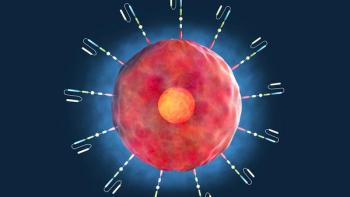
As ArsenalBio, TScan, and others abandon ex vivo programs for in vivo engineering, early clinical data and platform differences point to both the promise and the unresolved safety, manufacturing, and regulatory questions of generating CAR-T cells inside the body.
Caribou is halting vispa-cel and CB-011, allogeneic CAR-T therapies that showed up to 92% response rates, citing a difficult financing environment.

Artiva Biotherapeutics will present data on AlloNK, an allogeneic, non-genetically modified NK cell therapy given with rituximab, in refractory rheumatoid arthritis, Sjögren disease and systemic sclerosis at ACR Convergence 2026, ahead of a planned phase 3 trial in rheumatoid arthritis.
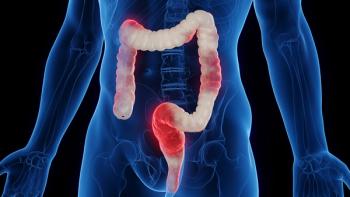
Odyssey's 146-patient phase 2a trial will pair OD-001 with vedolizumab, targeting both innate and adaptive immune drivers of ulcerative colitis.

MT027, T-MAXIMUM's B7-H3 CAR-T therapy, earns a second FDA-cleared phase 2 trial, now testing lung and breast cancer brain metastases.
Antisense oligonucleotides are reshaping drug design, from RNase H gapmers to inhaled delivery; this FAQ explains how they work and why trials still fail.
Johnson & Johnson's guselkumab achieved up to 29% fistula remission in hard-to-treat Crohn disease subgroups, including prior biologic failures.
Bristol Myers Squibb's Nathan Pennell explains how the MRD endpoint supports accelerated approval in multiple myeloma without changing how clinicians monitor patients.
Advertisement
Advertisement