

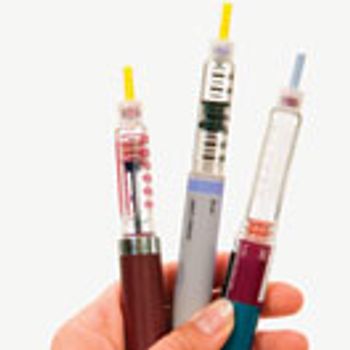
Siliconization is a key process step in the manufacturing of prefilled syringe systems.
Siliconization is a key process step in the manufacturing of prefilled syringe systems.

Through the support of the Japanese agency, Daiichi Sankyo intends to further develop its genetic vaccine platform focused around its new nucleic acid delivery technology.
Gelest, a manufacturer and provider of silane, silicone, and metal-organic compounds, released a range of dual-function poly(ethylene glycol) (PEG) reagents that enable new approaches to PEGylation for bioconjugates.
There is a lot of interest in delivering biologics via non-invasive routes in attempt to improve patient compliance and convenience.
Microdermics will focus on product development and clinical activities of new drug delivery methods, while Vetter’s primary role will be in the fill and finish aspect.
Researchers test the efficacy of a new polymer that is an alternative to PEG for drugs used to treat type 2 diabetes.
The baculovirus-insect cell system can produce large quantities of complex protein in a short period of time.
Challenging molecules and markets are driving the development of new solutions for drug delivery.
A new study examines the oral delivery of protein drugs in plant cells and hypothesizes that the cold storage and transportation of biologics could someday be eliminated.
The wearable devices for the delivery of biologic products are now being manufactured and will be tested in clinical trials in the near future, according to the company.
The company’s method reduces the time required to crystallize antibodies from weeks to one day.
Selecting a delivery method early on may be beneficial.
The company plans to reformulate injectable products to make them into inhaled and intranasal medications.
The company announced plans to begin PIONEER, a Phase IIIa program comprising seven trials of approximately 8000 people with type 2 diabetes.
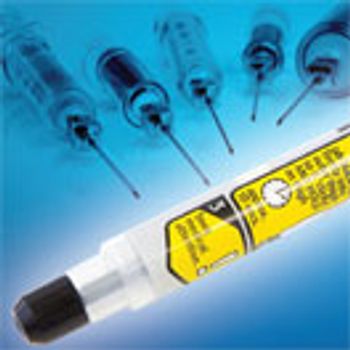
Industry experts spoke to BioPharm International about the key considerations in the development of a drug-delivery device for a biologic drug, the importance of human factors engineering, the advantages of prefilled syringes, and the challenges in the manufacture of these devices.
A vaccine patch may eliminate the need for traditional means of vaccine distribution, according to an article in NPR.
Ethylene vinyl acetate (EVA) drug-release technologies are explored.
Recently published research demonstrates how nanoparticles can be used to overcome hurdles in localized drug delivery.
A team from Northwestern University has demonstrated the feasibility of topical delivery of small interfering RNA (siRNA).
Panayiotis P. Constantinides of Biopharmaceutical & Drug Delivery Consulting on growth of nanoparticle delivery systems.
This article discusses potential opportunities to improve the patient experience through formulation and delivery device technologies.
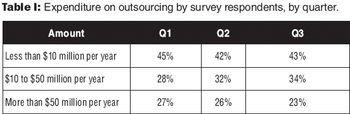
A survey provides insight into drug companies' plans for spending on outsourced services. This article contains bonus online material.
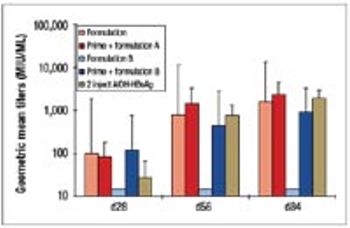
The disadvantages of the traditional vaccine regime (prime plus boost) have spurred the development of single-shot vaccines. This article describes the development and manufacture of a prototype single-shot vaccine that uses microspheres made from cross-linked modified dextran polymers for controlled release of the antigen.
The transdermal delivery of biologics-as well as of conventional drugs-is growing in popularity because the technique offers numerous advantages.