

FNIH CEO Dr Julie Gerberding will open the October 25-28 meeting with a talk on using AI, adaptive trials, and alternative methods in drug development.
FNIH CEO Dr Julie Gerberding will open the October 25-28 meeting with a talk on using AI, adaptive trials, and alternative methods in drug development.
Insilica's Dr Thomas Luechtefeld argues process traceability, not benchmark accuracy alone, determines whether AI toxicology decisions can be trusted.
At PharmSci 360, Insilica CEO Thomas Luechtefeld will present on auditable agentic AI systems and how they are expanding computational toxicology beyond single predictive models.

Dr Julie Gerberding and Dr David Berry will headline the October 25-28 New Orleans meeting, which adds a USP standards workshop and AI, organoid tracks.

The American Association of Pharmaceutical Scientists appointed former president Patrick J. Sinko as chief science officer to lead its scientific strategy, programming, and peer-reviewed journals.
Vibha Jawa, PhD, discussed evolving approaches to preclinical development, animal use reduction, and immunogenicity assessment during an interview with BioPharm International at AAPS NBC 2026.
A new European Union regulatory framework known as MIDBA may streamline auto-injector approvals for biologics by reducing the need for repetitive pharmacokinetic (PK) bridging studies. Charles Theuer discussed how the model-based approach could accelerate drug-device combination development and potentially influence future FDA policy.
At AAPS NPC 2026, Charles Theuer discussed how converting biologics from intravenous (IV) infusion to subcutaneous (sub-q) administration is reshaping patient experience, safety profiles, and regulatory development strategies. The shift toward pharmacokinetic (PK)-based approvals and label extrapolation is enabling faster development of subcutaneous oncology and biologic therapies.
Emerging sequential treatment study designs may simplify and accelerate IV-to-subcutaneous biologic conversions by reducing variability and shrinking clinical trial sizes. Charles Theuer discussed how streamlined pharmacokinetic (PK)-driven regulatory pathways and evolving EU initiatives are reshaping subcutaneous biologic development.
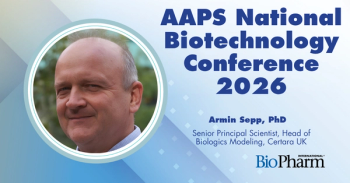
Certara UK’s Dr. Armin Sepp, who spoke at the 2026 AAPS National Biotechnology Conference, explains how quantitative systems pharmacology may improve CAR T-cell safety and efficacy by modeling immune activation, tumor response, and cell persistence.
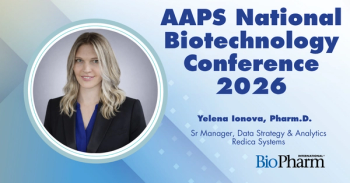
Yelena Ionova, Pharm.D., Redica Systems, discusses how benchmarking inspection data, strengthening sterile manufacturing controls, and adopting continuous regulatory intelligence strategies can help cell and gene therapy manufacturers improve inspection readiness and quality system performance.
Yelena Ionova, Pharm.D., Redica Systems, described how FDA and EMA standards for cell and gene therapy chemistry, manufacturing, and controls are increasingly aligned, yet manufacturers continue to struggle with basic GMP elements such as quality oversight, sterile processing, and staff training. She emphasized that newer CGT facilities have a critical opportunity to design quality systems and data integrity controls correctly from the outset to avoid costly remediation later.
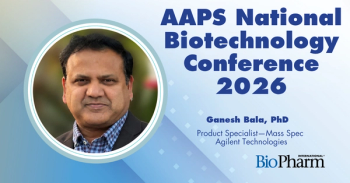
Multi-attribute LC–MS methods improve characterization of complex bioconjugates, supporting scalable and regulatory-ready biotherapeutic development, says Agilent Technologies’ Dr. Ganesh Bala, who spoke at the 2026 AAPS National Biotechnology Conference.
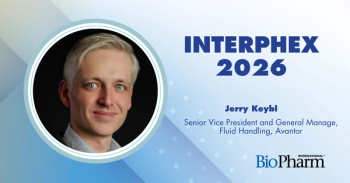
In the second half of an interview at the close of INTERPHEX 2026, Avantor’s Jerry Keybl explains that digital integration and AI-driven analytics enable predictive bioprocess control and can thus improve consistency, scalability, and data-driven manufacturing decisions.
Consistent fluid management across scales supports efficient bioproduction and reduces risk during scale-up of complex therapeutic modalities, says Avantor’s Jerry Keybl at INTERPHEX 2026.

AI and automation may streamline cell and gene therapy manufacturing by reducing labor demands while improving efficiency and supporting scalable production, says Dr. Alan Smith of Charles River Laboratories.
Dr. Alan Smith of Charles River Laboratories explains why early manufacturing planning and scalable processes are critical to ensure successful commercialization of complex cell and gene therapies as part of his panel discussion at INTERPHEX 2026.
ADC cleaning validation requires risk-based strategies to manage degradation and ensure safe limits for highly potent, dual-modality therapeutics, says Paul Lopolito, STERIS’ director of Technical Services, at INTERPHEX 2026.
Experts at AAPS PharmSci 360 discuss industry-wide transformation from AI implementation and the ripple effect on workforce development.
Eric Hill, Chief Scientific Officer, BA Sciences, discusses the how E&L testing principles can be adapted to biologic products and the unique challenges biologic drugs face regarding E&Ls.
Eric Hill, Chief Scientific Officer, BA Sciences, discusses the analytical challenges involved in conducting E&L testing for biologic drug products.
Reliable bioanalysis and regulatory-compliant study design enhance drug development, says Alturas’s Sara Underwood at AAPS PharmSci 360.
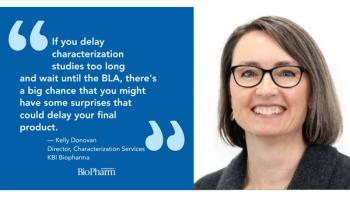
At AAPS PharmSci 360, Kelly Donovan says tailored analytical strategies are necessary for reducing development delay risks.
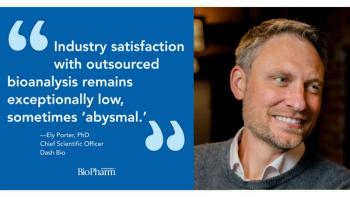
At AAPS PharmSci 360, Ely Porter, PhD, says automated platforms enhance drug production velocity and assay excellence.
At AAPS PharmSci 360 2025, Siddhant Sojitra, Alexion, defines an agitation model to reliably test stability for early-stage biologics.

At AAPS PharmSci 360, Siddhant Sojitra defines a scientifically justified agitation model for the early-stage development of high-concentration biologics.
Financing strategies for new modalities and AI will be central at PharmSci 360, shaping how advanced therapeutics move toward global patient access.
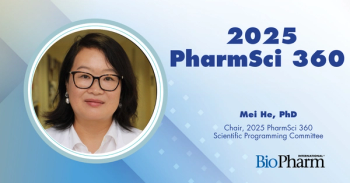
AI, gene therapy, top research breakthroughs, and more will be highlighted at this year’s AAPS PharmSci 360, according to programming chair, Mei He.