

“Understanding a degradation profile is an important element in cleaning validation.”
News|Podcasts|April 21, 2026
Why Managing Potency and Degradation are Crucial in ADC Cleaning Validation
Author(s)Feliza Mirasol, Paul Lopolito

ADC cleaning validation requires risk-based strategies to manage degradation and ensure safe limits for highly potent, dual-modality therapeutics, says Paul Lopolito, STERIS’ director of Technical Services, at INTERPHEX 2026.
Advertisement
Lopolito highlights the need for risk-based strategies tailored to complex drug modalities, emphasizing how ADCs introduce new considerations compared with traditional small- or large-molecule products.
ADCs combine highly potent small-molecule drug substances with large-molecule biologics, creating distinct validation challenges. According to Lopolito, differences in degradation profiles, health-based exposure limits, and analytical methods mean that a single
He also notes that some ADC manufacturing processes rely on solvents incompatible with single-use systems, necessitating reusable equipment and robust cleaning validation protocols. This increases the importance of contamination control and accurate analytical verification.
How does degradation impact ADC cleaning validation strategies?
A central issue in ADC cleaning validation is managing the degradation behavior of both molecular components. Large-molecule biologics are often intentionally degraded during cleaning processes using pH, temperature, or alkalinity to reduce their therapeutic activity. In contrast, small-molecule payloads require careful handling to avoid degradation into potentially more toxic byproducts, Lopolito explains.
“Understanding a degradation profile is an important element in cleaning validation,” he says.
This dual-modality consideration requires a nuanced, risk-based approach that integrates knowledge of degradation pathways, analytical method performance, and acceptable exposure limits. Lopolito emphasizes that the convergence of established strategies for small and large molecules presents both a challenge and an opportunity for the industry.
He adds that advancing ADC cleaning validation will depend on aligning these approaches to ensure safe, reliable manufacturing outcomes across increasingly complex therapeutic pipelines.
About the speaker
Paul Lopolito, Director, Technical Services, STERIS
Lopolito has more than two decades of industry experience in bio/pharmaceutical manufacturing and laboratory research, specializing in process cleaning, cleaning validation, and contamination control. At STERIS Life Sciences, he provides global technical support through field consultations, training, and analytical testing and manages the PACE program.
Advertisement
Related to this article

Manufacturing remediation, not efficacy or safety data, is delaying US approval of Novo's h+emophilia A therapy denecimig.

Doubled drug substance capacity at Alvotech's Reykjavik, Iceland, site aims to secure steady US supply of the Humira biosimilar Simlandi.

Patients suffered pyrogenic reactions before Fresenius Kabi recalled 3 contaminated batches at its 430,000-sq-ft Melrose Park, Ill., biologics plant.

NouvSight001 isn't limited to the RPE65-mutation subset current gene therapy treats, potentially reaching more of the 1.5 million with RP worldwide.
Survodutide advances metabolic disease treatment, while biosimilar capacity expands, FDA delays hemophilia review, and lupus data support next steps.
CaseBioscience joins an ARPA-H effort to develop room-temperature cell therapy preservation, Novartis licenses an mRNA-encoded T-cell engager from Abogen, and AstraZeneca, Daiichi Sankyo, and Summit plan to combine Datroway with ivonescimab.
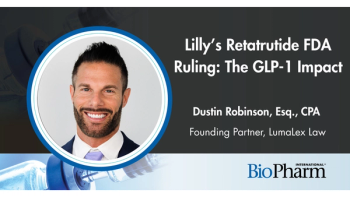
LumaLex Law's Dustin Robinson explains why retatrutide compounding remains illegal regardless of the Seventh Circuit's pending classification ruling.

Artiva Biotherapeutics will present data on AlloNK, an allogeneic, non-genetically modified NK cell therapy given with rituximab, in refractory rheumatoid arthritis, Sjögren disease and systemic sclerosis at ACR Convergence 2026, ahead of a planned phase 3 trial in rheumatoid arthritis.
Advertisement
Advertisement