

Chugai Pharmaceuticals, a research-based company headquartered in Tokyo, opens new facility in Berkley Heights, NJ.
Chugai Pharmaceuticals, a research-based company headquartered in Tokyo, opens new facility in Berkley Heights, NJ.
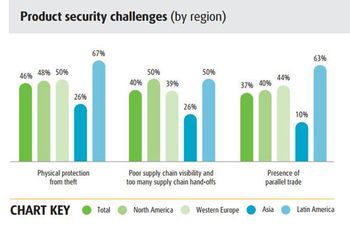
The 2015 UPS supply chain survey suggests that pharma companies need to improve cost control and planning for unexpected events.
Robert Califf addresses questions about drug pricing at the Senate hearing to weigh his appointment to be the next commissioner of FDA.
The new executive director of the European Medicines Agency begins appointment.
A landmark study by the National Institutes of Health determines that Lucentis is highly effective as a treatment for diabetic retinopathy.
An ABPI report found a lack of quality candidates for high-skilled roles in areas such as bioinformatics, translational medicine, clinical pharmacology, and pathology.
FDA seeks feedback on possible analytical standards and approaches to optimize regulation of next-generation sequencing (NGS)-based in vitro diagnostic tests.
Lawsuit alleges birth control packaging error led to 113 unwanted pregnancies.
Even though rising production and use of generic pharmaceuticals is saving billions for the nation’s healthcare system, policy makers continue to slap the industry with policies it claims will limit product development and sales.
The European agency presents guidelines for conducting post-authorization efficacy studies.
According to Diplomat’s CEO Phil Hagerman, true specialty pharmacies are “not in the business of toenail fungus and teenage acne.”
All biosimilars for a specific product will be reimbursed with the same J-code under Medicare Part B regardless of manufacturer, according to a CMS rule that was proposed in July 2015 and finalized on Oct. 30, 2015. The rule was finalized prior to any formal guidance from FDA on interchangeable products. CMS said it did not consider interchangeability into its decision, as there are no currently approved interchangeable biologics on the market.
The “next-generation” design for the pods will build on Pfizer’s existing modular prototype for oral solid-dose manufacturing.
The agency issued a draft guidance document on the requirements for submission of applications for liposome drug products.
USP responds to FDA's draft guidance on the naming of biological products.
Despite considerable investment by biotech manufacturers in developing competitive biologics for the US market, gaining FDA approval of these products has turned out to be a slow and complex process.
According to a third-quarter earnings report, Pfizer’s vaccine business contributed nearly 14% to its total revenue.
Melanoma treatment, Imlygic, received a positive opinion from CHMP, and several other products received extension of indications.
The agency provides terms and recommendations for packaging and labeling of injectable medical products.
The agency gives an update on the regulation of combination medical products.
Celebrating the best of pharma and recognizing companies that turn inspiration into innovation.
Through the Glycoscience Program, the National Institute of Health will contribute $10 million to advance the study of carbohydrates and the compounds that interact with them.
The Cell History File is designed as a “cell passport” for developers and manufacturers of tissue- and cell-based medicinal products.
The agency provides recommendations for submitting proposed labeling with abbreviated new drug applications.
The PDA report discusses qualification and operational handling of passive thermal protection systems.
Researchers in the US, Japan, and China are recognized for developing therapies to combat river blindness, lymphatic filariasis, and malaria.
Aging populations and increased access to healthcare translates into opportunities for biopharmaceutical companies. JLL’s 2015 Life Sciences Outlook report highlights global clusters worth watching.
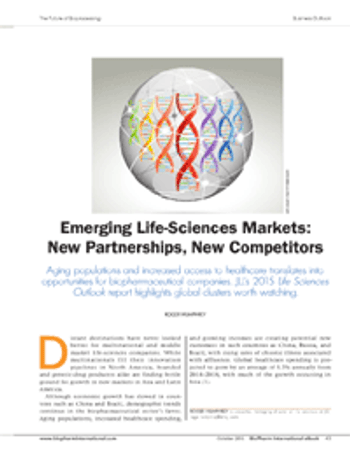
Aging populations and increased access to healthcare translates into opportunities for biopharmaceutical companies. JLL’s 2015 Life Sciences Outlook report highlights global clusters worth watching.
The project seeks to index the properties of various proteins in solution and create a home for data on the performance of product excipients with their active substances.
Democratic members of the House Committee on Oversight and Government Reform are requesting a subpoena for documents withheld by Valeant Pharmaceuticals.