

The BioPharm Brief covers Resolution Therapeutics’ completed enrollment of RTX001 in the EMERALD trial, Samsung Biologics’ $262 million manufacturing deal, and CordenPharma’s $80 million investment to expand sterile injectable capacity.
The BioPharm Brief covers Resolution Therapeutics’ completed enrollment of RTX001 in the EMERALD trial, Samsung Biologics’ $262 million manufacturing deal, and CordenPharma’s $80 million investment to expand sterile injectable capacity.

Samsung Biologics signed a $262 million contract manufacturing agreement with an undisclosed European pharmaceutical company, extending production commitments through 2033 and lifting the CDMO's cumulative contract value past $21.9 billion.

CordenPharma is expanding its Caponago, Italy site with a €80 million multi-year investment and new aseptic fill-finish lines, aiming to reach 500 million sterile injectable units of annual capacity to meet rising demand across peptide, biologic, LNP, and oligonucleotide-based drug products.
The BioPharm Brief highlights Biora Therapeutics’ first human trial of its BioJet oral delivery system, FDA priority review of Roche’s satralizumab for MOGAD, and Encoded Therapeutics’ $275 million financing for its Dravet syndrome gene therapy ETX101.

Solstice Oncology launched with a $225 million Series A financing to advance porustobart, a second-generation, Fc-enhanced CTLA-4 antibody licensed from Harbour BioMed, into neoadjuvant Phase 2 testing for microsatellite-stable colon cancer.
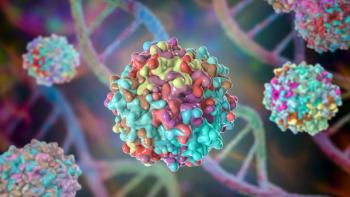
Encoded Therapeutics closed a $275 million Series F financing to fund pivotal and expansion studies of ETX101, an AAV9-mediated gene regulation therapy for SCN1A-positive Dravet syndrome, alongside commercial-scale buildout of the company's in-house GMP manufacturing.
Today’s BioPharm Brief looks at a phase 3 survival win for Imdelltra plus Imfinzi in first-line small cell lung cancer, FDA review of Rezolute’s ersodetug, and Novartis’s del-desiran setback in myotonic dystrophy type 1.
Amgen and AstraZeneca announced that the Phase 3 DeLLphi-305 trial met its primary endpoint, with Imdelltra (tarlatamab) plus Imfinzi (durvalumab) significantly improving overall survival versus durvalumab alone as first-line maintenance therapy for extensive-stage small cell lung cancer — the first phase 3 study of a bispecific T-cell engager to show a survival benefit in this earlier-line setting.

HHS announced four senior FDA leadership selections, including Karim Mikhail as permanent Director of the Center for Biologics Evaluation and Research and Michael Davis as Director of the Center for Drug Evaluation and Research, capping more than a year of turnover at both centers.
BrainChild Bio, Moonwalk Biosciences, and Aptar Pharma are advancing new approaches to CAR-T therapy, RNAi for obesity, and inhaled antisense oligonucleotide delivery.

Aptar Pharma's Nanopharm business will lead inhaled formulation development and device assessment for ACT-101, Aceso Therapeutics' antisense oligonucleotide candidate designed to correct CFTR protein function in cystic fibrosis patients carrying the F508del mutation.
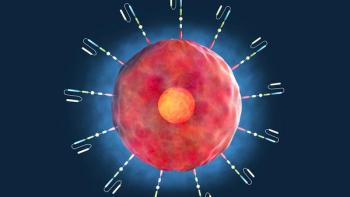
Bristol Myers Squibb reported positive topline phase 2 results for arlocabtagene autoleucel, a potential first-in-class GPRC5D-directed CAR T cell therapy, in patients with quadruple-class exposed relapsed and refractory multiple myeloma who had already received a prior BCMA-targeted therapy.
Cipla's US subsidiary secured exclusive rights to commercialize QL2107, Qilu Pharmaceutical's phase 3 biosimilar candidate to Keytruda, ahead of the reference biologic's anticipated 2028 patent expiration.

Medicus Pharma secured worldwide rights to PF-08046031 (CD228V), an antibody-drug conjugate targeting melanotransferrin that Pfizer discontinued earlier this year following its $43 billion Seagen acquisition, in a co-development and license agreement that could pay Pfizer more than $1 billion in milestones.
Today’s BioPharm Brief leads with a late-stage clinical setback for Ultragenyx, a major gene therapy filing from uniQure, and a billion-dollar oncology licensing deal between HUTCHMED and GSK.

Sebastian Andersen, CEO and founder of ClarityNorth Partners, discusses H1 2026 biopharma M&A, oncology deal activity, Lilly’s strategy, capital deployment, and how transaction structure can help companies manage risk.

Sebastian Andersen, CEO and founder of ClarityNorth Partners, discusses 2026 biopharma dealmaking, including M&A trends, oncology deal activity, Lilly’s acquisition strategy, and how transaction structure can help companies manage risk.

TScan Therapeutics is reorganizing to prioritize in vivo-engineered TCR-T therapy for solid tumors, pausing its phase 3 trial and autoimmune program and cutting about 75% of its workforce, even as new phase 1 data showed complete donor chimerism in all tracked heme malignancy patients.
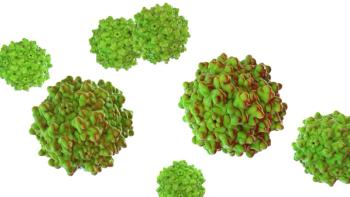
uniQure submitted a Biologics License Application to the FDA and a Marketing Authorisation Application to the UK's MHRA for ifezuntirgene inilparvovec (AMT-130), an AAV5 gene therapy for Huntington's disease, based on three-year Phase I/II data — a potential first disease-modifying treatment for a condition with no approved therapies that slow progression.
Ultragenyx published 96-week phase 3 data for GENGLYCOS, its AAV8 gene therapy for glycogen storage disease type Ia, in The Journal of Inherited Metabolic Disease, showing sustained cornstarch-intake reductions and continued glycemic control roughly six weeks after the therapy's FDA accelerated approval.

ArsenalBio is halting all development of its ex vivo CAR T programs for solid tumors and laying off the majority of its workforce as it pivots the company entirely toward in vivo CAR T therapy, joining a fast-growing field that already includes Johnson & Johnson, Eli Lilly, and several other developers.
Today’s BioPharm Brief covers a new first-line HER2 breast cancer approval in Europe, a $1.5 billion Roche deal, and new survival data for Ziihera in gastroesophageal cancer.

BeOne Medicines and Jazz Pharmaceuticals announced positive topline overall survival results from the second interim analysis of the Phase 3 HERIZON-GEA-01 trial, reinforcing the benefit of Ziihera-containing regimens just days after their FDA approval in first-line HER2-positive gastroesophageal adenocarcinoma.

GSK will begin a phase 3 trial in September 2026 for its investigational mRNA seasonal flu vaccine after phase II data showed stronger immune responses than licensed comparators. The candidate is designed to target both hemagglutinin and neuraminidase, a dual-antigen approach not yet tested in a late-stage mRNA flu trial.
Today’s BioPharm Brief looks at a new treatment for essential thrombocythemia, a halted cancer vaccine trial, and updated COVID-19 vaccine approvals ahead of the 2026-2027 season.

Novavax's partners Sanofi and Takeda have received regulatory approvals for an XFG variant-adapted formulation of Nuvaxovid, the company's protein-based, non-mRNA COVID-19 vaccine, across the US, EU, and Japan for the 2026-2027 vaccination season, positioning Novavax to continue earning royalties without maintaining its own commercial infrastructure.

BioNTech has terminated the Phase 2 BNT122-01 trial of autogene cevumeran as an adjuvant monotherapy in ctDNA-positive resected colorectal cancer, following a DSMB recommendation citing a numerical imbalance in overall survival, while the drug's separate pancreatic cancer trial continues unaffected.
Today’s BioPharm Brief looks at a new cardiovascular indication for Mounjaro, a billion-dollar ADC deal, and a potential new biosimilar competitor for Kadcyla.

Eron Kelly, CEO of ConcertAI, and Shaalan Beg, MD, chief medical officer, oncology, ConcertAI, discuss how artificial intelligence (AI) can accelerate clinical trial design, patient identification, and site selection while maintaining trust in clinical data.

The FDA has approved Lilly's tirzepatide (Mounjaro) to reduce major adverse cardiovascular events in adults with type 2 diabetes at high risk, based on the head-to-head SURPASS-CVOT trial showing non-inferiority to dulaglutide (Trulicity), making it the first GIP/GLP-1 receptor agonist with this indication.