
Today’s biopharma news highlights how new data could reduce treatment burden, improve excipient information sharing, and shape future options for patients with difficult-to-treat cancers.
Today’s biopharma news highlights how new data could reduce treatment burden, improve excipient information sharing, and shape future options for patients with difficult-to-treat cancers.

AstraZeneca's sBLA for durvalumab combined with neoadjuvant enfortumab vedotin in muscle-invasive bladder cancer, based on the Phase 3 VOLGA trial, has a PDUFA date expected in the fourth quarter of 2026.

IMVT-1402 (imeroprubart) failed to reach statistical significance on CLASI-A at Week 12 in a 57-patient proof-of-concept study, and Immunovant will stop development in cutaneous lupus erythematosus. The anti-FcRn antibody continues in five other autoimmune indications.
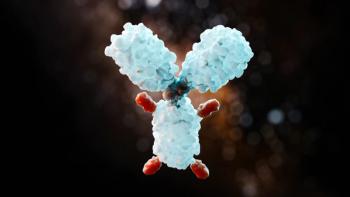
SOTIO Biotech's LRRC15-targeted antibody-drug conjugate SOT106 now holds both Orphan Drug and Fast Track Designations in soft tissue sarcoma and osteosarcoma. The company expects to start first-in-human testing later in 2026.
FDA expands Winrevair’s label with HYPERION data, formalizes the use of non-animal testing methods, and Amgen reports positive Phase 3 results for dazodalibep in Sjögren disease.

The FDA has approved a label update for Merck's Winrevair (sotatercept-csrk) incorporating Phase 3 HYPERION data, showing a 76% reduction in clinical worsening events when added to background therapy in adults diagnosed with pulmonary arterial hypertension within the past year.

Glycomine's GLM101, an investigational liposomal mannose-1-phosphate substrate replacement therapy, has received FDA Breakthrough Therapy designation for PMM2-CDG, a rare glycosylation disorder with no approved treatments.
Novo Nordisk reports positive phase 3 CagriSema data, Biocon’s pertuzumab biosimilar gets a positive CHMP opinion under EMA’s new tailored pathway, and Vironexis reports complete responses with its one-time in vivo therapy for relapsed ALL.

Eron Kelly, CEO of ConcertAI, and Dr. Shaalan Beg, CMO, oncology, ConcertAI, discuss how AI can help physicians access the right information at the right time while supporting clinical trials, research, and quality initiatives.

Biocon's Pebrilzo, a pertuzumab biosimilar for HER2-positive breast cancer, has become the first monoclonal antibody biosimilar to receive a positive CHMP opinion under EMA's newly adopted tailored clinical approach, which can reduce comparative efficacy trial requirements.

Vironexis Biotherapeutics reported that the first three antibody-naive patients with relapsed/refractory acute lymphoblastic leukemia treated with its one-time in vivo immunotherapy VNX-101 all achieved MRD-negative complete responses, with durability tracked through at least nine months.
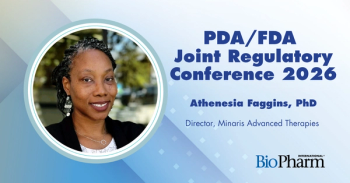
Athenecia Faggins of Minaris Advanced Therapies discusses raw material qualification, supplier management, testing, and risk control for advanced therapy manufacturing.
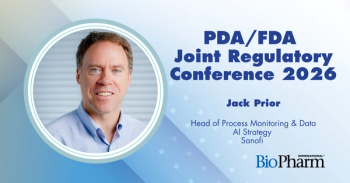
Sanofi’s Jack Prior discusses how biopharmaceutical manufacturers can assess whether process data is ready for human and AI use, and the role of data quality, accessibility, governance, and AI in manufacturing.
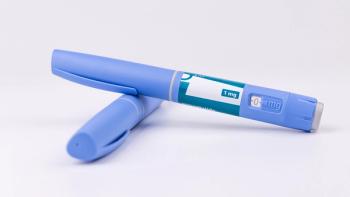
Regulatory approvals, trial data, and major licensing deals in 2026 are accelerating subcutaneous biologics, cutting patient burden and reshaping biopharma strategy.
Today’s biopharma news highlights GSK’s myeloma strategy, Insilico’s AI longevity research, and innovations that may improve future treatment outcomes.
This episode of the BioPharm Brief highlights Roche’s Tam-Peli phase 3 survival data in relapsed small-cell lung cancer, Cellectis’ shift to in vivo gene editing for lipid disorders, and Phio Pharmaceuticals’ FDA briefing package for PH-762 in cutaneous squamous cell carcinoma.
Tambotatug pelitecan (Tam-Peli), a B7-H3-targeted antibody-drug conjugate, is the second of at least three B7-H3-targeted ADCs to post positive late-stage data in relapsed small-cell lung cancer this year.

Four cell therapy developers have pulled back from ex vivo manufacturing in the past month — ArsenalBio, TScan Therapeutics, and Cellectis all pivoted to in vivo approaches, while Bristol Myers Squibb terminated its manufacturing partnership with automation specialist Cellares after determining its platform couldn't meet requirements for commercial Breyanzi production, triggering layoffs.
The BioPharm Brief covers Resolution Therapeutics’ completed enrollment of RTX001 in the EMERALD trial, Samsung Biologics’ $262 million manufacturing deal, and CordenPharma’s $80 million investment to expand sterile injectable capacity.

Samsung Biologics signed a $262 million contract manufacturing agreement with an undisclosed European pharmaceutical company, extending production commitments through 2033 and lifting the CDMO's cumulative contract value past $21.9 billion.

CordenPharma is expanding its Caponago, Italy site with a €80 million multi-year investment and new aseptic fill-finish lines, aiming to reach 500 million sterile injectable units of annual capacity to meet rising demand across peptide, biologic, LNP, and oligonucleotide-based drug products.
The BioPharm Brief highlights Biora Therapeutics’ first human trial of its BioJet oral delivery system, FDA priority review of Roche’s satralizumab for MOGAD, and Encoded Therapeutics’ $275 million financing for its Dravet syndrome gene therapy ETX101.

Solstice Oncology launched with a $225 million Series A financing to advance porustobart, a second-generation, Fc-enhanced CTLA-4 antibody licensed from Harbour BioMed, into neoadjuvant Phase 2 testing for microsatellite-stable colon cancer.
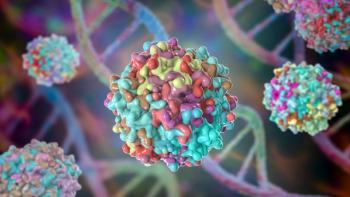
Encoded Therapeutics closed a $275 million Series F financing to fund pivotal and expansion studies of ETX101, an AAV9-mediated gene regulation therapy for SCN1A-positive Dravet syndrome, alongside commercial-scale buildout of the company's in-house GMP manufacturing.
Today’s BioPharm Brief looks at a phase 3 survival win for Imdelltra plus Imfinzi in first-line small cell lung cancer, FDA review of Rezolute’s ersodetug, and Novartis’s del-desiran setback in myotonic dystrophy type 1.

Amgen and AstraZeneca announced that the Phase 3 DeLLphi-305 trial met its primary endpoint, with Imdelltra (tarlatamab) plus Imfinzi (durvalumab) significantly improving overall survival versus durvalumab alone as first-line maintenance therapy for extensive-stage small cell lung cancer — the first phase 3 study of a bispecific T-cell engager to show a survival benefit in this earlier-line setting.

HHS announced four senior FDA leadership selections, including Karim Mikhail as permanent Director of the Center for Biologics Evaluation and Research and Michael Davis as Director of the Center for Drug Evaluation and Research, capping more than a year of turnover at both centers.
BrainChild Bio, Moonwalk Biosciences, and Aptar Pharma are advancing new approaches to CAR-T therapy, RNAi for obesity, and inhaled antisense oligonucleotide delivery.

Aptar Pharma's Nanopharm business will lead inhaled formulation development and device assessment for ACT-101, Aceso Therapeutics' antisense oligonucleotide candidate designed to correct CFTR protein function in cystic fibrosis patients carrying the F508del mutation.
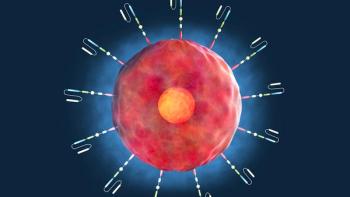
Bristol Myers Squibb reported positive topline phase 2 results for arlocabtagene autoleucel, a potential first-in-class GPRC5D-directed CAR T cell therapy, in patients with quadruple-class exposed relapsed and refractory multiple myeloma who had already received a prior BCMA-targeted therapy.